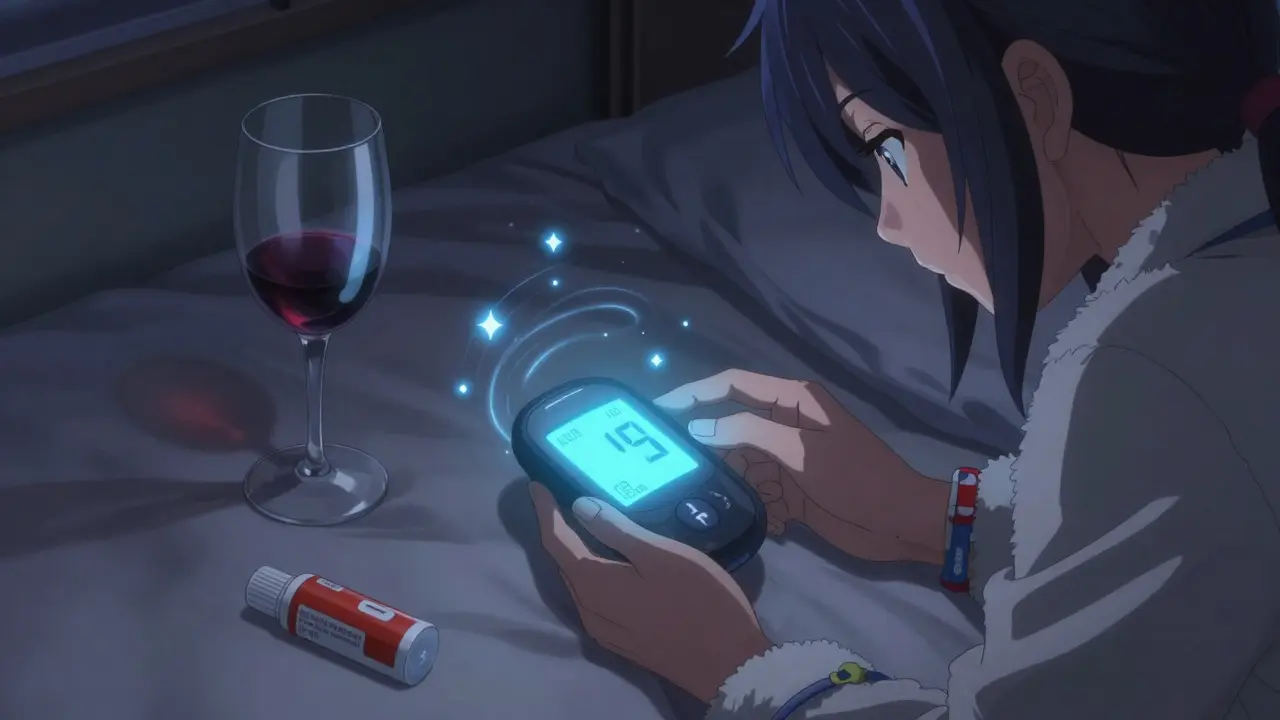
Drinking alcohol with diabetes isn’t off-limits-but it’s not harmless either. If you have diabetes and you drink, you’re playing a high-stakes game with your blood sugar. One sip can send your glucose plummeting hours later, often when you’re asleep, alone, or unaware. And the symptoms? They look exactly like being drunk: dizziness, confusion, sweating, shaking. No one knows if you’re having a medical emergency or just need another beer. That’s why understanding the real risks-and following clear, science-backed rules-isn’t optional. It’s life-saving.
How Alcohol Messes With Your Blood Sugar
Alcohol doesn’t just add empty calories. It hijacks your liver’s ability to keep your blood sugar stable. Normally, your liver releases glucose when your levels drop. But when alcohol is in your system, your liver prioritizes breaking down the alcohol over making glucose. That means if you’re on insulin or sulfonylureas, your blood sugar can crash-sometimes hours after your last drink.
Here’s the twist: alcohol can also cause a quick spike first. Sweet wines, cocktails with soda or juice, and even some craft beers contain carbs that raise blood sugar right away. But that spike is short-lived. The real danger comes later, when your liver is still busy processing alcohol and can’t release glucose. This delay is why many people with diabetes wake up in the middle of the night with dangerously low blood sugar-sometimes below 50 mg/dL.
Studies show that about 30% of people with type 1 diabetes who drink experience at least one severe hypoglycemic episode linked to alcohol. For type 2, it’s about 15% annually. And it’s not just about quantity-it’s about timing, what you mix it with, and whether you’ve eaten.
What Counts as One Drink?
Not all drinks are created equal. A “standard drink” is the same no matter what you’re drinking:
- 12 ounces (360 mL) of regular beer (5% alcohol)
- 5 ounces (150 mL) of wine (12% alcohol)
- 1.5 ounces (45 mL) of hard liquor like vodka, gin, or whiskey (40% alcohol)
That’s it. No more than one per day for women, two for men. Some guidelines suggest spreading no more than 14 units per week over at least three days, with alcohol-free days in between. This isn’t a suggestion-it’s a safety floor.
And watch out for “diabetic” beers or ciders. They’re marketed as safer, but they often have higher alcohol content-sometimes 2-3% more than regular versions. More alcohol means more risk of hypoglycemia. Don’t be fooled by the label.
Best and Worst Drinks for People With Diabetes
Not all alcohol is equally dangerous. Your drink choice matters more than you think.
Safest options:
- Dry red or white wine (under 4g carbs per 5 oz)
- Light beer (under 10g carbs per 12 oz)
- Hard seltzers with no added sugar (typically 2-4g carbs)
- Distilled spirits (vodka, gin, tequila) mixed with club soda, diet tonic, or plain water
High-risk drinks:
- Margaritas, piña coladas, daiquiris (can have 20-25g carbs from syrup and juice)
- Sweet wines, dessert wines, liqueurs (think Baileys, Kahlua-often 10g+ carbs per ounce)
- Craft beers and malt liquors (higher alcohol and carbs than regular beer)
- Pre-mixed cocktails in bottles or cans (even if labeled “low sugar,” they often contain hidden carbs)
One study found that drinks with 10g or more of carbs per serving increase the risk of high blood sugar by 35%-and that’s before the crash hits. If you’re going to drink, stick to the low-carb options. And always check the label. If you can’t find the carb count, assume it’s high.
When to Avoid Alcohol Completely
Some people with diabetes should not drink at all. Here’s when you should say no:
- Your blood sugar is below 100 mg/dL or above 300 mg/dL
- You have diabetic neuropathy (nerve damage)-alcohol makes it worse
- You have pancreatitis or liver disease-alcohol increases damage
- You’re pregnant-no amount of alcohol is safe during pregnancy
- You’re taking metformin and plan to drink heavily-this raises the risk of lactic acidosis
- You’re on sulfonylureas (like glipizide or glyburide)-these drugs already increase hypoglycemia risk, and alcohol doubles it
If you have any of these conditions, talk to your doctor before even thinking about drinking. The risks aren’t theoretical-they’re documented in clinical studies and have sent people to the ER.

How to Drink Safely: The Step-by-Step Rules
If you’re cleared to drink, here’s exactly what to do:
- Check your blood sugar before you drink. Aim for at least 100 mg/dL. If you’re below that, eat a snack with 15-30g of carbs first.
- Always drink with food. Never drink on an empty stomach. Eat a meal that includes protein, fat, and complex carbs. This slows alcohol absorption and gives your liver something to work with.
- Drink slowly. Sip over an hour or more. Chugging increases your risk of a sudden drop.
- Use only sugar-free mixers. Club soda, diet tonic, or plain water. No soda, juice, or syrup.
- Check your blood sugar every 2 hours while drinking. Don’t assume you’re fine because you felt okay at first.
- Check your blood sugar before bed. If it’s below 140 mg/dL, eat a small snack with 15g of carbs. A piece of fruit, a few crackers, or a small yogurt will do.
- Avoid alcohol within 2 hours of exercise. Exercise lowers blood sugar. Alcohol does too. Together, they’re a dangerous combo.
- Carry fast-acting glucose. Always have glucose tablets, juice, or candy with you. And tell someone you’re drinking-so they know what to do if you pass out.
- Wear medical alert jewelry. 92% of endocrinologists recommend it. If you’re found unconscious, paramedics need to know you have diabetes.
People who follow these steps report 82% fewer hypoglycemic episodes. It’s not magic-it’s basic safety.
Why Nighttime Hypoglycemia Is So Dangerous
The biggest danger isn’t during the party-it’s at 3 a.m.
Alcohol can cause low blood sugar for up to 12 hours after your last drink. Most people stop checking their levels after they go to bed. But that’s when the liver is still busy processing alcohol and can’t release glucose. That’s why 61% of alcohol-related diabetes emergencies happen at night.
And here’s the cruel part: your body’s natural warning signs-shaking, sweating, hunger-are often masked by alcohol. You might feel fine… until you collapse. That’s why checking before bed and eating a snack is non-negotiable.
People on continuous glucose monitors (CGMs) have a big advantage. The Dexcom G7, for example, now has an alcohol-risk algorithm that warns you when your glucose is likely to drop due to alcohol. In trials, it cut severe events by 37%. If you have a CGM, turn on those alerts.
What Real People With Diabetes Say
Online communities like Reddit’s r/diabetes and Breakthrough T1D forums are full of real stories.
One user wrote: “I had a margarita at dinner. Felt fine. Went to bed. Woke up at 3 a.m. with a heart rate of 130, drenched in sweat, and a glucose reading of 42. My partner had to give me glucose gel. I didn’t even know I was low.”
Another said: “I switched to hard seltzers with lime and drink with a cheese plate. I’ve had zero hypos in 18 months. It’s not about quitting-it’s about choosing smarter.”
Hard seltzers got a 4.5/5 rating across 1,200 reviews. Margaritas? 1.8/5. The pattern is clear: predictability saves lives.
Is Red Wine Actually Good for You?
You’ve heard the myth: “Red wine improves insulin sensitivity.”
Some European studies do show a small benefit-about a 12% improvement in insulin response with one glass of red wine per day in people with type 2 diabetes. But here’s the catch: the American Diabetes Association says no alcohol provides enough benefit to recommend starting to drink if you don’t already.
That’s because the risks outweigh the potential upsides. You can get the same insulin sensitivity benefits from exercise, weight loss, or better sleep-without the risk of hypoglycemia, liver damage, or addiction.
If you already drink, fine. But don’t start drinking for “health reasons.”
What’s Changing in 2025?
Guidelines are evolving. The ADA’s 2024 draft recommendations are moving away from fixed blood sugar thresholds (like 100 mg/dL) and toward personalized targets based on your CGM data. That means your “safe” level might be 110, while someone else’s is 130.
Researchers at Joslin Diabetes Center are testing time-restricted drinking: only allowing alcohol during a 2-hour window, but only if you’ve eaten a full meal 2 hours before. Early results show a 28% drop in hypoglycemia compared to standard advice.
But the core message hasn’t changed: alcohol and diabetes don’t mix safely unless you’re disciplined. No shortcuts. No exceptions. No guessing.
Final Rule: When in Doubt, Don’t Drink
Diabetes management is about control. Alcohol is the opposite-it’s unpredictable, dangerous, and easy to underestimate.
If you’re unsure, skip it. If you’re tired, sick, stressed, or haven’t eaten properly-skip it. If you’re going to a party where you won’t be able to check your blood sugar-skip it.
There’s no trophy for drinking. There’s no prize for being the life of the party. There’s only one thing that matters: staying alive.
One drink can wait. One night of sobriety might save your life.



Sally Denham-Vaughan
December 31, 2025 at 14:24
Hard seltzers changed my life. Used to drink margaritas, woke up sweating and confused three times. Now I stick to lime and soda, eat cheese before bed, and actually sleep through the night. No more ER visits. Simple stuff.