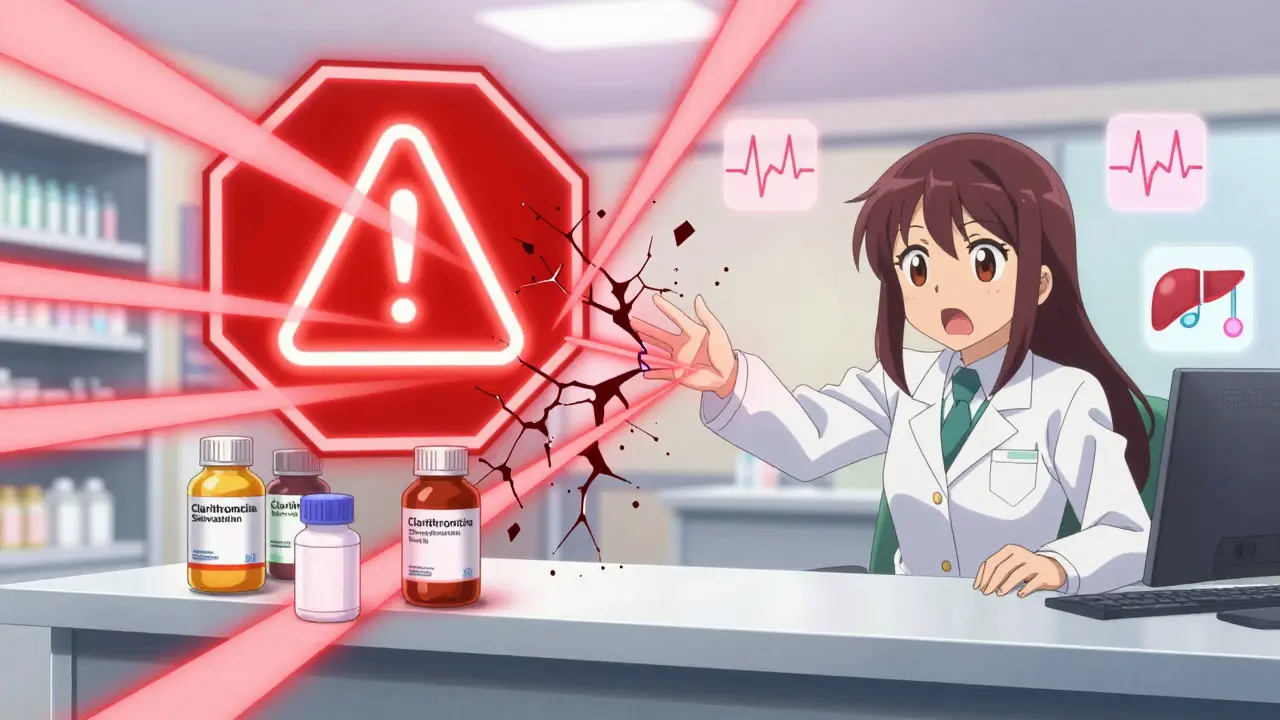
Clarithromycin Drug Interaction Checker
This tool checks for dangerous interactions between clarithromycin and common medications. Clarithromycin inhibits the CYP3A4 enzyme, which can cause dangerous drug buildup. For serious interactions, it may cause muscle damage, kidney failure, or heart rhythm problems. Always consult your healthcare provider before changing medications.
Check Your Medications
Clarithromycin is an antibiotic that works well against certain bacterial infections - like pneumonia, bronchitis, and skin infections. But here’s the problem: it’s also one of the most dangerous antibiotics you can take if you’re on any other medication. It doesn’t just kill bacteria. It messes with how your body processes dozens of other drugs, and in some cases, that mix can be deadly.
Why Clarithromycin Is So Risky
Clarithromycin doesn’t just stop bacteria from making proteins. It also shuts down a key enzyme in your liver called CYP3A4. This enzyme is responsible for breaking down about half of all prescription drugs. When clarithromycin blocks it, those drugs build up in your bloodstream like traffic on a highway with no exits.
That’s not theoretical. In one study, healthy people given clarithromycin along with a single dose of colchicine saw colchicine levels in their blood jump by 282%. That’s not a small increase. That’s a red alert. And this isn’t rare. As of 2020, the FDA had documented 58 serious or fatal cases of this exact interaction - and experts believe the real number is much higher because many cases go unreported.
Unlike azithromycin, another macrolide antibiotic, clarithromycin is a powerful CYP3A4 inhibitor. Azithromycin barely touches this enzyme. That’s why doctors are switching to azithromycin whenever possible. In fact, since 2015, clarithromycin prescriptions in the U.S. have dropped by 28%. Azithromycin now makes up 63% of all macrolide prescriptions. Why? Because doctors know what happens when you mix clarithromycin with other meds.
The Deadliest Combinations
Some drug pairs with clarithromycin are so dangerous they’ve earned official warnings from the FDA. Here are the top ones:
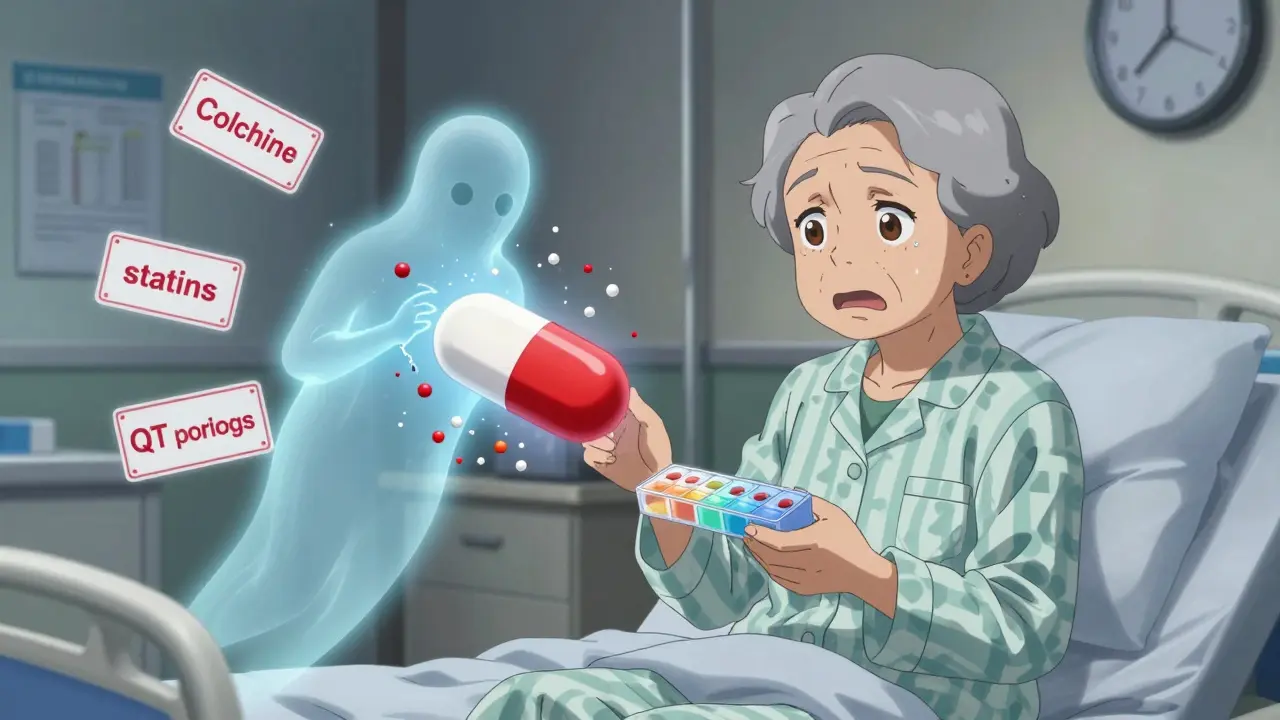
- Colchicine - Used for gout. When combined with clarithromycin, it causes severe poisoning: vomiting, diarrhea, muscle damage, kidney failure, and death. One case involved a 76-year-old woman with chronic gout who died 11 days after starting clarithromycin. She was taking her normal colchicine dose. No one checked for the interaction.
- Simvastatin and Lovastatin - These statins for cholesterol are especially risky. Clarithromycin can cause rhabdomyolysis - a condition where muscle tissue breaks down and floods your kidneys with toxic proteins. One 68-year-old man needed ICU care and dialysis after just three days of taking clarithromycin with simvastatin.
- Atorvastatin - Less risky than simvastatin, but still dangerous. Dose reductions are often needed.
- Calcium Channel Blockers - Drugs like verapamil, amlodipine, and diltiazem. When their levels spike, they can cause dangerously low blood pressure or heart rhythm problems.
- QT-Prolonging Drugs - Including antiarrhythmics, certain antidepressants, and antifungals. Clarithromycin itself can lengthen the QT interval on an ECG. Combine it with another QT-prolonging drug, and you risk torsades de pointes - a life-threatening heart rhythm that can lead to sudden death.
- Warfarin - Clarithromycin can make warfarin more potent, increasing bleeding risk. Patients on warfarin need frequent INR checks if clarithromycin is started.
- Digoxin - Used for heart failure and atrial fibrillation. Clarithromycin can raise digoxin levels by up to 100%, leading to nausea, confusion, and fatal heart arrhythmias.
The American College of Physicians updated its guidelines in January 2024 to say: "Use azithromycin instead of clarithromycin in any patient taking three or more medications." That’s not a suggestion. That’s a rule.
Who’s Most at Risk?
You don’t have to be old to be in danger - but if you’re over 65, your risk jumps dramatically. Studies show 42% of elderly patients on clarithromycin are also taking at least one contraindicated drug. That’s nearly half. Why? Because older adults often take multiple meds for heart disease, gout, high cholesterol, and high blood pressure - all of which overlap with clarithromycin’s danger list.
People with kidney problems are also at higher risk. The European Medicines Agency specifically warned in 2020 that patients with severe renal impairment who take colchicine and clarithromycin together have a 4.3-fold higher risk of fatal toxicity. Even if you’re young and healthy, if you’re on any of these drugs, you’re not safe.
What Should You Do?
If you’re prescribed clarithromycin, ask these questions:
- "What other medications am I taking that could interact with this?"
- "Is there a safer antibiotic I can take instead - like azithromycin?"
- "If I must take clarithromycin, should I lower the dose of my other meds?"
- "Should I get blood tests to check for drug buildup?"
Your pharmacist is your best ally here. Most pharmacies now run automatic drug interaction checks when a prescription is filled. But don’t assume they caught everything. If you’re on statins, colchicine, or heart meds, speak up. Tell them you’re worried about clarithromycin.
The FDA added a boxed warning to clarithromycin labels in March 2023 - the strongest possible warning. It says: "Concomitant use has resulted in fatal and near-fatal colchicine toxicity." That means the risk is real, documented, and unavoidable if you don’t check.
What About Other Antibiotics?
Amoxicillin is often a better choice. It doesn’t interact with CYP3A4 at all. It’s not as broad-spectrum as clarithromycin, but for many common infections - like sinusitis or strep throat - it’s just as effective and far safer.
Azithromycin is the go-to macrolide now. It’s just as good for most infections, with a shorter course (often just 5 days), and only 4 absolute contraindications compared to clarithromycin’s 142. If your doctor says you need a macrolide, ask: "Why not azithromycin?"
There’s one exception: Mycobacterium avium complex (MAC). For people with advanced HIV or other immune disorders, clarithromycin is still essential. But even here, doctors monitor drug levels closely and avoid combining it with anything else unless absolutely necessary.

What If You’ve Already Taken Them Together?
If you’ve taken clarithromycin with colchicine, simvastatin, or another high-risk drug - watch for these signs:
- Unexplained muscle pain or weakness (especially in the shoulders or thighs)
- Dark urine (a sign of muscle breakdown)
- Severe diarrhea, vomiting, or nausea
- Feeling lightheaded, dizzy, or having an irregular heartbeat
If any of these happen, go to the ER immediately. Don’t wait. Toxicity can develop within 24 to 72 hours. Death has occurred as early as 5 days after starting the combination.
There’s no antidote. Treatment is supportive: stopping both drugs, IV fluids, dialysis if needed, and monitoring heart rhythm. Prevention is the only real defense.
Final Reality Check
Clarithromycin isn’t going away. It still has a role - especially for stubborn infections like MAC. But it’s no longer a first-line choice for most people. The data is clear: its risks far outweigh its benefits for the average patient.
Doctors aren’t ignoring this. Prescriptions are falling. Guidelines are changing. The FDA is warning. The American College of Physicians is recommending alternatives. And patients? They’re being saved by pharmacists who catch the interaction before the pill is even dispensed.
If you’re prescribed clarithromycin, don’t assume it’s safe. Ask. Check. Push for an alternative. Your life might depend on it.
Can I take clarithromycin if I’m on a statin?
It depends on the statin. Simvastatin and lovastatin are absolutely unsafe with clarithromycin - this combination can cause fatal muscle damage. Atorvastatin is less risky, but still dangerous. Rosuvastatin and pravastatin are safer alternatives. Always check with your pharmacist or doctor before combining clarithromycin with any statin. Dose reductions and close monitoring are often required.
Is azithromycin always a safer choice than clarithromycin?
For most common infections - like sinusitis, bronchitis, or strep throat - yes. Azithromycin has minimal CYP3A4 inhibition, meaning far fewer drug interactions. It’s also taken for fewer days (often just 5 days). The only time clarithromycin might be preferred is for treating Mycobacterium avium complex (MAC), where it’s more effective. But even then, doctors weigh the risks carefully.
How long does clarithromycin affect drug metabolism?
Clarithromycin’s effect on CYP3A4 lasts beyond its time in your bloodstream. Even after you finish the 7- to 14-day course, enzyme inhibition can persist for up to a week. That means if you stop clarithromycin and then start another medication like colchicine or a statin just a few days later, you’re still at risk. Always wait at least 7 days after your last dose before starting a high-risk drug.
Can I take clarithromycin with over-the-counter meds?
Yes - but not all. Common OTC painkillers like acetaminophen and ibuprofen are generally safe. But avoid herbal supplements like St. John’s Wort, which can interact unpredictably. Also, some OTC antacids or cold medicines contain ingredients that affect heart rhythm or kidney function. Always tell your pharmacist about everything you’re taking - even supplements and vitamins.
What should I do if my doctor prescribes clarithromycin without checking my other meds?
Politely ask them to review your full medication list. Say: "I’ve read that clarithromycin can have dangerous interactions with some of my other drugs. Can we check if any of them are risky?" If they dismiss you, ask for a pharmacist consultation. Most hospitals and clinics have clinical pharmacists on staff specifically for this. Your safety matters more than convenience.







Natanya Green
February 25, 2026 at 16:10
I just got prescribed clarithromycin last week for a sinus infection... and I was already on simvastatin. My pharmacist called me within 10 minutes of the prescription being filled. I almost didn't believe her until I read the FDA warning. Now I'm on azithromycin instead. I'm alive. You're welcome, future readers. 🙌