
Herpes simplex on the skin isn't just a fleeting annoyance-it's a lifelong condition that can flare up without warning. Whether it's a tingling lip before a big presentation or a painful blister near the groin, the emotional and physical toll is real. The good news? You can significantly reduce how often outbreaks happen and make them much less severe. It's not about curing the virus-there's no cure-but it's about taking control. With the right combination of medication, lifestyle changes, and smart timing, many people go from having 8 outbreaks a year to just one or two.
Understanding How Herpes Simplex Works
Herpes simplex virus (HSV) lives in your nerve cells after the first infection. It doesn't leave your body. It just goes quiet-until something wakes it up. HSV-1 usually causes cold sores around the mouth, while HSV-2 typically affects the genital area. But that's not set in stone. More and more genital herpes cases are now caused by HSV-1, thanks to oral sex. The virus reactivates because of triggers: stress, sunburn, illness, hormonal shifts, or even a dental procedure. Once it wakes up, it travels down the nerve to the skin, and within hours, you feel that telltale tingling-before the blister even forms.
The Three Main Ways to Prevent Recurrences
There are three proven strategies to stop herpes from coming back: daily antiviral medication, episodic treatment at the first sign of symptoms, and managing your personal triggers. Each works differently, and the best approach depends on how often you get outbreaks.
Daily Suppressive Therapy
If you have six or more outbreaks a year, daily antiviral medication is the most effective option. Three drugs are approved for this: acyclovir, valacyclovir, and famciclovir. Valacyclovir (Valtrex) is often preferred because it's taken less often-once or twice a day-thanks to better absorption. Studies show it cuts recurrences by 70-80%. For example, one person who had outbreaks every 3 weeks saw them drop to once every 5 months after starting daily valacyclovir. This isn't just about fewer blisters-it also reduces the chance of spreading the virus to partners, even when no sore is visible. The CDC confirms that daily use lowers transmission risk by about half.
Episodic Therapy: Catch It Early
If outbreaks are rare-say, two or three times a year-daily pills aren't usually worth the cost or side effects. Instead, start treatment at the very first sign: tingling, itching, burning, or redness. This is called the prodrome. Taking valacyclovir 2 grams twice in one day (12 hours apart) can shorten healing time from 5 days to less than 4. But if you wait until the blister is open, the benefit drops by half. The key is acting fast. Most people don’t realize they’re in prodrome until it’s too late. Practice recognizing those early signals. Keep the medication handy. Set a reminder. Time matters more than you think.
Trigger Management: What Makes It Flare Up
Medication helps, but it’s not the whole story. Your triggers are unique. For 68% of people in online support groups, stress is the #1 cause. For others, it’s sun exposure, fatigue, or even tight clothing. Sunlight is a major trigger for lip herpes. Using SPF 30+ lip balm daily-yes, even in winter-reduces outbreaks by 76% according to a Healthline survey of 1,200 users. Zinc supplements (15-30mg daily) helped 63% of respondents reduce severity. Some people find that avoiding arginine-rich foods (chocolate, nuts, seeds) and eating more lysine (dairy, eggs, legumes) helps, though the science here is weaker. The bottom line: track your outbreaks. Note what you were doing, how you felt, and what you ate. Patterns emerge over time.
What About Topical Creams and Natural Remedies?
Don’t waste money on topical creams like acyclovir ointment. Studies show they don’t prevent outbreaks or speed healing significantly. Same with tea tree oil, lemon balm, or lysine patches-there’s no strong evidence they work better than placebo. Zinc lozenges might help a little, but they’re no substitute for antivirals. And don’t skip your meds because you’re “trying natural methods.” The data is clear: antivirals work. Everything else is optional support.
Special Situations: Procedures and Dental Work
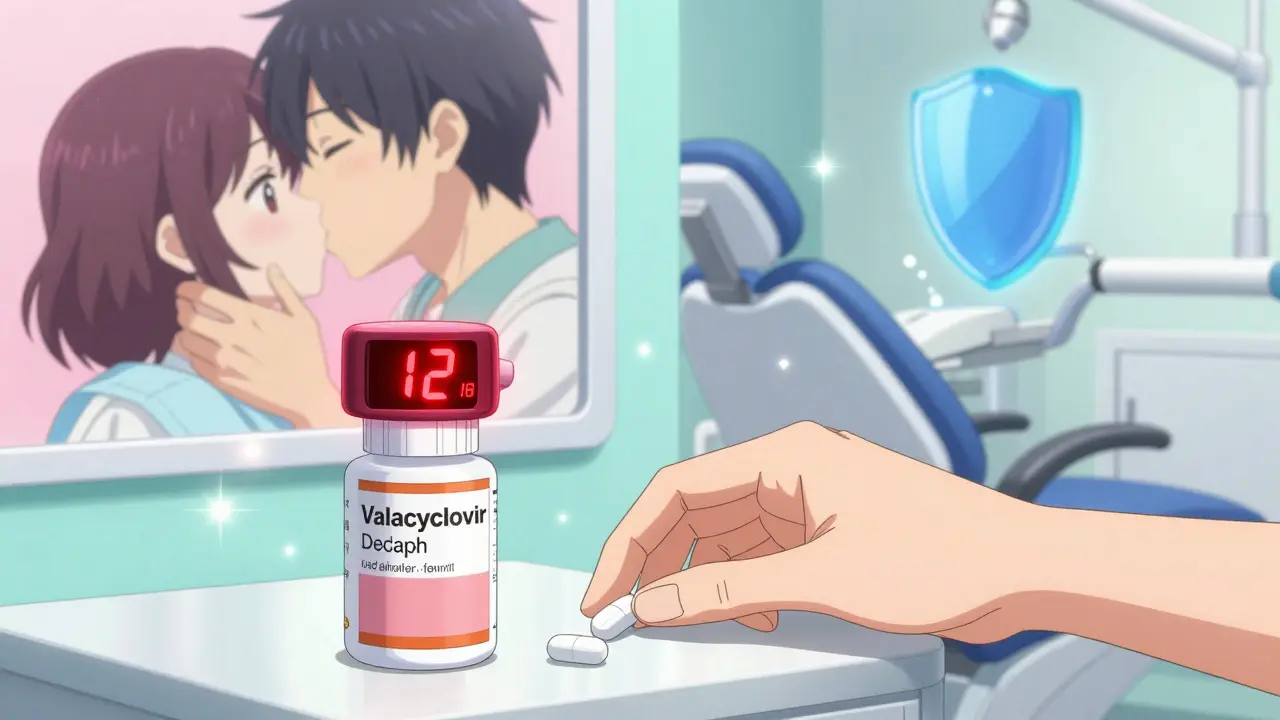
If you’re planning a laser treatment, chemical peel, tattoo, or even a deep dental cleaning, you need to plan ahead. Up to 20% of people with HSV get an outbreak after these procedures. The fix? Take valacyclovir 2 grams one hour before the procedure, then again 12 hours later. For laser resurfacing, a 10-14 day course starting the day before cuts recurrence risk to nearly zero. Dermatology clinics now require you to disclose your HSV history before any invasive skin procedure. If you’ve ever had a cold sore, assume you’re at risk. Don’t wait until after the procedure to act.
Cost, Side Effects, and Real-Life Challenges
Valacyclovir costs about $370 a month without insurance in the U.S. That’s a barrier for many. Some people skip doses. Others switch to acyclovir, which is cheaper but requires 4 doses a day. Side effects are usually mild-headache, nausea, dizziness-but can be enough to make people quit. If cost is an issue, talk to your doctor about generic options, pharmacy discount programs, or even a 90-day supply. For those with fewer than six outbreaks a year, episodic treatment is cheaper and just as effective. And if you’re worried about transmission, using condoms and avoiding sex during outbreaks reduces risk by 90%. No medication is 100% protective, but combining methods makes a big difference.
What Doesn’t Work
Don’t believe the myths. You can’t out-boost your immune system with supplements to “cure” herpes. You can’t stop outbreaks by avoiding kissing. The virus is already in your nerves. You can’t rely on hand sanitizer to prevent spread-it doesn’t kill HSV on skin. And you don’t need to live in fear. Most people with herpes have normal relationships, careers, and lives. The virus is common. One in two adults has HSV-1. One in six has HSV-2. You’re not alone.

When to See a Doctor
See a provider if: outbreaks are getting worse or more frequent, you have pain that doesn’t improve, sores last longer than two weeks, or you’re immunocompromised. Also, if you’re unsure whether it’s herpes-some rashes look similar. A simple swab test can confirm it. And if you’re sexually active and have herpes, ask about partner testing and prevention strategies. Your doctor can help you decide if daily meds are right for you.
Support and Resources
You don’t have to figure this out alone. The American Sexual Health Association offers a free hotline (1-800-227-8922) with trained counselors who answered over 14,000 calls in 2022. Their website has clear, non-judgmental info. Online communities like Reddit’s r/Herpes have over 127,000 members sharing real tips and emotional support. Knowledge is power. The more you understand, the less power the virus has over you.
Can herpes simplex be cured?
No, herpes simplex cannot be cured. Once you’re infected, the virus stays in your nerve cells for life. But it can be managed. With proper care, many people have fewer than one outbreak a year. The goal isn’t elimination-it’s control.
Do I need to take antivirals forever?
Not necessarily. Daily suppressive therapy is usually recommended for people with six or more outbreaks a year. If your outbreaks become rare-say, once every 18 months-you and your doctor can consider stopping. Many people take meds for 1-2 years, then pause to see if they still need them. It’s a personal decision based on frequency, triggers, and quality of life.
Can I spread herpes even when there’s no sore?
Yes. This is called asymptomatic shedding. The virus can be active on the skin without causing symptoms. Daily antiviral therapy reduces shedding by up to 80%, but doesn’t eliminate it. Using condoms, avoiding sex during outbreaks, and taking suppressive meds together lower transmission risk significantly. Open communication with partners is essential.
Is it safe to use antivirals long-term?
Yes, for most people. Acyclovir and valacyclovir have been used safely for decades. The main concern is kidney function in older adults or those with pre-existing kidney disease. Your doctor may check your creatinine levels if you’re on long-term therapy. Side effects like headache or nausea are usually mild and temporary. The benefits of fewer outbreaks typically outweigh the risks.
Can I still have children if I have herpes?
Absolutely. Herpes doesn’t affect fertility. The main concern is transmission to a baby during delivery, which is rare if you’re not having an outbreak at the time. If you have genital herpes and are pregnant, your OB/GYN will monitor you closely. Most women with herpes deliver vaginally without issue. If an outbreak occurs near term, a C-section may be recommended. Antivirals are safe during pregnancy and often used in the last month to prevent outbreaks.
Next Steps: What to Do Today
Start by tracking your outbreaks for the next 3 months. Note the date, location, triggers, and severity. If you have more than 6 a year, talk to your doctor about daily antivirals. If outbreaks are rare, keep antivirals on hand and learn to recognize the prodrome. Use SPF 30+ lip balm daily. Manage stress with sleep, exercise, or counseling. Avoid known triggers. You don’t need to live in fear. Herpes is common. It’s manageable. And with the right approach, it doesn’t have to rule your life.





Annie Joyce
February 12, 2026 at 15:54
Just wanna say - I started daily valacyclovir last year after 7 outbreaks in 12 months. Now? One tiny tingle last winter, zero blisters. Life-changing. Not magic, just science. And yeah, I use SPF 30 lip balm every damn morning. Even in January. Even indoors. My lips don’t care about your excuses.
Also, stop googling ‘herpes cure’ and start googling ‘herpes management’. The difference is everything.