
Every time you pick up a prescription, the label on that bottle or box holds critical information that could save your life. But most people glance at it quickly-just enough to see their name and the drug name-and move on. That’s a risky habit. Verifying the prescriber and pharmacy information on your medication label isn’t just a good idea-it’s a necessary safety step. And it takes less than a minute.
Why This Matters More Than You Think
In 2023, the FDA reported over 1.3 million injuries and more than 7,000 deaths linked to medication errors. About 12% of those were caused by mistakes in identifying who prescribed the medicine or where it came from. That’s not a small number. It’s not rare. It’s happening to real people-neighbors, friends, family members. One patient in a Reddit thread shared how they received a Schedule II controlled substance prescribed by a dentist, but the label listed their primary care doctor. That mismatch could have led to dangerous drug interactions or even legal trouble. Another patient caught a pharmacy filling the wrong prescription because the prescriber’s name didn’t match their cardiologist. They called the pharmacy right away-and avoided a serious health crisis. The truth? Labels aren’t perfect. Even pharmacies with high accuracy rates-like CVS or Walgreens-still make mistakes. Electronic prescriptions can auto-fill the wrong doctor’s name. Specialty pharmacies handling complex drugs have a 23% higher error rate than local pharmacies. And if you’re over 65, small print and confusing names make it even harder to spot errors.What to Look for on the Label
Your prescription label isn’t just a receipt. It’s a safety document. Here’s exactly what you need to check:- Prescriber’s Full Name - Is it the doctor, nurse practitioner, or dentist you actually saw? Spelling matters. One patient found their prescriber’s name was misspelled as “Dr. J. Smith” instead of “Dr. J. Smyth.” That mismatch flagged a mix-up with another patient’s prescription.
- NPI Number - This is the National Provider Identifier, a unique 10-digit number assigned to every licensed healthcare provider in the U.S. It’s usually printed near the prescriber’s name. If you’re unsure, you can look up the NPI number on the NPPES NPI Registry (a free public database). If the number doesn’t match the provider, something’s wrong.
- Prescription Number - This is usually labeled as “Rx#” or “Prescription #.” Compare it to the number you were given when you picked up the med or when you called in a refill. If it’s different from your records, ask why.
- Pharmacy Name and Address - Make sure it’s the pharmacy you intended to use. Mail-order pharmacies often have different names than your local one. If you didn’t order from a mail service, but the label says “Express Scripts Pharmacy,” that’s a red flag.
- Pharmacy Phone Number - This isn’t just for refills. It’s your direct line to a pharmacist if you have questions about side effects, interactions, or dosing. Save this number in your phone.
- Pharmacist’s Name (if shown) - Forty-two states require this. If it’s there, it’s an extra layer of accountability. You can ask for them by name when you call.
When to Verify: Three Critical Moments
Don’t wait until you’re about to swallow your pill. Check the label at three key times:- When you first receive the medication - Right at the counter. Don’t just take it and leave. Pause. Read it. If something feels off, ask the pharmacist to double-check.
- Before you take your first dose - Even if you’ve used the same drug before, the prescriber or pharmacy might have changed. A new batch, a refill, or a different location can trigger errors.
- Every time you refill - Prescriptions get mixed up during refill processing. One patient refilled their blood pressure med for months-until they noticed the prescriber had switched from a cardiologist to a general practitioner. The drug was correct, but the context wasn’t. That mismatch raised flags about whether the prescribing doctor knew their full history.
Why Physical Labels Still Beat Apps
You might think: “I have the pharmacy app. I can check it there.” But here’s the hard truth: physical labels are more reliable. A 2023 study in the Journal of the American Pharmacists Association found that patients using mobile apps to verify their prescriptions had a 7.2% error rate. Those who checked the paper or printed label had only a 2.1% error rate. Why? Apps can glitch. They can show outdated info. They can auto-sync to the wrong account. Physical labels don’t need Wi-Fi. They don’t need passwords. They don’t get hacked. They’re right in your hand. And if the label says “Dr. Lee, Cardiology,” but you’ve never seen Dr. Lee-then you know something’s wrong.What to Do If You Find a Mistake
If you spot an error-wrong name, wrong pharmacy, wrong prescription number-don’t guess. Don’t assume it’s a typo. Call the pharmacy immediately. Use the phone number on the label. Ask to speak to the pharmacist. Say: “I noticed the prescriber name on this label doesn’t match who I saw. Can you confirm this prescription was meant for me?” Pharmacies are required to investigate these reports. In fact, the FDA’s 2024 guidance says prescriber verification reduces medication errors by 32% when patients do it consistently. If the pharmacy dismisses your concern or refuses to check, contact your prescriber’s office directly. And if you’re still worried, file a report with the FDA’s MedWatch program. You don’t need to prove anything-just report what you saw.Tools to Help You Stay on Track
You don’t have to remember everything. Use these simple tools:- Personal Medication Record (PMR) - Keep a list of all your meds, dosages, prescribers, and pharmacies. Update it every time something changes. Most major pharmacies (CVS, Walgreens, Rite Aid) offer free digital PMRs in their apps.
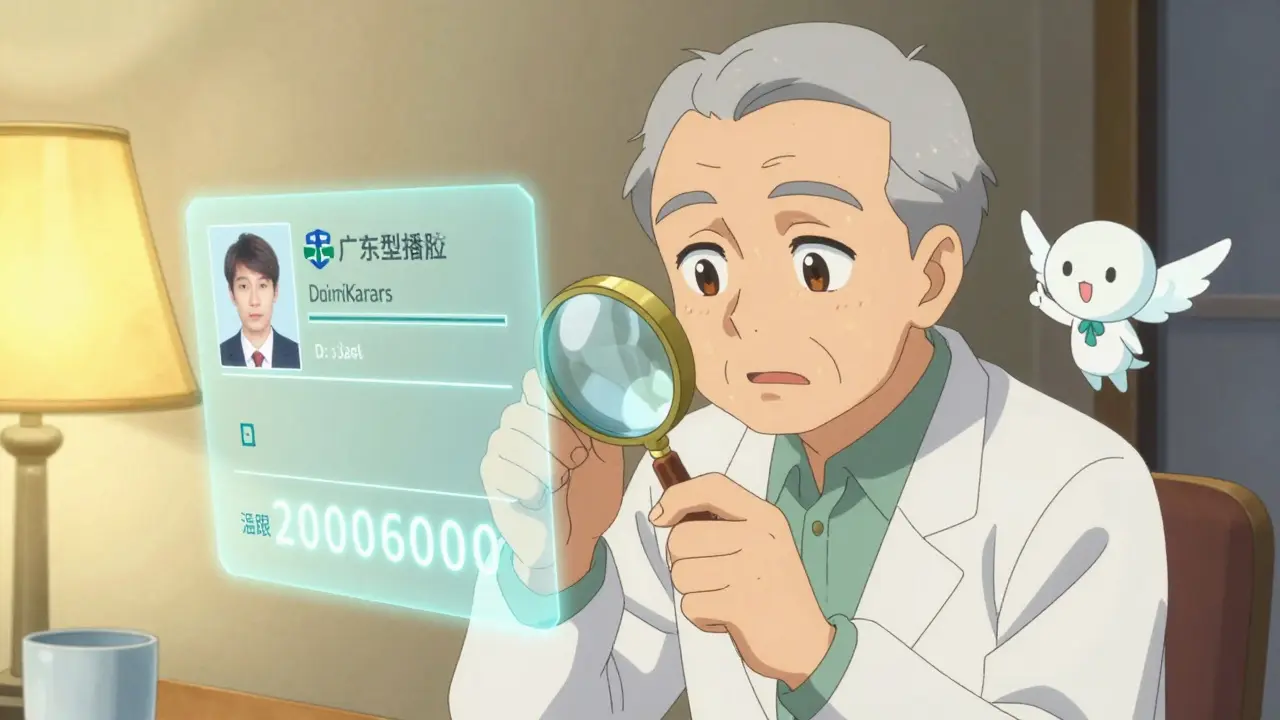
- Magnifying glass or phone flashlight - If the print is too small, ask the pharmacy for a large-print label. Eighty-two percent of pharmacies provide this for free.
- Ask the pharmacist to spell names - If the prescriber’s name is unusual, have them say it out loud. “Is that ‘S-m-i-t-h’ or ‘S-m-y-t-h’?”
- Take a photo - Snap a picture of the label when you get it. Store it in your phone. That way, you can compare it next time you refill.
What’s Changing in 2025
The FDA is testing QR codes on labels that link to digital verification pages. Early results show a 19% improvement in accuracy. But here’s the catch: they’re not replacing physical labels. They’re adding another layer. Also, starting in 2025, all member pharmacies of the American Society of Health-System Pharmacists (ASHP) must use double-verification for high-risk medications like insulin, blood thinners, and opioids. That means two pharmacists will check the label before dispensing. That’s good. But it doesn’t mean you can skip your own check. The FDA’s 2024-2027 plan aims to get 75% of U.S. adults verifying their prescriber info-up from 62%. That’s progress. But it still means nearly one in three people aren’t checking. Don’t be one of them.Real Stories, Real Results
A 71-year-old woman in Ohio noticed her diabetes med had a different prescriber name on the refill label. She called the pharmacy. Turns out, someone else’s prescription had been accidentally filled under her name. The right med was in her bottle-but the wrong person’s name was on the label. She saved herself from a dangerous mix-up. A man in Texas found his blood pressure medication had been switched to a different drug entirely. The pharmacy had filled a similar-sounding prescription. He caught it because he checked the prescriber’s NPI number against his records. Patients who verify their labels report 27% fewer medication errors and 31% better adherence to their treatment plans. That’s not just safer-it’s cheaper, too. Fewer ER visits, fewer hospital stays.Final Reminder
No one else will check your label for you. Not your doctor. Not your pharmacist. Not your family. You are the last line of defense. And it only takes 60 seconds. Before you take your next pill, pause. Look at the label. Confirm the name. Confirm the pharmacy. Confirm the number. If it doesn’t feel right, trust that feeling. Call. Ask. Double-check. Your health isn’t a gamble. Your medication label isn’t a suggestion. It’s your safety net. Make sure it’s working.What if the prescriber name on my label doesn’t match the doctor I saw?
Call the pharmacy immediately using the number on the label. Ask to speak to the pharmacist and explain the mismatch. It could be a simple data entry error, or it could mean you received someone else’s prescription. Never take the medication until you confirm it’s correct. You can also contact your doctor’s office to verify the prescription was issued to you.
Is it normal for the pharmacy name to be different from where I picked it up?
Yes, if you used a mail-order pharmacy or a specialty pharmacy that partners with your local store. For example, your local CVS might fill your prescription through Express Scripts, and the label will show the mail-order pharmacy’s name. But if you didn’t order mail-order and see a name you don’t recognize, ask the pharmacist why. That’s a red flag.
Can I trust the information on my pharmacy app instead of the physical label?
No. Pharmacy apps can be outdated, glitchy, or linked to the wrong account. A 2023 study found that physical label verification had a 70% lower error rate than app-based verification. Always check the printed or paper label first. Use the app as a backup, not your only source.
What should I do if the pharmacy refuses to fix an error?
Contact your prescriber directly to confirm the prescription was issued to you. If the issue isn’t resolved, file a report with the FDA’s MedWatch program. You can do this online or by phone. Your report helps improve safety for everyone. You have the right to safe medication.
Are there free tools to help me track my prescriptions?
Yes. Most major pharmacy chains-CVS, Walgreens, Rite Aid-offer free digital medication records in their apps. You can also use the MyMedications app from the FDA or the Personal Health Record tool from MyHealthRecord.gov. Write down your meds, prescribers, and pharmacy info, and update it every time you get a new prescription.






Mussin Machhour
December 25, 2025 at 17:54
Just checked my last prescription label and caught a mismatched prescriber name-turned out it was a typo from the e-script. Called the pharmacy, they apologized and fixed it in 10 minutes. Seriously, take 30 seconds. Your life isn’t worth gambling over a typo.