The Connection Between Salt and Your Inner Ear
Why does salt matter so much for your ears? It comes down to a fluid called endolymph. In a healthy ear, this fluid stays at a steady level. With Meniere's, too much fluid builds up-a condition called Endolymphatic Hydrops-which puts pressure on the delicate structures of the inner ear. Sodium acts like a sponge in your body. When you eat too much salt, your body holds onto extra water to dilute it. This extra fluid doesn't just stay in your tissues; it increases the pressure in the endolymphatic sac. Think of it like a water balloon that is being overfilled; eventually, the pressure causes a "leak" or a surge, which triggers a vertigo attack. By restricting sodium, you're essentially letting the air out of that balloon, keeping the fluid levels stable and reducing the frequency of attacks.Setting Your Sodium Limits
If you're starting a Meniere's diet, the magic number is usually between 1,500 and 2,000 mg of sodium per day. To put that in perspective, that's about 3/4 to 1 teaspoon of table salt for the entire day. Some doctors, like Dr. Richard Miyashita, argue that keeping sodium under 3,000 mg is the baseline, but recent clinical evidence suggests the lower 1,500 mg mark is where the real benefits happen. A 2024 study published in Acta Otolaryngologica showed that patients who stuck to 1,500 mg of sodium saw a significant jump in their hearing thresholds and a massive drop in their dizziness scores. It's not just about avoiding the salt shaker; it's about a consistent, low-level intake that prevents "spikes" in fluid pressure.| Guideline/Source | Daily Sodium Limit | Goal/Outcome |
|---|---|---|
| Standard Clinical Consensus | 1,500 - 2,000 mg | General symptom reduction |
| Acta Otolaryngologica (2024) | 1,500 mg | Improved hearing & less vertigo |
| Miyashita et al. | Under 3,000 mg | Activation of ion transport |
| American Heart Association | 1,500 - 2,300 mg | Overall cardiovascular and ear health |
The Secret to Fluid Balance: Hydration
One of the biggest mistakes people make is cutting salt but then stopping drinking water. You might think, "If I want less fluid in my ear, I should drink less water," but that is actually counterproductive. When you get dehydrated, your body panics and releases a hormone called Aldosterone. This hormone tells your kidneys to hold onto salt and water, which can actually make the fluid buildup in your ear worse. The goal is "abundant and consistent" hydration. A precise rule of thumb from recent research suggests aiming for about 35 ml of water per kilogram of your body weight. For example, if you weigh 70 kg, you should aim for roughly 2.4 liters of water a day. By keeping your water intake steady, you trick your body into feeling safe, preventing the aldosterone spikes that lead to fluid retention in the inner ear.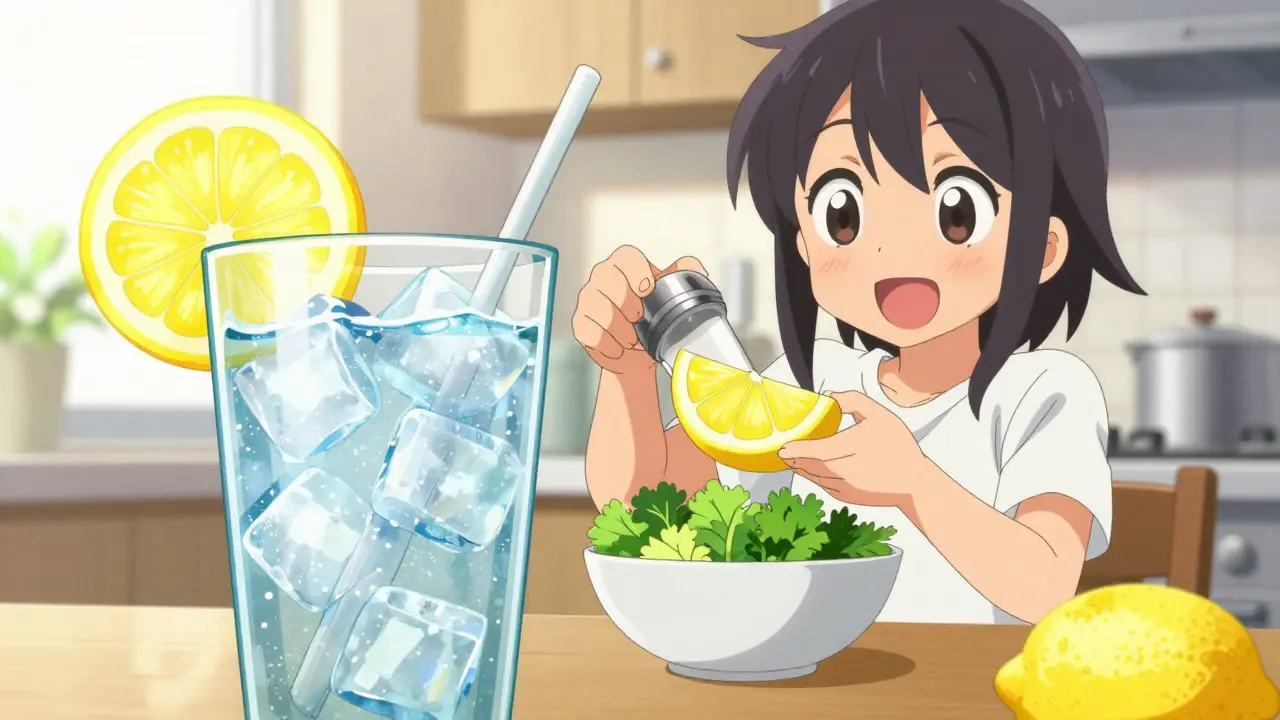
Practical Tips for Living Low-Sodium
Cutting salt is hard because it's hidden everywhere. About 77% of the sodium we eat comes from processed and restaurant foods, not the salt we add at the table. Here is how to actually make this work in your daily life:- Audit the Pantry: Toss the soy sauce, ketchup, mustard, and Worcestershire sauce. These are sodium bombs. Replace them with lemon juice, apple cider vinegar, or salt-free herb mixes.
- The 400 mg Rule: When buying canned or frozen goods, look for labels that say "low sodium." Aim for items with less than 400 mg of sodium per serving.
- Dining Out: Most restaurants over-salt everything. Don't be afraid to ask for your meal "without added salt" or ask for the dressing on the side. Avoid fast food entirely; a single burger can often exceed your entire daily limit.
- Snack Smarter: Look for snacks that have 50-80 mg of sodium or less per serving. Watch those serving sizes-they are almost always smaller than you think.
Beyond Salt: Caffeine and Alcohol
While sodium is the star of the show, Caffeine and Alcohol are the supporting actors. Both of these substances can constrict the blood vessels in your inner ear, reducing blood flow and potentially triggering an attack. If you notice that a second cup of coffee or a glass of wine precedes a dizzy spell, it's time to cut them back. Many people find that eliminating these triggers, combined with the low-salt diet, provides a much more stable environment for the inner ear.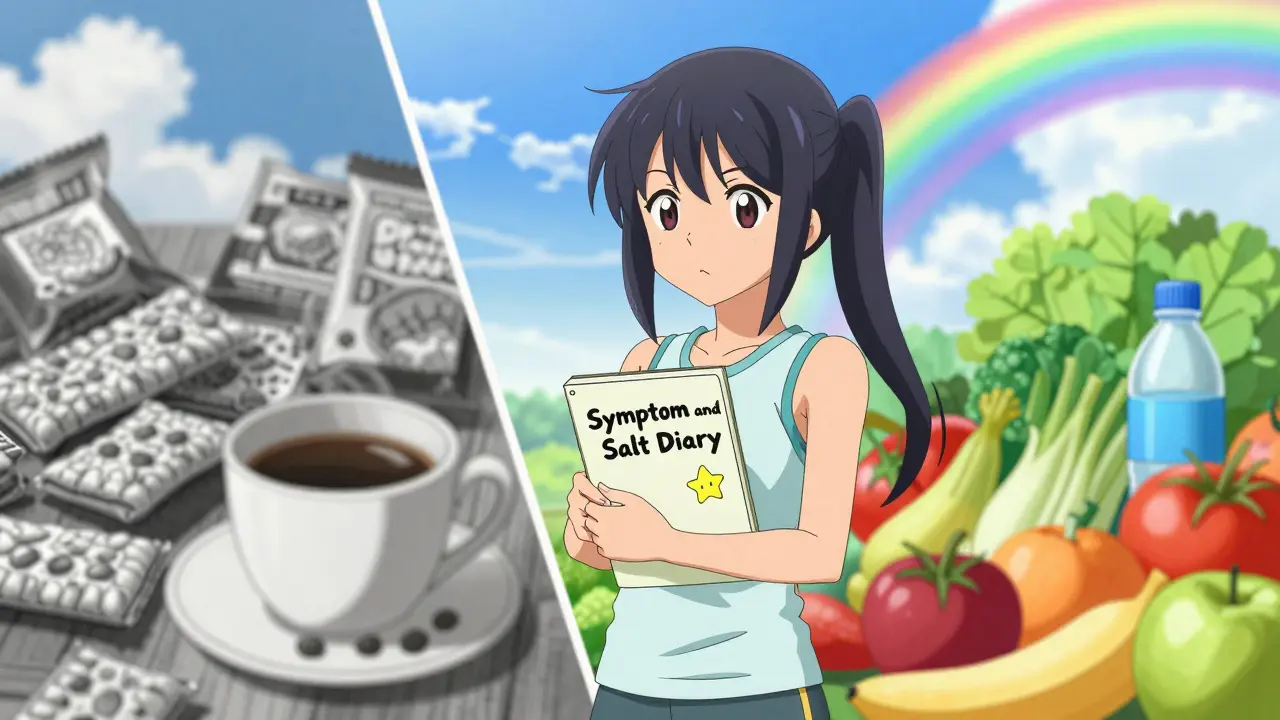
Diet vs. Medication: Which is Better?
Many patients are prescribed Diuretics (like hydrochlorothiazide) to flush out excess fluid. While these work for about 50-70% of people, they come with a price: kidney stones, dehydration, and electrolyte imbalances. Dietary restriction is essentially a natural diuretic. It has almost zero side effects and costs nothing but a few changes in your grocery list. While some people find it hard to maintain-about 22% struggle with the taste of low-salt food-those who do stick to it often see results similar to medication without the pharmacy bill or the risk of dehydration. For severe cases, doctors might move to intratympanic steroid injections or gentamicin, but these are usually reserved for when diet and meds fail.Can I use salt substitutes?
Be careful. Many salt substitutes replace sodium with potassium. While this is better for the ear, it can be dangerous for people with kidney issues or those taking certain blood pressure medications. Always check with your doctor before switching to a potassium-based substitute.
How long does it take for the diet to work?
It's not an overnight fix. While some feel a difference in a few weeks, a major study showed the most significant improvements in hearing and vertigo after 6 months of strict adherence. Consistency is more important than perfection for one or two days.
Does drinking a lot of water cause more fluid in my ears?
Actually, the opposite is true. Proper hydration prevents your body from triggering the renin-angiotensin-aldosterone system, which is what actually causes the body to retain salt and water in the inner ear. Stay hydrated to stay stable.
Is 2,000 mg of sodium really a strict limit?
In the context of a modern diet, yes. The average person eats way more than that. However, by focusing on fresh foods and avoiding processed snacks, it's very achievable. It's about shifting your habits rather than starving yourself of flavor.
What should I do if I accidentally eat a high-salt meal?
Don't panic, but do increase your water intake for the next 24 hours. This helps your kidneys flush out the excess sodium more efficiently and can help prevent the pressure buildup that leads to a vertigo attack.