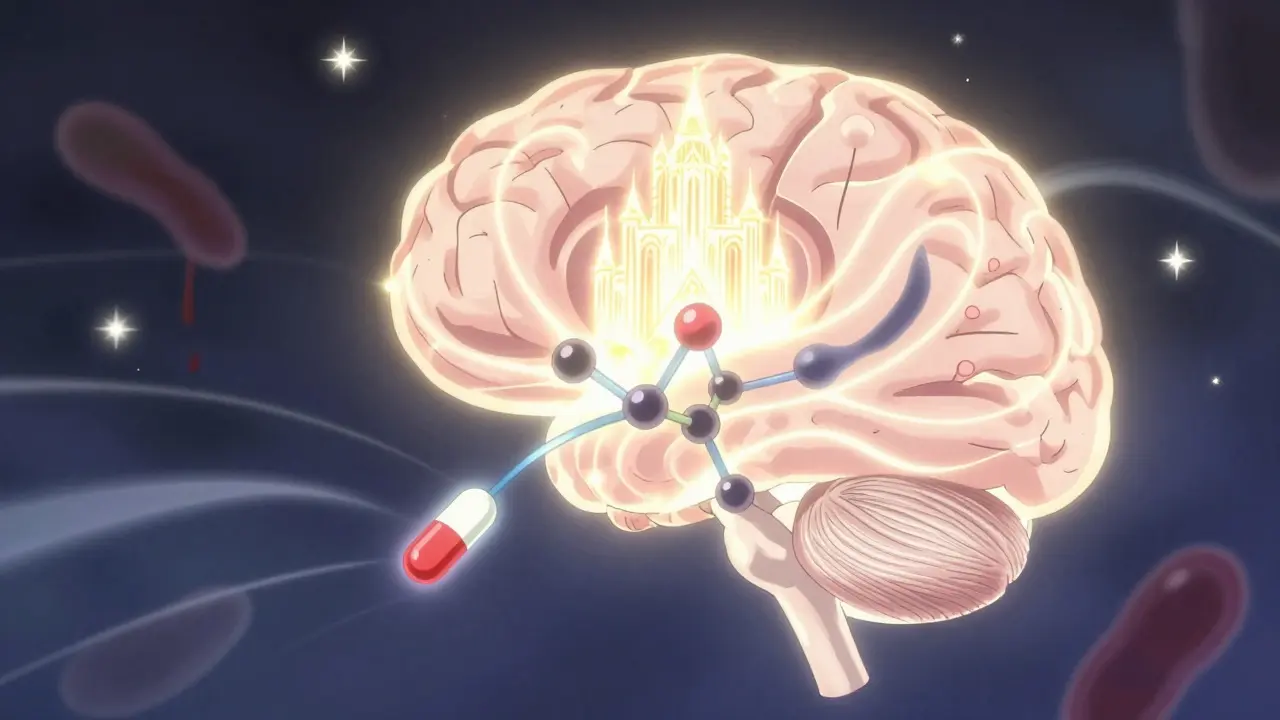
People take opioids because they work-really well. A broken bone, surgery, or advanced cancer pain can feel unbearable until a pill like oxycodone or morphine kicks in. But here’s the hidden truth: the same mechanism that relieves pain also sets you up for danger, even if you follow the prescription exactly. Tolerance builds. Dependence sets in. And overdose can happen without warning-especially when you think you’re safe.
How Opioids Work (And Why They’re So Dangerous)
Opioids bind to special receptors in your brain and spinal cord, mainly the mu-opioid receptors. When they lock in, they reduce pain signals and flood your system with dopamine-the chemical behind pleasure and reward. That’s why people feel calm, warm, even euphoric. But over time, your brain adapts. It doesn’t like the constant flood of dopamine. So it starts to downregulate: fewer receptors, less sensitivity. You need more of the drug to get the same effect. That’s tolerance.
And here’s the trap: tolerance to pain relief and euphoria develops faster than tolerance to respiratory depression-the life-threatening side effect that slows or stops your breathing. Even if you’ve been taking high doses for months, your body hasn’t fully adjusted to the danger. That’s why someone who’s been on opioids for years can still overdose. Their brain still thinks it’s okay to slow down breathing. It’s not.
Tolerance Isn’t Just About Taking More
Tolerance isn’t just a number on a prescription pad. It’s a biological rewrite. Chronic opioid use triggers molecular changes inside nerve cells. Receptors get phosphorylated, internalized, and sometimes destroyed. Neuroinflammation kicks in, especially in areas like the periaqueductal grey-part of your brain’s pain control system. Glutamate signaling goes haywire. Your body starts producing more enzymes to break down the drug faster. All of this means you need higher doses just to feel normal.
Studies show that within six months of starting chronic opioid therapy, most patients need a 25-50% increase in dose to keep pain under control. That’s not failure-it’s biology. But the problem is, the higher the dose, the closer you are to the edge of overdose. And that edge doesn’t move much for respiratory depression.
Dependence: When Your Body Demands the Drug
Tolerance leads to dependence. This isn’t addiction-it’s physical. Your nervous system has rewired itself around the presence of opioids. Without them, you don’t just feel bad-you go through withdrawal. Symptoms include nausea, vomiting, muscle aches, sweating, anxiety, insomnia, and intense cravings. It’s not just uncomfortable. For many, it’s terrifying.
Dependence can happen even with short-term use. Someone on a two-week course of hydrocodone after surgery can experience withdrawal if they stop cold turkey. That’s why doctors taper doses instead of cutting them off abruptly. But here’s the catch: dependence doesn’t mean you’re addicted. You might take your pills exactly as prescribed, never misuse them, yet still be physically dependent. That’s why stopping opioids isn’t a matter of willpower-it’s a medical process.
Overdose: The Silent Killer
Overdose happens when opioids overwhelm your brainstem’s ability to control breathing. You stop breathing. Oxygen drops. Brain damage starts in minutes. Death follows quickly if no one intervenes.
In 2021, over 80,000 people in the U.S. died from opioid overdoses. Most of those deaths weren’t from prescription pills. They were from fentanyl-50 to 100 times stronger than morphine. Illicit fentanyl is mixed into counterfeit pills that look like oxycodone or Xanax. People think they’re taking a regular pill. They’re not.
Even among those prescribed opioids, overdose risk rises with dose. Taking more than 100 morphine milligram equivalents (MME) per day increases overdose risk by five times compared to doses under 20 MME. And combining opioids with alcohol, benzodiazepines, or sleep aids? That’s a recipe for disaster. All of them depress breathing. Together, they’re deadly.
The Relapse Trap: Why Former Users Are Most at Risk
One of the most misunderstood facts about opioid overdose is this: people who’ve been clean are at higher risk than those still using.
When someone stops using opioids, their tolerance drops fast. Within weeks, their body forgets how to handle even moderate doses. But their cravings? Those don’t fade. So when they relapse, they often take the same dose they used before-sometimes higher. Their body can’t handle it. Their breathing shuts down.
Studies show 65% of opioid overdose deaths occur in people with a history of prior treatment. Reddit users share stories like: “After six months clean, I used my old dose. Paramedics said I was clinically dead for four minutes.” Harm reduction groups report that 87% of naloxone reversals since 2018 involved people who had been abstinent.
This isn’t about poor choices. It’s about biology. Your brain remembers the high. Your body forgot how to survive it.
Why Some Opioids Are Safer Than Others
Not all opioids are created equal. Fentanyl, heroin, oxycodone, and morphine are full agonists-they fully activate opioid receptors. That means no ceiling on respiratory depression. More dose = more danger.
Buprenorphine is different. It’s a partial agonist. It activates receptors just enough to ease withdrawal and cravings, but not enough to cause dangerous breathing suppression. There’s a ceiling effect. Even at high doses, it won’t stop your breathing the way fentanyl does. That’s why it’s used in Medication-Assisted Treatment (MAT). It saves lives.
Methadone is a full agonist, but it’s long-acting and taken once a day under supervision. That reduces the risk of rapid highs and crashes, which are common with heroin. But methadone still carries overdose risk, especially if mixed with other depressants or if the dose isn’t carefully managed.
What’s Changing Now
The opioid crisis isn’t static. In 2023, the U.S. passed the Mainstreaming Addiction Treatment (MAT) Act. It removed the old “X-waiver” requirement, meaning any licensed doctor can now prescribe buprenorphine. Before, only 150,000 providers could. Now, it’s over 1.1 million. That’s a game-changer.
Pharmaceutical companies are also being forced to act. The FDA now requires opioid manufacturers to fund education on tolerance and overdose risk. And naloxone-this life-saving nasal spray that reverses overdoses-is now available over the counter in most states. Communities that distribute naloxone widely have seen fatal overdoses drop by 34%.
Research is moving toward “biased agonists”-new drugs that block pain without triggering respiratory depression. Early results are promising. But until then, the tools we have are naloxone, buprenorphine, and awareness.
What You Need to Know
If you’re prescribed opioids:
- Take them exactly as directed. Don’t increase the dose without talking to your doctor.
- Never mix them with alcohol, benzodiazepines, or sleep aids.
- Ask about naloxone. Keep it in your home. Teach someone how to use it.
- If you’ve been on them for more than a few weeks, don’t stop suddenly. Work with your doctor on a taper plan.
If you or someone you know is recovering:
- Assume your tolerance is gone-even after months clean.
- Never use alone. Have someone nearby who can call 911.
- Carry naloxone. It’s free in many places.
- Consider MAT. Buprenorphine reduces overdose risk by half.
Opioids aren’t evil. They’re powerful tools. But power without understanding is dangerous. Tolerance doesn’t protect you. Dependence isn’t weakness. Overdose doesn’t care if you’re a patient, a parent, or a former user. It only cares if you’re breathing.
Can you become dependent on opioids even if you take them as prescribed?
Yes. Physical dependence happens when your body adapts to the presence of the drug. It doesn’t mean you’re addicted. You can be dependent on a medication like insulin or blood pressure pills without having a substance use disorder. With opioids, dependence means you’ll experience withdrawal symptoms if you stop suddenly. That’s why doctors taper doses instead of cutting them off.
Is fentanyl more dangerous than prescription opioids?
Yes-by a huge margin. Fentanyl is 50 to 100 times stronger than morphine. A dose as small as two milligrams can be fatal. Most fentanyl-related deaths now come from counterfeit pills that look like oxycodone or Xanax. People think they’re taking a regular pill. They’re not. Even experienced users can overdose on fentanyl because its potency overwhelms the body’s ability to adapt.
Why do people overdose after being clean for months?
Tolerance drops quickly after stopping opioids-sometimes within weeks. But cravings and behaviors don’t. So when someone relapses, they often take their old dose-or even higher-because they think they can handle it. Their body can’t. That’s why former users are at higher risk than new users. Studies show 65% of opioid overdose deaths occur in people with prior treatment history.
Can naloxone reverse any opioid overdose?
Naloxone reverses overdoses caused by opioids-including heroin, fentanyl, oxycodone, and morphine. It works by kicking the opioid off the brain’s receptors and restoring breathing. But it doesn’t work on non-opioid drugs like cocaine or alcohol. One dose may not be enough for strong opioids like fentanyl. That’s why it’s critical to call 911 even after giving naloxone. You may need a second dose.
Is buprenorphine safer than methadone for treating opioid dependence?
Yes, in terms of overdose risk. Buprenorphine is a partial opioid agonist, meaning it has a ceiling effect on respiratory depression. Even at high doses, it’s unlikely to stop breathing. Methadone is a full agonist and carries higher overdose risk, especially if misused or mixed with other depressants. But both are effective for treating dependence. Buprenorphine is easier to access now since the X-waiver was removed in 2023.
What should I do if I think I’m becoming dependent on opioids?
Talk to your doctor immediately. Don’t wait until you’re struggling to stop. Ask about tapering options. Request naloxone. Consider Medication-Assisted Treatment (MAT) with buprenorphine if you’re having trouble cutting back. Dependence isn’t a failure-it’s a medical condition. And it’s treatable. The sooner you act, the safer you’ll be.




Sarah Mailloux
January 15, 2026 at 05:51
This hit me hard. My cousin was prescribed oxycodone after a car accident and ended up in rehab two years later. Nobody warned her that tolerance could sneak up like that.