Nail Discoloration: Causes, Treatments, and What You Need to Know
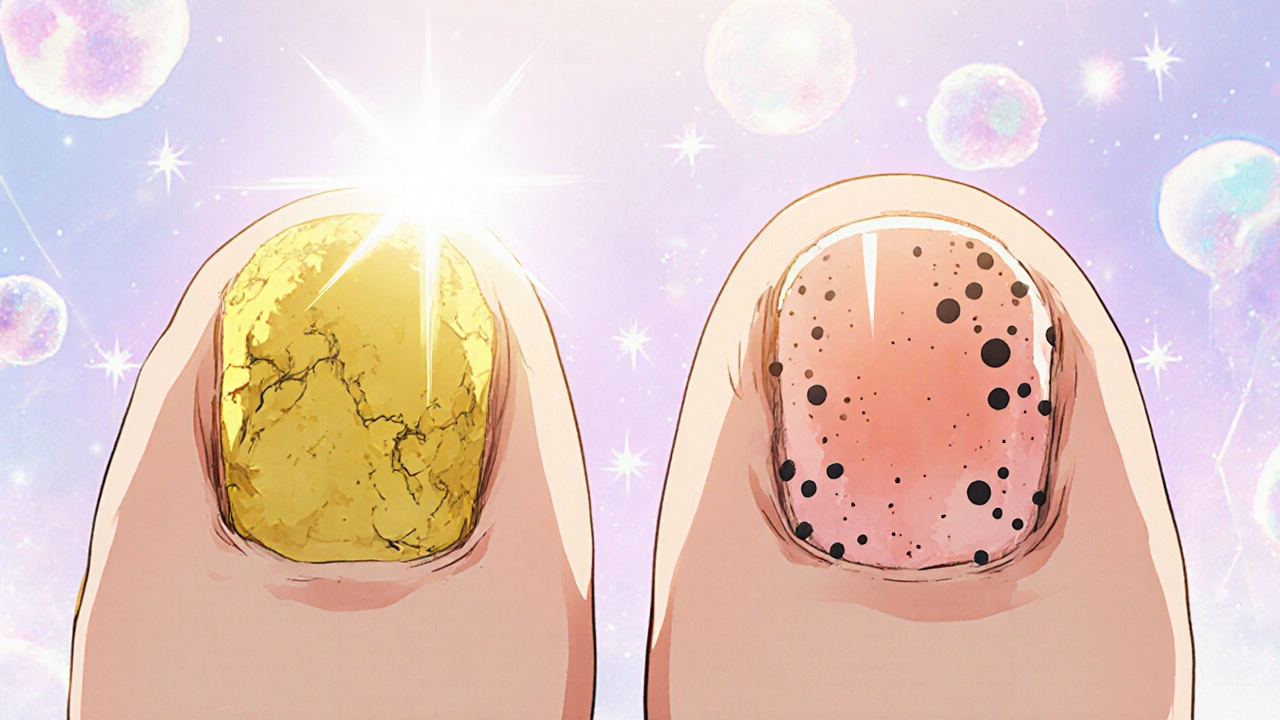
When your nails turn yellow, brown, or white, it’s not just a cosmetic issue—it’s a signal. nail discoloration, a visible change in nail color that often points to an underlying condition. Also known as onychochromia, it’s more common than you think and often linked to something treatable. Most people assume it’s just dirt or aging, but the truth is more complex. A simple stain from nail polish can look like a fungal infection, and a dark streak might be harmless—or a sign of melanoma. You can’t guess your way out of this. You need to know what you’re looking at.
fungal nail infection, a common cause of nail discoloration, especially in older adults or people with sweaty feet. Also known as onychomycosis, it’s responsible for about half of all nail changes you’ll see. It starts as a tiny white or yellow spot under the tip of the nail and slowly spreads. Left untreated, the nail thickens, crumbles, or separates from the skin. The good news? It’s not contagious in the way colds are, but it won’t go away on its own. antifungal treatment, whether oral pills like terbinafine or topical solutions. Also known as nail fungus therapy, it’s the only way to clear a true fungal infection. But here’s the catch: treatment takes months. You need patience, consistency, and sometimes a doctor’s prescription.
Not all nail discoloration is fungal. Trauma—like dropping something on your toe—can cause a dark bruise under the nail that looks scary but fades over time. Psoriasis can make nails pitted or lift off the nail bed. Even some medications, like chemotherapy drugs, can change nail color. And yes, smoking can stain your nails yellow over years. That’s why self-diagnosis fails. You need to look at the whole picture: how fast it changed, if it hurts, if other nails are affected, and if you have other health issues like diabetes.
What you’ll find in the articles below isn’t just a list of remedies. It’s a practical guide to understanding what’s really going on with your nails. You’ll see how nail discoloration connects to things like fungal infections, medication side effects, and even systemic diseases. Some posts compare old-school treatments like griseofulvin with modern options. Others explain how to tell the difference between a harmless stain and something that needs a biopsy. You’ll learn what to ask your doctor, what tests actually matter, and how to avoid wasting money on useless creams.
This isn’t about quick fixes. It’s about knowing when to act—and when to wait. Whether you’re dealing with a single discolored nail or multiple changes across your hands and feet, the information here gives you the clarity to make smart choices. No fluff. No hype. Just what works, what doesn’t, and why.
Skin Care and Dermatology
11
Comments
Nail Disorders: How to Tell Fungal Infections Apart from Psoriatic Changes
Fungal nail infections and psoriatic nail changes look similar but require totally different treatments. Learn the key signs, diagnostic tests, and effective treatments for each condition to avoid misdiagnosis and wasted time.
About
Skin Care and Dermatology
Latest Posts


Cumulative Drug Toxicity: How Side Effects Build Up Over Time
By Marcel Kornblum Jan 1, 2026

Exercise and Constipation: How Physical Activity Can Improve Your Gut Health
By Marcel Kornblum May 6, 2023

How Medications Cross the Placenta and Affect the Fetus
By Marcel Kornblum Dec 26, 2025