When a brand-name drug’s patent runs out, the market doesn’t just flip open for generic competitors-it gets complicated. Brand pharmaceutical companies don’t just sit back and watch their profits vanish. Instead, many launch something called an authorized generic. It’s not a traditional generic. It’s not the brand drug either. It’s the exact same pill, same capsule, same ingredients-just without the brand name on the label. And it’s one of the most strategic moves in modern pharmacy.
What Exactly Is an Authorized Generic?
An authorized generic is a version of a brand-name drug made by the original manufacturer and sold under a different label. It’s the same medicine you’ve been taking, down to the last inactive ingredient. No bioequivalence studies needed. No separate FDA approval. It’s marketed under the original New Drug Application (NDA), not an Abbreviated New Drug Application (ANDA). That’s why it’s not listed in the FDA’s Orange Book, even though it’s therapeutically identical. Take Colcrys, for example. The brand version is made by AstraZeneca. But you can also buy an authorized generic made by Prasco Laboratories-same active ingredient (colchicine), same fillers, same coating. The only difference? The label says "colchicine tablets" instead of "Colcrys." Same goes for Concerta (methylphenidate ER). The brand is made by Janssen. The authorized generic? Made by Watson/Actavis, but it’s the exact same product straight off the same production line. Even the color and markings might be slightly different-just enough to distinguish packaging, not chemistry.Why Do Brand Companies Do This?
It’s not altruism. It’s business. Under the Hatch-Waxman Act, the first company to file a generic version of a drug gets 180 days of exclusive market access. That’s a goldmine. But if the brand company launches its own authorized generic during that window, it splits the market. The first generic maker doesn’t get to corner the entire discount market. Instead, they’re now competing with a version of the same drug that costs almost as little. Data from Health Affairs (2022) shows that between 2010 and 2019, there were 854 authorized generic launches in the U.S. The peak? 2014. That’s when a wave of major patents expired-drugs like Lipitor, Plavix, and Singulair. Brand companies didn’t wait. They launched authorized generics within months, often before the first generic even hit shelves. The result? Prices drop faster. The Federal Trade Commission found that in markets with authorized generics, prices during the 180-day exclusivity period were 15-20% lower than in markets without them. That’s good for consumers. But it’s also good for the brand company. They keep a slice of the market, avoid a total revenue cliff, and maintain relationships with pharmacies and insurers.How Is This Different From a Regular Generic?
This is where confusion sets in. A traditional generic only needs to prove it has the same active ingredient and is bioequivalent to the brand. It doesn’t have to match the fillers, dyes, or coatings. That’s why some patients report different side effects or effectiveness with generics-especially with narrow therapeutic index drugs like levothyroxine or warfarin. An authorized generic doesn’t have that problem. It’s the same formulation. Same manufacturing process. Same batch. The only thing changed is the label. Think of it like this: A regular generic is a copycat. An authorized generic is the original wearing a disguise. For patients on drugs where tiny differences matter-like seizure meds, thyroid hormones, or blood thinners-authorized generics can be a safer switch. Pharmacists often see patients who failed on traditional generics but stabilized perfectly on the authorized version.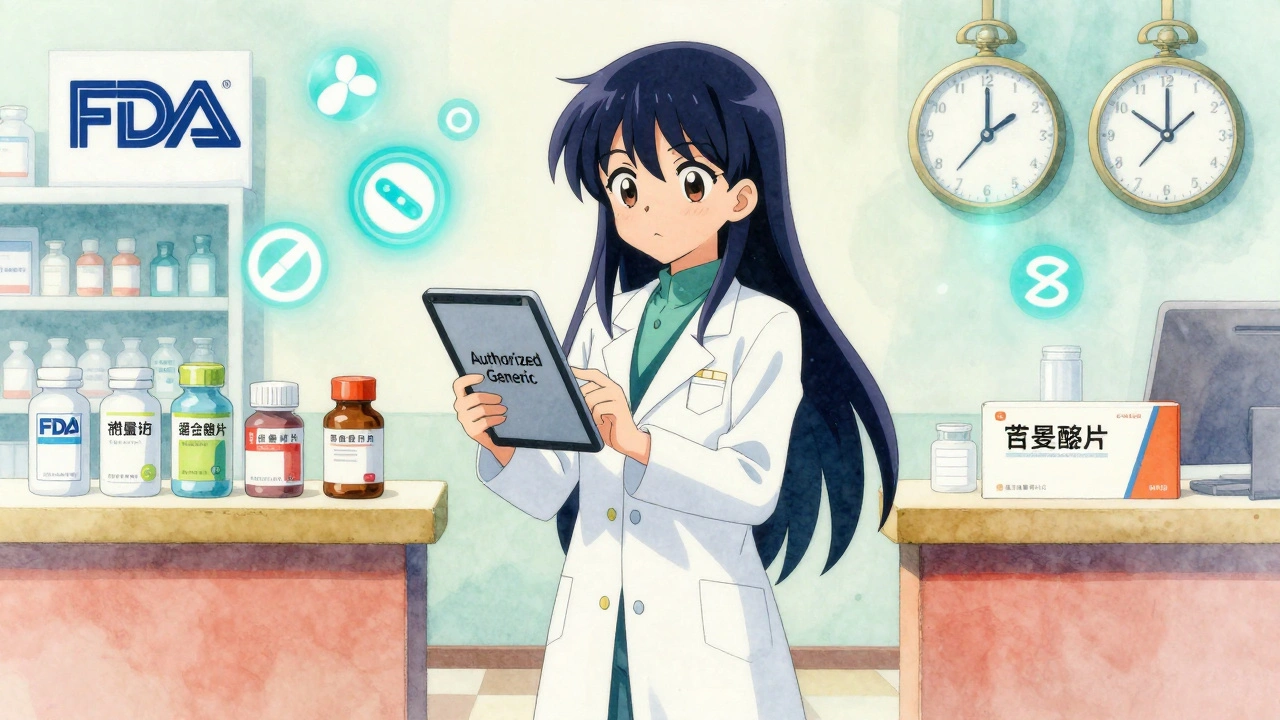
Who Benefits? Who Loses?
The FTC says consumers win. Lower prices during the critical 180-day window mean more people get affordable meds faster. Pharmacies and PBMs (like Express Scripts and OptumRx) like them too. They’re easier to manage because they’re the same drug. No need to re-educate patients. No clinical risk. Plus, they’re often preferred on formularies because they’re seen as higher quality. But not everyone’s happy. The Generic Pharmaceutical Association (GPhA) argues that authorized generics delay real competition. If the first generic company knows the brand will drop its own version right away, they might delay their launch-or not even bother. That’s a problem if you’re a small generic manufacturer trying to break in. And then there’s the patient confusion. A 2023 survey by Pharmacy Times found that 68% of pharmacists say patients don’t understand what an authorized generic is. One patient reviewed an authorized version of Singulair and wrote: “I got this ‘generic’ but it looks identical to the brand I used before-is this actually generic?” The answer? Yes. It’s a generic. Just not the kind most people expect.How Do Pharmacies Handle Them?
It’s messy. Since authorized generics aren’t in the Orange Book, pharmacy systems can’t automatically flag them as interchangeable. A technician might see “celecoxib” and think it’s a standard generic. But if it’s Greenstone’s version (Pfizer’s authorized generic of Celebrex), it’s actually the brand drug under a different name. That leads to billing errors. A 2021 survey by the National Community Pharmacists Association found that 41% of independent pharmacies had issues with insurance claims for authorized generics. Sometimes the system rejects them. Sometimes they’re priced wrong. To fix this, some pharmacy software like Epic Systems added special flags in their 2021 update. Now, when an authorized generic is dispensed, the system highlights it as “Authorized Generic - Same as Brand.” That cut identification errors by 67%. Training matters too. AmerisourceBergen’s 2022 materials show that 73% of pharmacy techs needed 2-3 weeks of extra training to recognize and counsel patients properly.



![How and Where to Buy Flagyl (Metronidazole) Online in Australia Safely [2025 Guide]](/uploads/2025/08/thumbnail-how-and-where-to-buy-flagyl-metronidazole-online-in-australia-safely-2025-guide.webp)
Shashank Vira
December 1, 2025 at 08:23
Let me just say this with the gravitas of a man who’s read every page of the Federal Register: authorized generics are the pharmaceutical industry’s most elegant form of market manipulation. It’s not competition-it’s camouflage. The FDA’s Orange Book is a relic. The real game is played in the shadows of NDA loopholes, where corporate lawyers outsmart pharmacists and patients alike. This isn’t innovation. It’s intellectual piracy dressed in white coats.