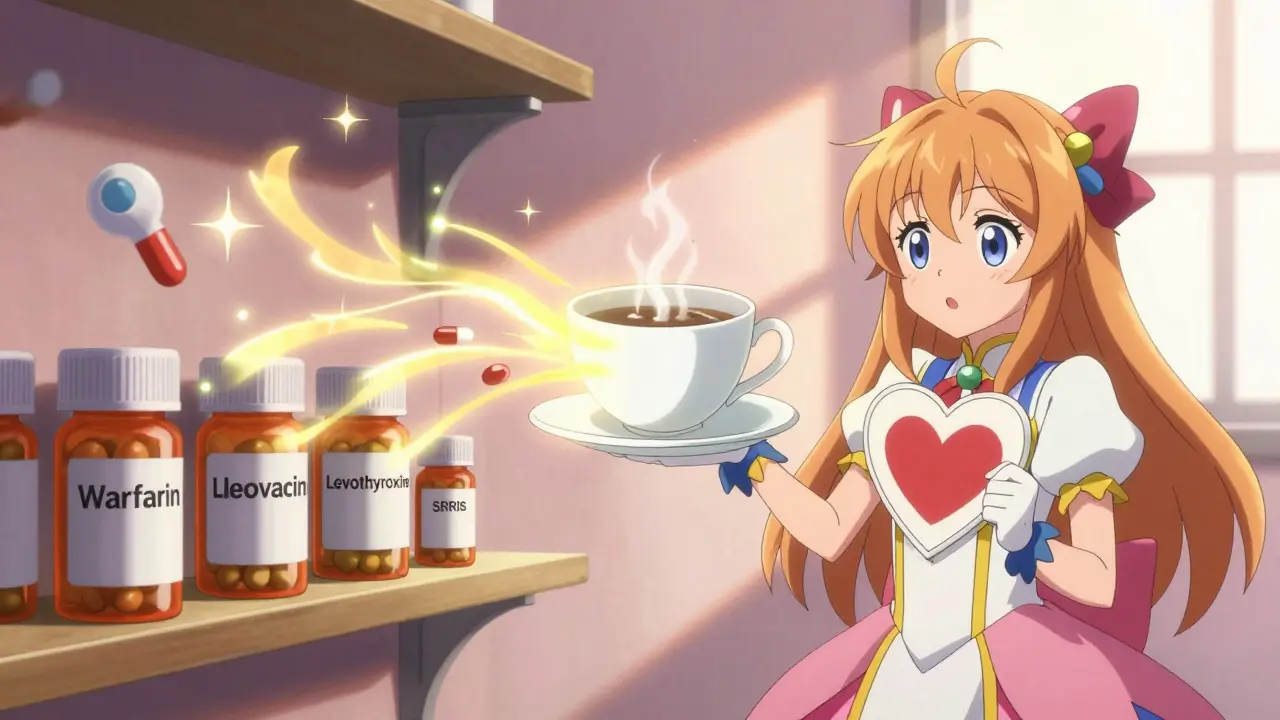
Most people drink coffee without thinking twice. But if you're taking any kind of prescription or over-the-counter medication, that morning cup could be quietly messing with your treatment. Caffeine isn't just a pick-me-up-it's a powerful chemical that interacts with dozens of common drugs, sometimes in ways that are dangerous, even life-threatening.
How Caffeine Changes How Your Medicines Work
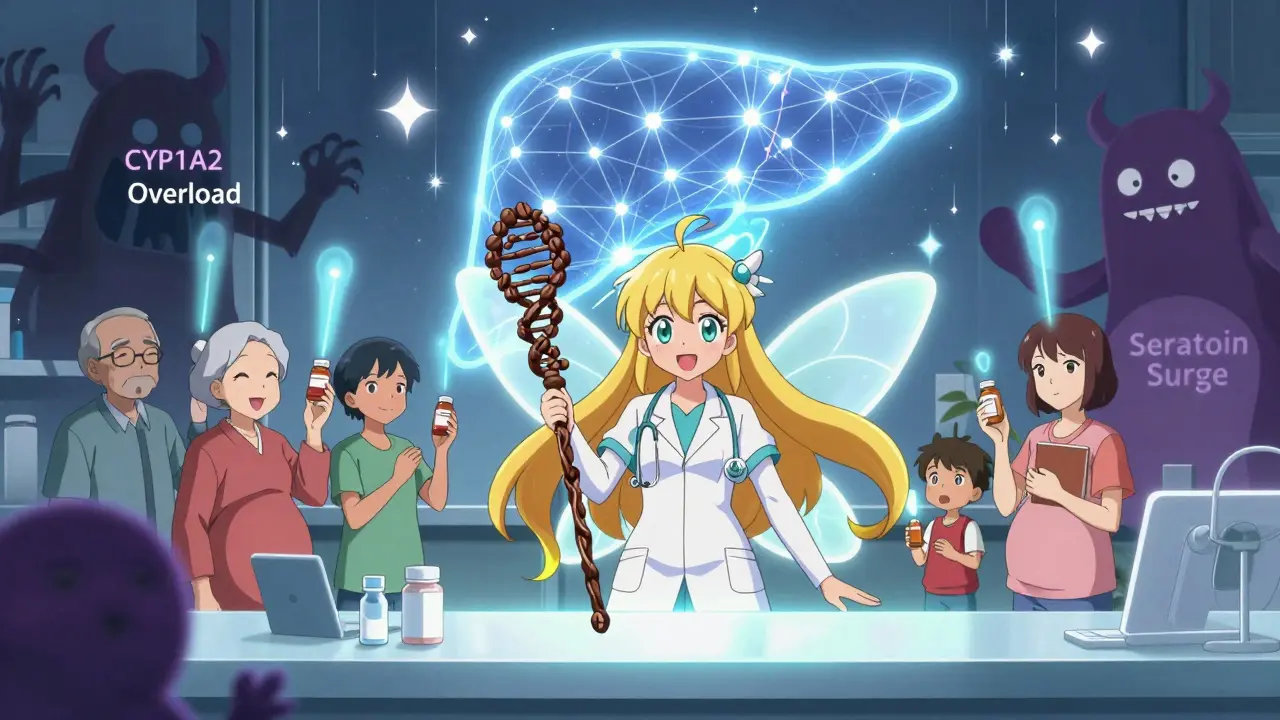
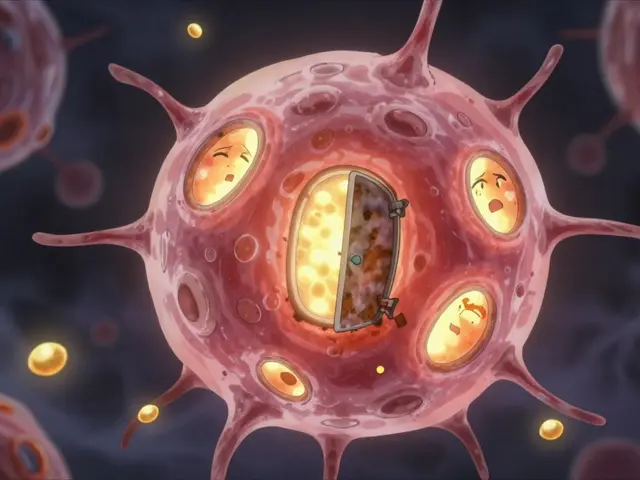
Caffeine doesn't just wake you up. It's metabolized by the same liver enzyme-CYP1A2-that breaks down about 10% of all prescription drugs. When you drink coffee, tea, or an energy drink, caffeine can block that enzyme. That means your body can't clear other drugs as quickly, causing them to build up to toxic levels. Or, it can slow down how well your body absorbs the medicine in the first place.
It's not just about coffee either. Energy drinks pack 80 to 300 mg of caffeine per can-sometimes more than four cups of coffee-and often include other stimulants like taurine or ginseng that add to the risk. Even soda and chocolate contain enough to matter if you're on a sensitive medication.
High-Risk Interactions: The Medications You Can't Ignore
Some drugs are especially dangerous when mixed with caffeine. Here are the top ones you need to know about.
Warfarin and Other Blood Thinners
If you're on warfarin (Coumadin), your INR levels-your blood's clotting time-can spike 15% to 25% within 24 hours of drinking coffee. That means your blood thins too much. One study found 41% of warfarin users who drank more than 200 mg of caffeine daily had INR levels above 4.0, putting them at risk for internal bleeding. Some needed emergency care.
Newer blood thinners like apixaban and edoxaban are less affected, but the European Medicines Agency still warns that more than 300 mg of caffeine daily can increase bleeding risk by 15% to 20%. The FDA says you must keep your caffeine intake consistent. No sudden spikes. No weekend coffee binges.
Levothyroxine (Thyroid Medication)
Drinking coffee with your thyroid pill can cut its absorption by up to 55%. That’s not a small drop-it’s enough to make your TSH levels jump from normal to dangerously high. One patient on Reddit reported their TSH went from 1.8 to 8.7 after taking levothyroxine with coffee for three weeks. Their endocrinologist confirmed it was textbook interference.
The American Thyroid Association says you must wait at least 60 minutes after taking your pill before drinking coffee. Even waiting 30 minutes isn’t enough. If you’re struggling to get your thyroid levels stable, your coffee habit might be why.
Antidepressants
SSRIs like fluoxetine and sertraline can lose up to 33% of their effectiveness if you drink a lot of caffeine. That’s not just theory-63% of users on Drugs.com reported increased anxiety, while 28% felt their depression got worse after starting or increasing coffee.
Fluvoxamine is especially risky. It blocks CYP1A2 even more than caffeine does, so the two can pile up together, raising the chance of serotonin syndrome-a dangerous condition with confusion, rapid heartbeat, and muscle rigidity.
But not all antidepressants react the same. Bupropion (Wellbutrin) doesn’t interact significantly with caffeine. If you're on an SSRI and your symptoms aren't improving, talk to your doctor about your caffeine intake before changing doses.
Heart and Blood Pressure Medications
Verapamil, a calcium channel blocker used for high blood pressure and irregular heartbeat, loses 25% to 30% of its effect when taken with coffee. Harvard Health found that patients who drank coffee within two hours of their dose had significantly higher blood pressure than those who waited.
Even more dangerous: adenosine and dipyridamole, drugs used in cardiac stress tests. If you’ve had coffee, tea, or even chocolate in the past 24 hours, these drugs can fail to work-by up to 90%. That means your doctor can’t properly assess your heart function, and you might need to reschedule the test.
Theophylline (Asthma Medication)
Theophylline and caffeine are chemically almost identical. They share the same metabolic pathway. When you take both, caffeine can push theophylline levels up by 15% to 20%. That’s enough to cause nausea, tremors, fast heartbeat, or even seizures-even if you’re taking the right dose of theophylline.
A 2024 study of 317 asthma patients found 22% developed a heart rate over 100 bpm after drinking coffee. The advice? Limit caffeine to under 100 mg per day-about one small coffee-and watch for signs your body is overloaded.
Pseudoephedrine and Ephedrine (Cold and Decongestants)
Pseudoephedrine in cold medicines already raises your heart rate and blood pressure. Add caffeine, and you get a one-two punch. Dr. John Higgins at UT Southwestern says this combo can spike heart rates by 20 to 30 beats per minute in sensitive people.
Ephedrine is even worse. The Mayo Clinic says combining it with caffeine increases the risk of hypertensive crisis by 47%. In clinical trials, 68% of patients saw systolic blood pressure rise over 30 mmHg. That’s enough to trigger a stroke or heart attack.
Who’s Most at Risk?
Not everyone reacts the same. Genetics play a huge role. Some people have a version of the CYP1A2 gene that breaks down caffeine slowly. Others clear it fast. If you're a slow metabolizer, even one cup of coffee can cause problems.
Older adults, people with liver disease, and those taking five or more medications daily are at higher risk. A 2021 study found these patients were 3.2 times more likely to have dangerous interactions.
And don’t forget: caffeine stays in your system longer if you're pregnant, taking birth control pills, or have a severe liver condition. Its half-life can stretch from 5 hours to over 90 hours in some cases.
What You Can Do Right Now
You don’t have to quit coffee. But you need to be smart.
- Know your meds. Check the label or ask your pharmacist if your drug has a caffeine warning. If it’s on the list above, take it seriously.
- Separate coffee and pills. For thyroid meds, wait 60 minutes. For blood pressure meds, wait 2 hours. For warfarin, keep your intake steady-don’t suddenly drink three cups.
- Track your intake. A standard cup of coffee has 95-200 mg caffeine. An energy drink? 80-300 mg. A soda? 30-50 mg. Write it down for a week.
- Watch your body. If you feel jittery, anxious, have a racing heart, or notice your meds aren’t working like they used to, caffeine might be the culprit.
- Ask your pharmacist. They’re trained to spot these interactions. Bring your full list of meds and supplements every time you refill a prescription.
What’s Changing in 2025 and Beyond
More hospitals are starting to screen for caffeine interactions. Epic Systems rolled out a pilot program in 47 hospitals in April 2025 that cuts interaction-related ER visits by 29%. The FDA now requires interaction warnings on 23% of prescriptions-up from 12% in 2019.
The NIH is funding a $4.7 million study to map how genetic differences affect caffeine-warfarin interactions. By 2028, personalized caffeine advice based on your DNA may become standard.
For now, the best defense is awareness. Most people don’t realize caffeine is a drug. And it’s one that can quietly undo the work of your other medications.
When to Call Your Doctor
Call your doctor if you notice:
- Your medication isn’t working as well as it used to
- You’re feeling more anxious, jittery, or have a racing heart
- Your INR levels are fluctuating without a clear reason
- Your thyroid levels won’t stabilize despite consistent dosing
- You’ve had unexplained bleeding or bruising
Don’t assume it’s just stress or aging. It could be your coffee.




George Bridges
January 10, 2026 at 21:39
I never realized how much my morning coffee could be messing with my meds. I’m on warfarin and drink two cups a day-this post scared me a little, but in a good way. Going to talk to my pharmacist tomorrow and track my intake. Thanks for laying it out so clearly.
Also, just learned that energy drinks are basically caffeine bombs. Never buying those again.