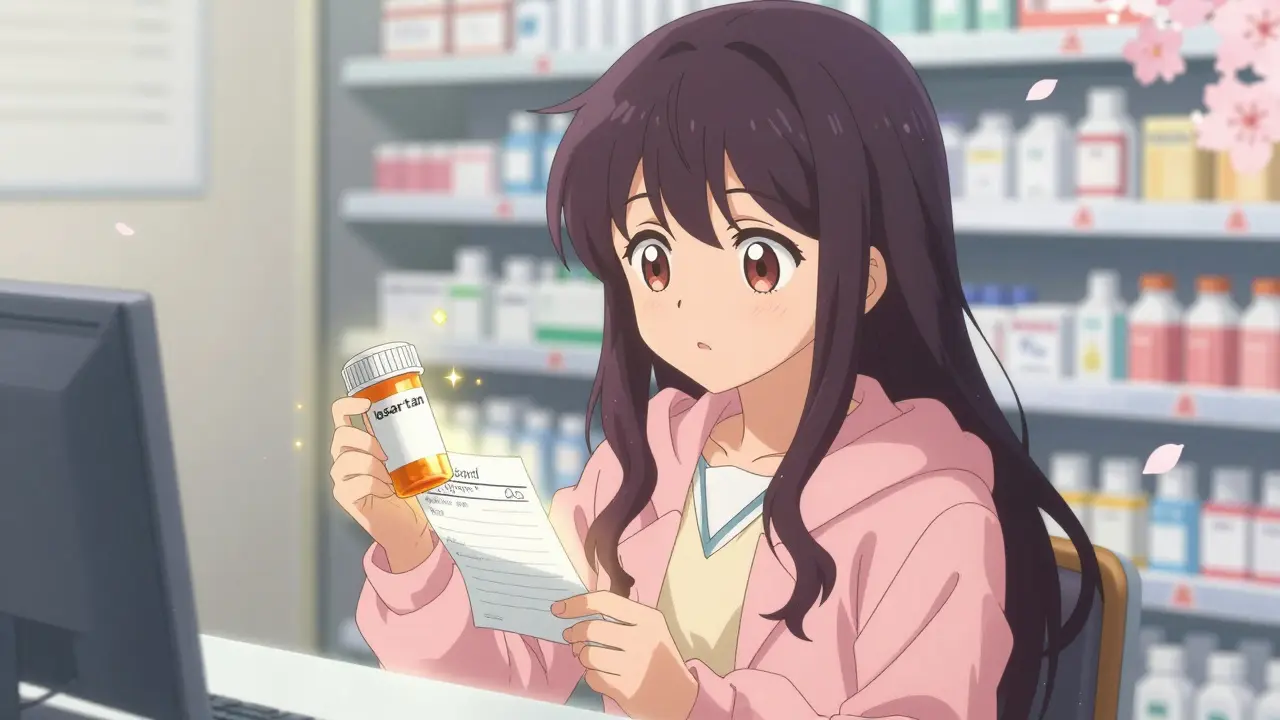
Every year, hundreds of thousands of people in the U.S. take the wrong medication or the wrong dose because of a simple mistake on the pharmacy label. It’s not rare. It’s not a glitch. It’s a system flaw that patients can help fix - if they know what to look for.
You’ve been to the pharmacy before. You grab your bag, scan the label, see your name, and assume it’s right. But what if the name on the bottle isn’t the one your doctor wrote? What if the dose says 5 mg instead of 0.5 mg? That’s not a typo. That’s a life-threatening mistake.
What Exactly Is a Pharmacy Labeling Error?
A pharmacy labeling error happens when the information on your medication container doesn’t match what your doctor prescribed. It could be the wrong drug name, the wrong strength, the wrong form (tablet vs. capsule), or even missing instructions. These aren’t just minor mix-ups. They cause real harm.
According to the Institute for Safe Medication Practices, dispensing errors account for 16-20% of all medication errors in community pharmacies. And here’s the scary part: pharmacists’ double-checks miss about 3.4% of these mistakes. That means the final safety net - you - is often the only thing standing between you and a dangerous error.
Some errors are obvious. Others? They’re sneaky. Take look-alike, sound-alike (LASA) drugs. Names like cycloserine and cyclosporine, or hydralazine and hydroxyzine, sound almost identical. One is for seizures, the other for anxiety. Mix them up, and you could end up in the hospital.
The Five Things You Must Check on Every Label
You don’t need to be a pharmacist to catch a mistake. You just need to check five things every single time you pick up a new prescription.
- Drug Name - Both brand and generic. If your doctor prescribed lisinopril, but the label says losartan, that’s a problem. Don’t assume. Read it out loud. Hearing it helps your brain catch errors your eyes miss.
- Strength - This is where decimal points kill. Warfarin, insulin, and levothyroxine are high-alert drugs. A label that says “5 mg” instead of “0.5 mg” is a tenfold overdose. Read the number slowly. Say it: “zero point five milligrams.”
- Dosage Form - Is it a tablet, capsule, liquid, or patch? If you were expecting a pill but got a liquid, ask why. Sometimes, the form changes for convenience - but you should know about it.
- Directions for Use - “Take one by mouth daily” sounds simple. But if it says “take two every four hours,” and your doctor said once a day, that’s a red flag.
- Indication for Use - This is the most overlooked. The label should say why you’re taking it: “for high blood pressure,” “for depression,” “for infection.” If it’s blank, ask. A 2016 study found that including the indication helped patients catch wrong-medication errors 63% of the time.
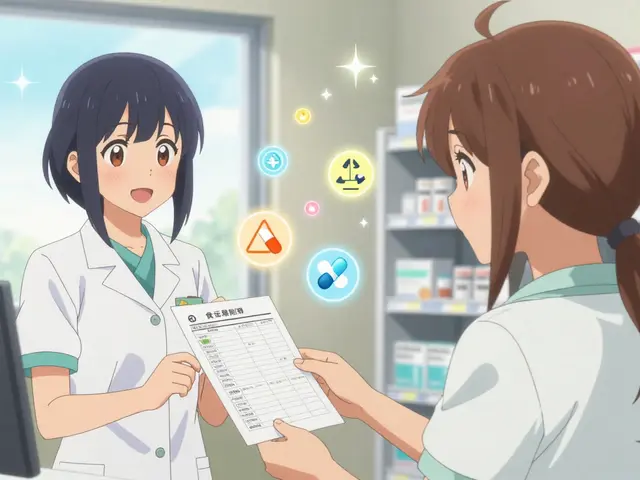
Don’t just glance. Compare. Hold your prescription slip next to the label. If you don’t have a copy, call your doctor’s office. Ask them to read you the prescription. It takes two minutes. It could save your life.
Watch Out for These Common Mistakes
Some errors happen over and over again. Here are the top three, with real examples:
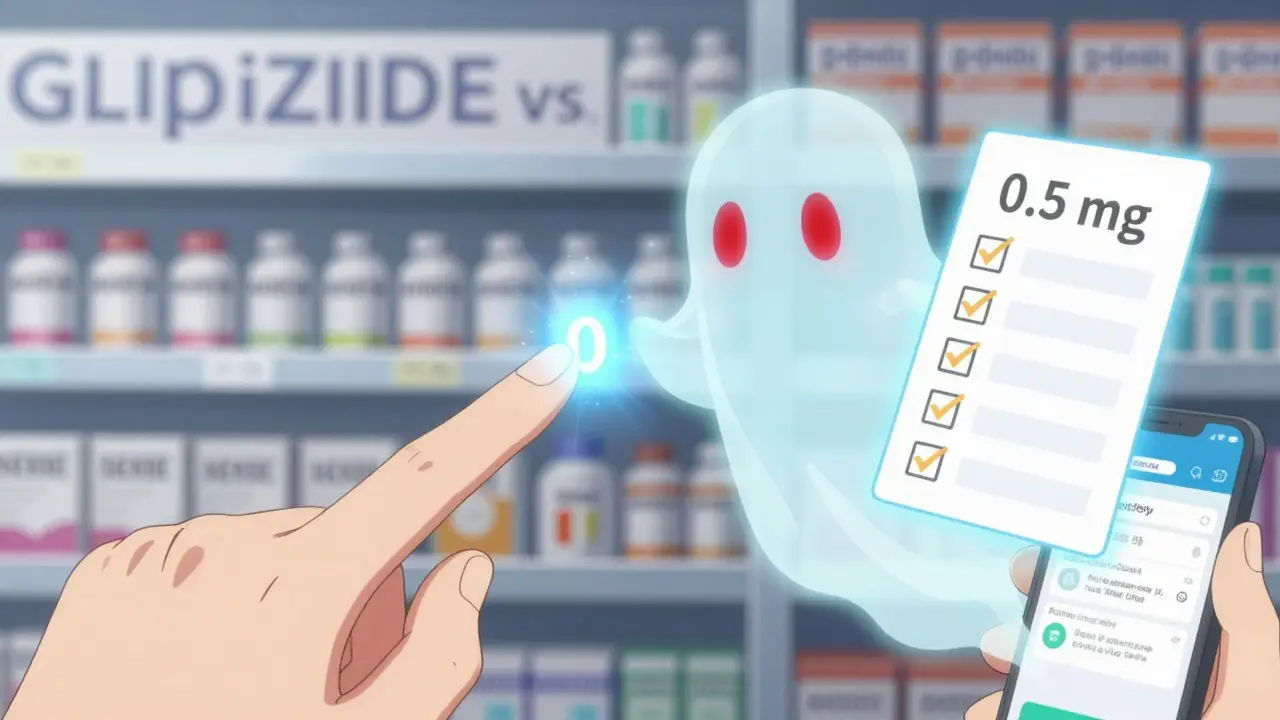
- Strength errors with decimals - A patient in Michigan took 10 times the dose of glipizide because the label read “5 mg” instead of “0.5 mg.” Result: severe hypoglycemia. This happens because pharmacies sometimes print “5.0 mg” without the leading zero. Always look for missing zeros or misplaced decimals.
- Look-alike, sound-alike (LASA) drugs - The FDA lists over 1,500 risky drug pairs. Tall-man lettering (like GLIpiZIDE vs. glyBURIDE) helps, but only 45 of the 1,500 high-risk pairs use it consistently. If you don’t see the capital letters, don’t assume it’s safe. Read the full name.
- Wrong drug entirely - A woman in Florida picked up hydroxyzine for anxiety, but the label said hydralazine - a blood pressure drug. She took it for two days before noticing the difference. She didn’t feel sick, but her blood pressure dropped dangerously low.
These aren’t hypotheticals. They’re real cases documented in state pharmacy board reports. And they’re preventable.
How to Verify Like a Pro - The 4-Step Method
The Agency for Healthcare Research and Quality (AHRQ) created a simple, proven method that works in real life:
- Compare - Match the label to your doctor’s written prescription. If you don’t have it, call the office.
- Check tall-man lettering - Look for capital letters in similar drug names. PremazinE vs. pROMethazine. GLIpiZIDE vs. glyBURIDE. If it’s not there, ask the pharmacist if they use it.
- Read the strength aloud - Say “zero point five milligrams,” not “point five.” Saying it out loud forces your brain to process it differently. You’re more likely to catch “five” vs. “point five.”
- Confirm the purpose - “Why am I taking this?” If the label doesn’t say, ask. If your doctor said it’s for migraines but the label says “for diabetes,” stop. Don’t take it.
Studies show patients trained in this method catch 92% of simulated labeling errors. Untrained patients? Only 55%. It’s not magic. It’s method.
Technology Can Help - But Don’t Rely on It Alone
New tools are making verification easier. Apps like MedSafety Check use your phone’s camera to scan your label and compare it to your prescription in real time. They’re 94.7% accurate.
CVS and other chains now offer QR codes on prescription bags. Scan it, and you get an audio description of your medication - what it is, why you’re taking it, and how to use it. That’s huge for older adults or people with vision problems.
But here’s the catch: in a 2022 study, 68% of patients who noticed a potential error still took the medication because they didn’t want to “bother” the pharmacist. That’s the real problem - not the technology. It’s the fear of speaking up.
What to Do If You Find a Mistake
Don’t panic. Don’t throw the medicine away. Don’t take it.
Call the pharmacy. Say: “I think there’s an error on my label. Can you double-check the prescription from Dr. Smith?” Most pharmacies will recheck and correct it immediately. If they brush you off, ask to speak to the pharmacist in charge.
If they refuse to fix it, call your doctor. And if you still feel unsafe, go to another pharmacy. Your health isn’t worth the hassle.
Also, report it. Every state has a pharmacy board. Reporting errors helps them track patterns and improve systems. You’re not being difficult - you’re helping everyone.
Who’s Most at Risk?
Older adults, people with low health literacy, and those taking multiple medications are most vulnerable. But anyone can be affected. A 2022 Consumer Reports survey found that only 37% of people consistently check their labels. The top reason? “I trust the pharmacy.”
Trust is good. Verification is better. Even the best pharmacies make mistakes. Pharmacists are human. They’re busy. They’re under pressure. That’s why the final check belongs to you.
High-alert medications - insulin, blood thinners like warfarin, opioids, and seizure drugs - are where mistakes are most deadly. If you take any of these, make verification a ritual. Do it every time. No exceptions.
Final Thought: You’re the Last Line of Defense
Pharmacists do their best. Systems are improving. But until every pharmacy uses barcode scanning, standardized labeling, and mandatory indication fields, you’re the last safety net.
It takes less than two minutes. You don’t need to be smart. You don’t need to be a doctor. You just need to care enough to look.
Next time you get a prescription, don’t just grab it. Stop. Read. Ask. Say it out loud. If something feels off - it probably is. And you’re the only one who can stop it.



jenny guachamboza
December 23, 2025 at 10:55
OMG I JUST REALIZED MY LAST PRESCRIPTION HAD '0.5 MG' PRINTED AS '5 MG' 😱 I THOUGHT IT WAS A TYPO BUT NOW I KNOW IT WAS A LIFE-THREATENING MISTAKE!! I'M TELLING EVERYONE!! 🚨💊 #PharmacyFail #DontTrustTheLabel