Imagine picking up a bottle of medicine for your child and seeing a label that says 250mg/5mL. Do you take the whole bottle? Or just a spoonful? It sounds like a simple question, but a mistake here can lead to a dangerous overdose or a treatment that simply doesn't work. In the US alone, misunderstood instructions contribute to about 1.5 million preventable adverse drug events every year. That is a staggering number, but the good news is that most of these errors are entirely avoidable if you know exactly what to look for on the packaging.
Quick Guide to Medication Label Safety
- Double-check the name: Ensure the medication is actually prescribed for you.
- Focus on the "Directions": This tells you exactly how much to take and when.
- Avoid household spoons: Always use a metric syringe or dosing cup for liquids.
- Check the expiration: Expired meds can lose potency or become harmful.
- Read the warnings: Look for interactions with other drugs or food.
Decoding the OTC Drug Facts Label
When you walk into a pharmacy and grab something off the shelf, you are looking at an Drug Facts standardized label format mandated by the FDA for all over-the-counter medications. This format was created to stop people from hunting through tiny print to find the most important info.
The most critical section is the "Directions." This is where the reading medication labels process becomes a matter of safety. It doesn't just tell you the dose; it tells you the frequency. For example, "take two tablets every 4 to 6 hours" means you shouldn't take another dose until at least four hours have passed. A common mistake happens with multi-symptom cold medicines. You might take a cough syrup and a separate pain reliever, not realizing both contain acetaminophen. This can lead to an accidental overdose because you're double-dosing on the same active ingredient.
| Section | What it Tells You | Why it Matters |
|---|---|---|
| Active Ingredients | The chemical that treats the symptom | Prevents taking two drugs with the same active ingredient |
| Uses | What the medicine is for | Ensures you aren't using a drug for the wrong condition |
| Warnings | Side effects and precautions | Identifies high-risk groups (e.g., people with liver issues) |
| Directions | Dose, timing, and amount | The foundation for correct administration |
Understanding Prescription Labels
Prescription labels are different because they are tailored to you by a pharmacist. While OTC labels are general, your prescription bottle contains Prescription Medication Labeling patient-specific instructions that include the drug name, patient name, and precise dosing.
The gold standard for pharmacists is the "Five Rights" of medication administration: right patient, right drug, right dose, right route, and right time. When you get your meds, do a quick audit. Is your name correct? Does the dosage match what the doctor told you in the office? Sometimes, a pharmacy error occurs, or a doctor changes a dose at the last second, and the label doesn't reflect the newest change. If the label says "take one tablet daily" but you remember the doctor saying "twice a day," stop and call the pharmacy immediately.
The Danger of Liquid Medications and Concentration
Liquid meds are where most people run into trouble, especially parents. The biggest culprit is the "concentration statement." If a label says 350mg per 5mL, it means that in every 5 milliliters of liquid, there are 350 milligrams of the drug. If your child needs 700mg, you need 10mL.
The mistake often happens when people confuse the volume (mL) with the dose (mg). Some patients have accidentally emptied an entire 30mL vial of amoxicillin thinking it was a single dose, when it was actually six separate 5mL doses. This can be incredibly dangerous.
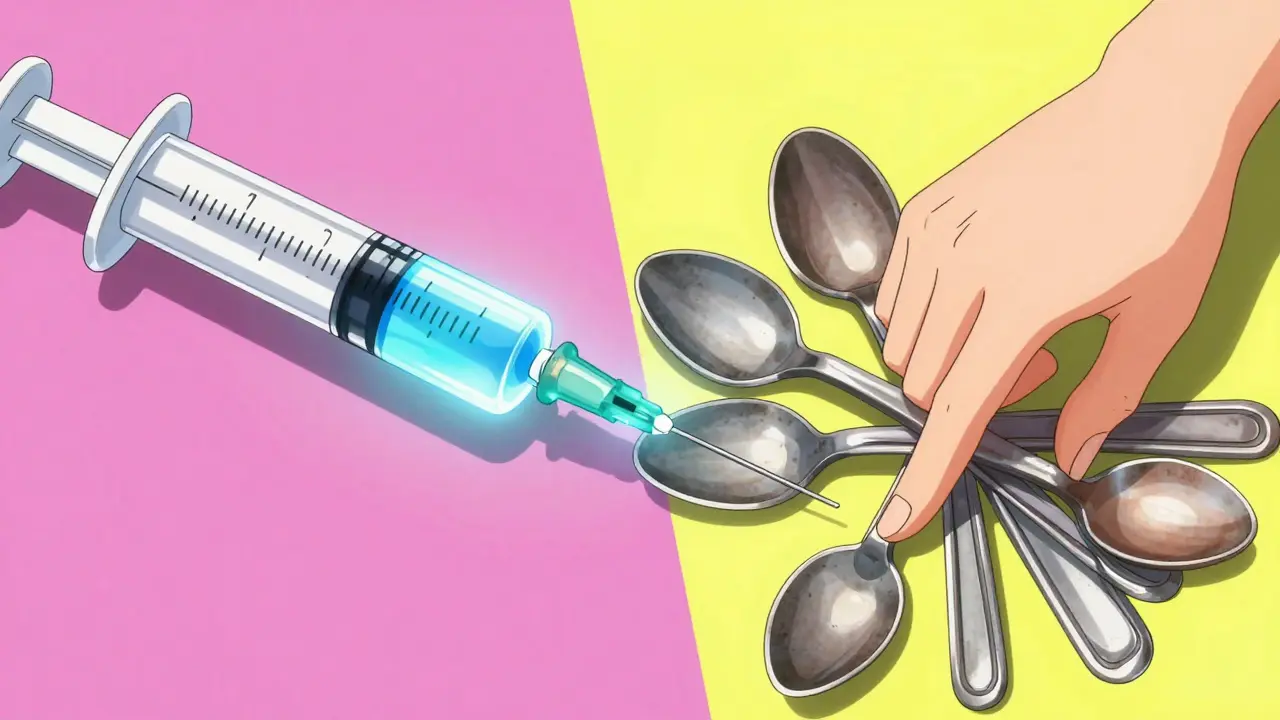
To avoid this, throw away your kitchen spoons. The American Academy of Pediatrics a professional organization specializing in child health warns that household teaspoons vary wildly in size, from 2.5mL to over 7mL. One spoon might give your child half a dose, while another gives them double. Only use the oral syringe or dosing cup that comes with the medicine.
Spotting Warnings and Expiration Dates
Many people skip the "Warnings" section, but this is where the most critical safety data lives. For high-risk medications-like insulin or anticoagulants-you might receive a separate Medication Guide an FDA-mandated paper handout for high-risk drugs containing detailed safety information. These guides explain serious side effects that a small bottle label simply cannot fit.
Then there is the expiration date. For OTC meds, these are set by the manufacturer and usually last 2-3 years. Prescription meds are different; the pharmacy usually sets an expiration date based on when they dispensed the drug, often capping it at one year. Using a drug past this date isn't always toxic, but it often means the drug has lost its strength. If you're treating a serious infection and the antibiotic has degraded, the bacteria may not be fully killed, which can lead to antibiotic resistance.
Steps to Verify Your Medication Every Time
To make sure you're staying safe, follow this simple verification process before every dose. It only takes a few seconds but can save a trip to the ER.
- Verify Identity: Check that the name on the bottle is yours (or your child's).
- Match the Med: Compare the medication name on the label to the one on your original prescription or doctor's order.
- Confirm Strength: Ensure the milligrams (mg) or micrograms (mcg) match what you expect.
- Read Directions Aloud: This helps you catch mistakes in timing or dosage that you might skim over if reading silently.
What does "take every 4 to 6 hours" actually mean?
It means you should wait at least 4 hours between doses, but no more than 6 hours. For example, if you take a dose at noon, you can take the next one as early as 4:00 PM, but you should not take it more often than that to avoid overdose.
Can I use a kitchen tablespoon to measure liquid medicine?
No. Household spoons are not standardized for medical use. A "tablespoon" in your drawer could hold anywhere from 7mL to nearly 15mL, which can lead to significant dosing errors. Always use a medical dosing cup or an oral syringe.
What should I do if the label is smudged or hard to read?
Do not guess. Contact your pharmacist immediately to get a replacement label. Taking the wrong dose because of a misread number is a primary cause of medication errors.
Is there a difference between the expiration date and the "discard after" date?
Yes. The expiration date is when the manufacturer guarantees the drug's potency. A "discard after" date (common in liquid antibiotics) is based on how long the drug remains stable after it has been mixed with water.
Why do some meds come with a separate paper guide?
Certain high-risk drugs (like some HIV medications or isotretinoin) require more detailed safety information than can fit on a bottle. The FDA mandates these guides to ensure patients understand the specific risks and required tests associated with the drug.
What to Do if You Make a Mistake
If you realize you've taken too much of a medication or missed a dose, don't panic, but act quickly. Your first call should be to your pharmacist or a poison control center. Do not try to "balance it out" by skipping the next dose or taking extra later without professional advice. Depending on the drug, the correct response could be to take the missed dose immediately or to wait until the next scheduled time.
For those managing multiple medications, consider using a pill organizer or a digital tracking app. This reduces the need to rely solely on reading labels during a rushed morning, providing a secondary layer of safety to ensure the "Five Rights" are met every single day.