Switching from a brand-name medication to a generic can feel like a simple cost-saving move - until your body reacts differently. You might notice new side effects, a drop in effectiveness, or a return of symptoms you thought were under control. If you’ve been stable on your brand medication and your pharmacy suddenly hands you a different pill, it’s not just your imagination. You’re not being difficult. You’re being smart.
Why Some People Need to Stay on Brand Medication
Not all generics are created equal - and that’s not because they’re fake or low quality. The FDA requires generics to contain the same active ingredient, strength, and dosage form as the brand. But they can differ in inactive ingredients: fillers, dyes, preservatives, and coatings. For most people, this doesn’t matter. But for others, it makes all the difference. Take levothyroxine, the drug used for thyroid conditions. Even tiny changes in absorption can throw off hormone levels. A 2021 study in Neurology found that patients switching from brand-name anti-seizure drugs to generics had a 23% higher chance of having a seizure. For people on warfarin, a blood thinner, switching between generic brands has been linked to a 17% spike in emergency room visits due to unstable blood levels. If you’re allergic to lactose, gluten, or certain food dyes, a generic version might contain those - while your brand doesn’t. About 7% of patients report reactions to inactive ingredients, according to the Journal of Allergy and Clinical Immunology. That’s not rare. That’s real.How to Prepare for the Conversation
Talking to your doctor about staying on brand isn’t about arguing. It’s about showing up with facts. Start by writing down what happened when you switched. Not just, “I didn’t feel right.” Be specific:- “I switched to generic Keppra in March and had three seizures in two months - I hadn’t had one in five years on the brand.”
- “After switching to generic warfarin, my INR levels jumped from 2.4 to 4.1 in two weeks.”
- “I got severe stomach cramps and diarrhea every time I took the generic version - stopped when I went back to the brand.”
Use the SBAR Framework to Speak Up
The American Medical Association recommends using SBAR: Situation, Background, Assessment, Recommendation. It’s simple, structured, and gets results.- Situation: “I’m here because I had to switch from my brand-name medication to a generic, and my condition worsened.”
- Background: “I’ve been on [brand name] for three years. My symptoms were stable. When I switched to the generic in [month], I started experiencing [symptoms].”
- Assessment: “I believe the change in formulation is causing this. My lab results and symptom diary support this.”
- Recommendation: “Can we keep me on the brand? Or try another generic with different inactive ingredients?”
Insurance Is the Real Hurdle - Here’s How to Beat It
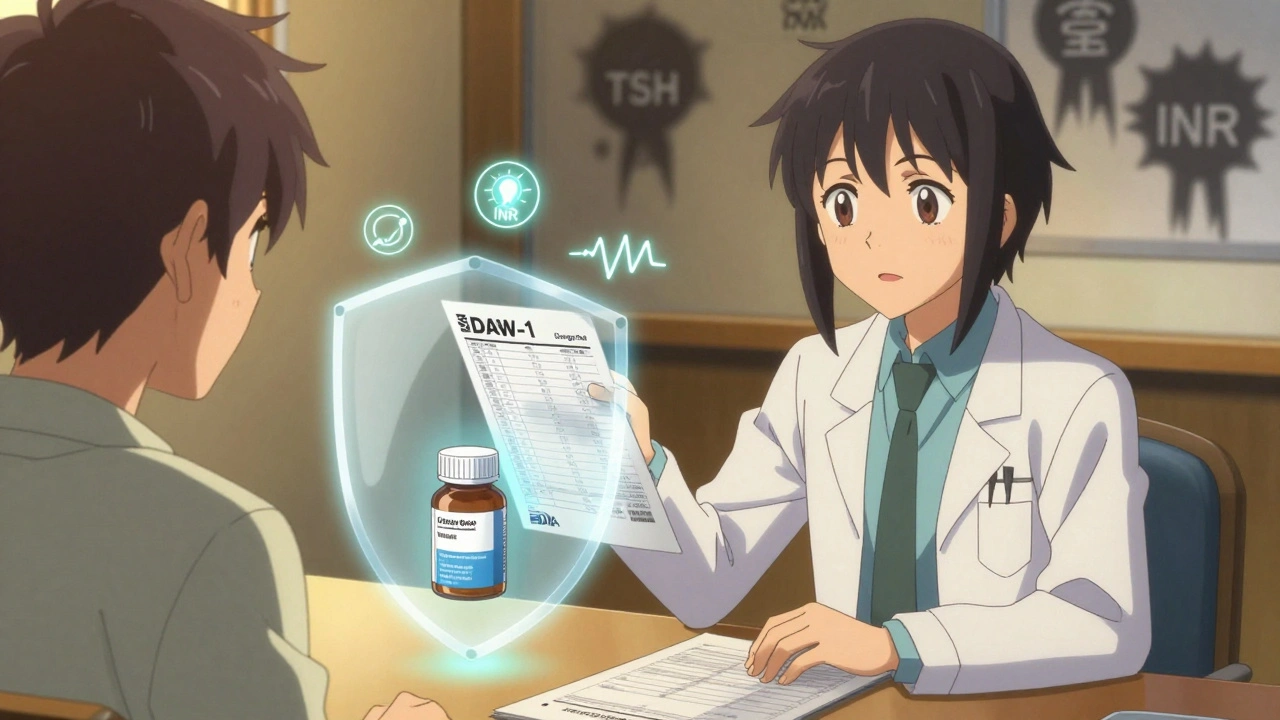
Most insurance plans push generics. In fact, 82% of commercial plans in the U.S. require you to try the generic first. But they can’t force you to take something that doesn’t work. Your doctor can write “Dispense as Written” (DAW-1) on the prescription. That tells the pharmacy: “Don’t substitute. This is medically necessary.” If your claim gets denied, appeal. In 2023, 72% of brand-name medication denials were overturned when patients submitted proper documentation - lab results, symptom logs, or letters from their doctor. Medicare Part D approved 57% of brand-name requests with clinical evidence. Don’t wait for the denial to act. Ask your doctor to start the prior authorization process before you even fill the prescription. It can take 3-5 days. Bring a printed copy of your medication’s FDA Orange Book listing (search “Drugs@FDA”) to show the therapeutic equivalence rating.Know Your Medication’s Profile
Some drugs are more sensitive to formulation changes than others. These are called “narrow therapeutic index” drugs - meaning the difference between an effective dose and a harmful one is small. Common ones include:- Levothyroxine (for thyroid)
- Warfarin (blood thinner)
- Phenytoin, carbamazepine, valproate (anti-seizure)
- Lithium (for bipolar disorder)
- Cyclosporine (organ transplant)
What to Do If Your Doctor Pushes Back
Some doctors assume generics are always interchangeable. But that’s outdated thinking. Dr. Aaron Kesselheim from Harvard Medical School says the FDA’s 80-125% bioequivalence range - while technically acceptable - can still cause real-world problems for some patients. If your doctor dismisses your concerns, say this: “I understand generics are cheaper, but I’ve had documented issues. Can we try a different generic? Or get a letter of medical necessity?” If they still say no, ask for a referral to a specialist - like an endocrinologist or neurologist - who’s more familiar with these nuances.
Real Stories, Real Results
One patient in Adelaide, on levothyroxine for 12 years, switched to a generic and suddenly felt exhausted, gained weight, and had brain fog. Her TSH levels went from 1.8 to 8.2. She brought her records in, and her doctor immediately switched her back. Her symptoms cleared in three weeks. Another, on carbamazepine, started having mini-seizures after switching. She kept a daily log - time, severity, sleep, diet - and showed it to her neurologist. The doctor wrote a DAW-1 and filed an appeal. Approved on the first try.What You Can Do Today
You don’t need to wait for your next appointment. Start now:- Check your last prescription. Is it marked “DAW-1”? If not, ask your pharmacy for a copy.
- Open your pill bottle. Look at the label. Does it say “generic” or list a different manufacturer? Take a photo.
- Write down any changes in how you feel since switching - even small ones.
- Call your doctor’s office. Ask if they can submit a prior authorization for your brand medication.
- Search “Drugs@FDA” online. Type in your drug name. Look up the ANDA number for your generic. Compare inactive ingredients.
It’s Not About Price - It’s About Your Health
Generic drugs are essential. They’ve saved billions. But they’re not magic. Your body isn’t a lab test. It’s a living system that responds to subtle differences. You’re not asking for special treatment. You’re asking to be heard. And you have every right to be. If your medication keeps you alive, stable, and able to live your life - then staying on brand isn’t a luxury. It’s a medical necessity.Can my pharmacist switch my brand medication to a generic without telling me?
In most states, yes - unless your prescription says "Dispense as Written" (DAW-1). Pharmacists are allowed to substitute generics unless the doctor specifically blocks it. Always check your pill bottle when you pick up a prescription. If it looks different, ask. You have the right to know what you’re taking.
Are brand-name medications safer than generics?
Not inherently. Both must meet the same FDA standards for purity, strength, and quality. But safety can depend on inactive ingredients. If you’re allergic to a dye, lactose, or gluten, the generic might contain it - while the brand doesn’t. That’s not about safety of the active drug - it’s about the filler. Always check the ingredient list.
What if I can’t afford the brand medication?
Talk to your doctor. Many pharmaceutical companies offer patient assistance programs that provide brand-name drugs for free or at low cost if you qualify. You can also ask about manufacturer coupons or nonprofit foundations like NeedyMeds. Don’t skip doses just because it’s expensive - there are options.
How long does it take to get prior authorization approved?
It usually takes 3 to 7 business days. Some plans approve it faster if your doctor calls in. If it’s denied, you can appeal - and many appeals are approved with proper documentation. Keep copies of everything: lab results, doctor’s notes, pharmacy receipts.
Can I switch back to the brand if I’ve already switched to a generic?
Yes - but you’ll need to prove it’s medically necessary. Bring your symptom log and lab results to your doctor. They can write a new prescription with DAW-1. Insurance may require prior authorization again, but your history makes your case stronger.






Deborah Jacobs
December 5, 2025 at 05:59
I switched from brand levothyroxine to generic last year and it was like someone flipped a switch in my brain. One day I was functioning, the next I was crying in the shower over spilled coffee. My TSH went from 2.1 to 7.9. I brought my logs in, showed my pill bottles, and my endo just nodded like he’d seen this a hundred times. He wrote DAW-1 on the spot. Don’t let anyone tell you you’re being dramatic. Your body knows.
Also, the FDA’s 80-125% bioequivalence range? That’s like saying two different sizes of jeans are ‘the same’ because they both fit someone who’s 5’10”. Nope. Not how bodies work.
Thank you for writing this. I’ve been too scared to speak up before. Now I’m telling everyone I know.