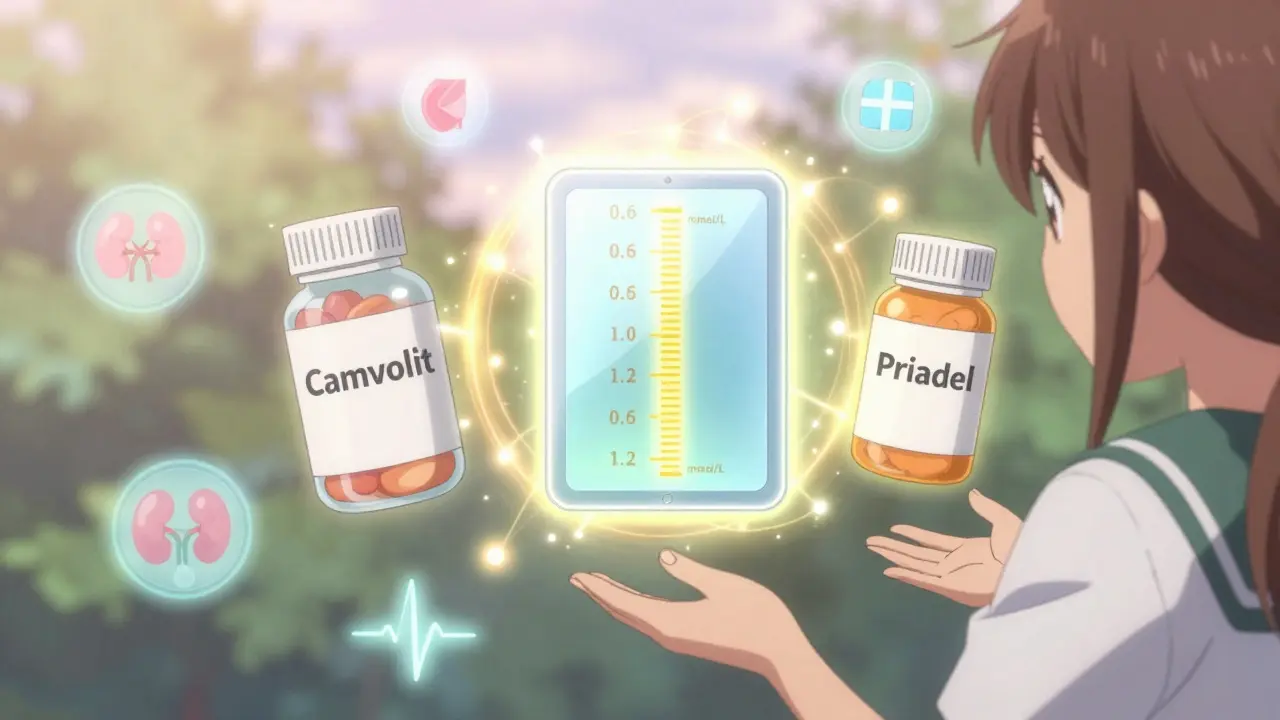
When you're managing bipolar disorder with lithium carbonate, switching from a brand-name pill to a generic version might seem like a simple cost-saving move. But for NTI drugs - narrow therapeutic index medications - that switch can change your blood levels enough to make you feel worse, or even put you at risk of toxicity. Lithium isn't like most other drugs. A tiny change in your serum level can mean the difference between stability and a hospital visit.
Why Lithium Is Different
Lithium carbonate has one of the narrowest therapeutic windows of any psychiatric medication. The sweet spot for most people is between 0.6 and 1.2 mmol/L. Go below 0.6, and your mood may start to slip. Rise above 1.2, and you risk tremors, confusion, or worse - seizures, kidney damage, or cardiac issues. At 2.0 mmol/L or higher, lithium becomes life-threatening. Unlike antibiotics or blood pressure pills, where a 20% variation in dose might not matter, lithium’s margin for error is razor-thin. That’s why it’s classified as an NTI drug. Even small differences in how your body absorbs the medication can push you out of the safe zone.Generics Aren’t All the Same
You might think all lithium carbonate pills are created equal. They’re not. While FDA and EMA rules require generics to be bioequivalent to the brand, that doesn’t mean they behave the same in your body. Take Camcolit and Priadel - both are sustained-release formulations. A 2024 study found that patients on Camcolit had, on average, 11% higher serum levels than those on Priadel, even when taking the same daily dose. That’s not a typo. Eleven percent. For someone at 0.8 mmol/L, that could push them to 0.89 - still in range. But for someone already near 1.1 mmol/L? That’s a jump to 1.22. Now you’re in the danger zone. Even more troubling: some patients saw lithium levels spike to 1.88 mmol/L after switching brands. That’s not a fluke. That’s a pattern. One patient went from 0.75 to 1.35 mmol/L just by changing from one generic to another. No dose change. No new meds. Just a different pill. The problem isn’t that generics are unsafe. It’s that their release profiles vary. Priadel releases lithium over about 2 hours. Some other generics take 3 to 4 hours. One manufacturer’s tablet might dissolve faster than another’s, even if both say “extended-release.” That changes when lithium hits your bloodstream - and how high it peaks.When to Check Your Levels
If you’re on lithium, you should be getting your serum levels checked regularly. But when? It depends on your formulation. For immediate-release lithium (taken 2-3 times a day), draw blood 12 hours after your last dose. That’s the standard. For once-daily sustained-release versions like Camcolit or Priadel, draw at 24 hours - right before your next dose. That gives you the true trough level, the most accurate picture of your steady-state concentration. Don’t assume your doctor knows your brand. Many prescriptions just say “lithium carbonate.” If you switch pharmacies or your insurance changes formulary, you might get a different generic without knowing it. Always ask: Which brand am I taking? Write it down. Take a picture of the pill. Keep a log.
What Your Doctor Should Be Monitoring
Lithium doesn’t just affect your mood. It affects your kidneys, your thyroid, and your electrolytes. That’s why regular blood tests aren’t optional - they’re essential.- Thyroid function: Lithium causes hypothyroidism in 5-15% of long-term users. Check TSH every 6 months.
- Kidney function: Lithium reduces your glomerular filtration rate over time. Use eGFR-cystatin C, not just creatinine - it’s more accurate in older adults.
- Sodium levels: Low sodium (hyponatremia) increases lithium retention. Avoid very low-salt diets, excessive sweating, or diuretics without close monitoring.
- Hydration: Drink enough water. Dehydration spikes lithium levels fast.
Age, Gender, and Dose
There’s no one-size-fits-all dose. Your body changes as you age. People under 40 often need 900-1200 mg per day. Between 40 and 60, that drops to 740-925 mg. Over 60? Many experts recommend 550-740 mg. Why? Kidney function declines with age. Lithium clears slower. Higher doses = higher risk. Women, on average, need about 96 mg less than men per day - even after adjusting for weight. That’s not just body size. It’s metabolic differences. And yes - if you’re over 80, your doctor should be prescribing significantly less. One study showed patients over 80 took 437 mg less per day than those under 30. That’s not arbitrary. That’s evidence.Target Levels: What’s Right for You?
There’s no universal consensus. The American Psychiatric Association says 0.8-1.0 mmol/L for acute episodes, 0.6-0.8 for maintenance. But many clinicians still use 0.8-1.2 for sustained-release forms. Here’s the reality: your target should be personalized. If you’re stable at 0.7 mmol/L on Priadel - don’t chase 1.0. If you’re still having mood swings at 0.8 on Camcolit - talk to your doctor about a slight increase. The goal isn’t to hit a number. It’s to feel stable, with minimal side effects. For older adults, many experts recommend lowering targets by 20-25%. That means 0.5-0.7 mmol/L might be safer than 0.6-0.8. But only if you’re monitored closely.
What Happens When You Switch Brands?
If your pharmacy switches your lithium from one generic to another - even if it’s still labeled “lithium carbonate” - get your blood level checked within 1-2 weeks. Don’t wait. Don’t assume it’s fine. A 2024 study found that 12.5% of lithium prescriptions were written without a brand specified. That means pharmacists can substitute freely. And if you’re on a sustained-release form, that substitution could be dangerous. If you’ve ever felt suddenly tired, shaky, or foggy after a refill - even if nothing else changed - that’s a red flag. It might not be stress. It might not be your mood. It might be your lithium level.What You Can Do
- Always ask your pharmacist: Which brand am I getting today?
- Keep a list of your lithium brand and dose. Show it to every doctor and pharmacist.
- Request a blood test within 2 weeks of any brand switch.
- Never stop lithium suddenly. Taper only under medical supervision.
- Report tremors, nausea, confusion, or frequent urination immediately.
The Bigger Picture
Lithium is still the gold standard for preventing suicide in bipolar disorder. Studies from the 1980s still hold up today. It reduces relapse by more than half. No other mood stabilizer has that track record. But it’s not easy. It requires discipline. Regular blood tests. Careful dosing. Awareness of your brand. And a doctor who understands NTI drugs. The future may bring genetic testing to predict lithium response. AI tools that adjust doses based on your EHR data. But right now? The best tool you have is knowledge - and vigilance. Don’t let a pharmacy change your pill without knowing it. Your brain depends on it.Can I switch between lithium generics without checking my blood levels?
No. Even if two generics are labeled the same, their release rates can differ enough to change your serum levels by 10-20%. Always get a blood test within 1-2 weeks after switching brands, even if your doctor says it’s "the same thing." Lithium is an NTI drug - small changes matter.
What’s the safest lithium serum level for older adults?
For patients over 60, many experts recommend a target range of 0.5-0.7 mmol/L instead of the standard 0.6-0.8. This accounts for reduced kidney function and slower clearance. However, this should always be individualized. Some older adults tolerate 0.8 mmol/L well. The key is frequent monitoring - not a fixed number.
Why do I need to check my thyroid if I’m on lithium?
Lithium interferes with iodine uptake in the thyroid gland, which can lead to hypothyroidism in 5-15% of users. Symptoms like fatigue, weight gain, cold intolerance, or depression can be mistaken for bipolar symptoms. Checking TSH every 6 months catches this early. It’s easily treated with levothyroxine - but only if you test for it.
Is there a difference between immediate-release and extended-release lithium?
Yes. Immediate-release forms peak in 1-2 hours and require 2-3 doses per day. Extended-release (like Priadel or Camcolit) peak around 4-5 hours and are taken once or twice daily. They’re gentler on the stomach and reduce side effects, but they also require different blood draw timing - 24 hours after the last dose, not 12. Mixing them up can lead to inaccurate level readings.
Can I take lithium with other medications?
Many medications interact with lithium. NSAIDs like ibuprofen, ACE inhibitors, diuretics, and some antidepressants can raise lithium levels dangerously. Even over-the-counter painkillers or salt substitutes can affect your levels. Always tell every prescriber - including dentists - that you’re on lithium. A simple drug interaction can turn a safe dose into a toxic one.
Why isn’t lithium used more often if it’s so effective?
Because it requires constant monitoring. Blood tests, thyroid checks, kidney function - it’s more work than a once-daily pill with no lab follow-up. Many doctors prefer newer drugs like valproate or lamotrigine because they’re easier to manage. But for long-term stability and suicide prevention, lithium still has no equal. It’s not the easiest option - but for many, it’s the best.
What should I do if I miss a dose of lithium?
If you miss one dose, take it as soon as you remember - unless it’s close to your next scheduled dose. Never double up. Missing doses can cause mood instability, but doubling up can cause toxicity. If you miss more than two doses in a row, contact your doctor. Don’t restart on your own. Your levels may have dropped too far, or your body may have adjusted.






gary ysturiz
January 12, 2026 at 00:44
Just switched from Priadel to a generic last month. My levels went from 0.78 to 1.12. Felt like I was drunk for a week. Got my blood drawn, caught it early. Don't let this happen to you. Always ask for the brand.