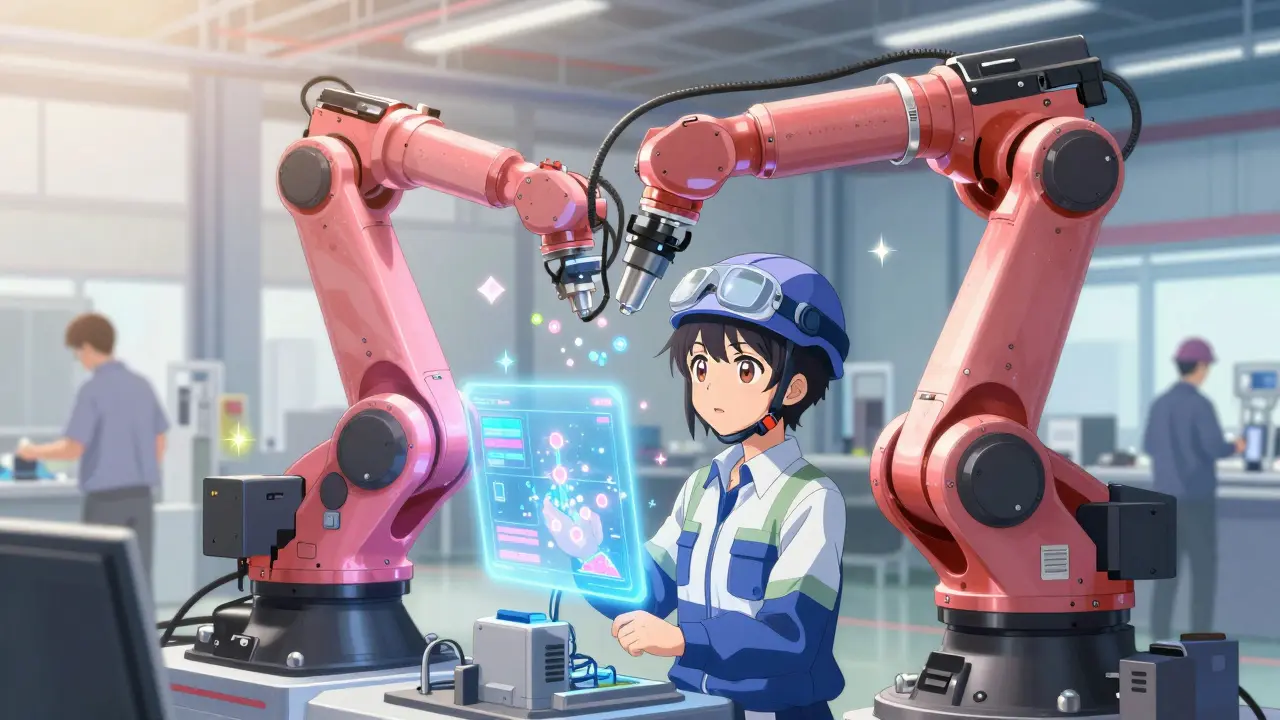
The modern manufacturing floor has changed drastically over the last few years. When you walk into a facility today, the conversation is no longer just about moving parts; it is about managing complex digital systems that control those parts. By 2026, the question isn't simply if a worker can operate a machine, but whether they can interact with the data that machine generates. Personnel training for manufacturing staff now sits at the intersection of traditional trade skills and advanced digital literacy. This shift has created a clear demand for structured qualifications that go beyond basic experience.
Employers are looking for specific proof of competency. A resume filled with "years of experience" is losing its punch against a candidate holding a nationally recognized certification. The industry recognizes that unstructured learning leads to inconsistent quality and higher safety risks. For instance, organizations implementing structured safety training protocols report significant reductions in workplace injuries. This drives the need for standardized educational requirements that validate both technical ability and safety consciousness before a candidate steps onto the line.
Educational Baselines for Entry Roles
Not every role requires a university degree, but there is a distinct floor for acceptable entry-level credentials. For many production operator positions, a high school diploma remains the standard starting point. Surveys from recruitment firms indicate that over ninety percent of manufacturing employers accept this baseline. However, simply having the diploma is not enough anymore. Employers want evidence that the applicant understands basic math for inventory counting or physics for equipment handling.
High School Diploma is the minimum credential for most entry-level manufacturing roles, serving as proof of basic academic capability.It acts as the gateway for apprenticeships. Without it, access to formal training programs becomes nearly impossible. Yet, relying solely on secondary education puts companies at risk. Workers entering with only this level of formal education face higher turnover rates compared to those who continue their education. If you are hiring for long-term stability, looking for candidates who have completed post-secondary technical courses often yields better retention.
Certifications That Define Competence
This is where qualifications get interesting. While degrees provide theoretical knowledge, certifications prove practical application. There are three primary pillars of industry-recognized credentials that dominate the hiring landscape right now. These serve as the shorthand for skill verification that managers trust across different facilities.
Certified Production Technician (CPT) is a portable industry credential validating frontline production skills developed by Manufacturing Skill Standards Council. It covers safety, quality practices, and maintenance basics.Holding this credential signals that a worker understands the fundamentals of the shop floor without needing months of onboarding. Another major benchmark involves process improvement methodologies. Six Sigma is widely known, but few people realize how granular the levels are. From White Belts to Black Belts, each tier represents a deeper understanding of process control. Companies often require Green Belts for team leaders because they can statistically analyze defects rather than just reporting them visually.
| Credential Type | Target Audience | Avg. Cost Range | Time Commitment |
|---|---|---|---|
| Certified Production Technician (CPT) | Frontline Operators | $500 - $1,500 | 2 - 4 Weeks |
| Six Sigma Green Belt | Team Leads, Analysts | $1,000 - $3,000 | 3 - 6 Months |
| Associate Degree | Technicians, Engineers | $15k - $30k total | 2 Years Full-time |
| Safety Specialist (OSHA) | HSE Managers | $800 - $2,000 | 1 Week Workshop |
The table above highlights the diversity in investment. Some certifications are short-term boosts, while others represent significant career pivots. For smaller manufacturers, the cost of sending staff to Six Sigma training ($99 to $5,000 depending on the level) can be a barrier. However, the return on investment becomes positive within months due to reduced waste. Large enterprises view these costs as essential infrastructure, not optional perks.

The Rise of Digital Literacy Requirements
In 2026, a mechanic without computer skills is a liability. We are seeing a massive shift towards Industry 4.0 technologies where machines talk to computers. This changes the profile of the ideal hire. You can no longer separate mechanical aptitude from digital fluency. Candidates now need to demonstrate comfort with data analytics tools, not just wrenches.
Specific programming languages are making their way into the qualification lists. Python and SQL are appearing in job descriptions for senior technicians because they are needed to query manufacturing databases directly. While this might sound extreme, automated defect tracking requires staff who can pull reports without waiting for IT support. Research suggests that workforce gaps in these digital areas are widening, leaving millions of jobs unfilled annually because qualified candidates lack these specific IT overlaps.
Industry 4.0 Integration refers to the merging of physical production systems with digital network capabilities, requiring IoT sensors and Data Analytics proficiency.If your training program does not include this digital component, your graduates will be obsolete upon graduation. Modular micro-credentials are emerging as the solution here. Instead of a one-size-fits-all degree, workers can stack specific digital certifications alongside their trade skills. This keeps the learning fresh and aligned with software updates.
Training Pathways and Implementation
There is more than one way to get qualified. The choice between a traditional apprenticeship and a community college program depends heavily on the learner's financial situation and time availability. Apprenticeships offer the benefit of earning a wage while learning, covering two to four years of paid training. This makes it attractive for younger demographics who want to avoid student debt.
However, apprenticeships can suffer from portability issues. If you learn on a specific proprietary machine at Factory A, can you transfer those skills to Factory B? Not always. That is why national certifications like the Certified Production Technician are so valuable-they validate general skills that move with you. Meanwhile, community colleges offer diplomas that are highly transferable. Completion rates for these technology programs are consistently high, often exceeding 90% job placement within the first year after graduation.
For HR leaders planning implementation, documentation is key. Tracking progress through skills matrices helps identify exactly where the gap lies. Do we need more safety training? Is it quality control? Using incident reports and production metrics to design the curriculum ensures the training solves actual problems, not hypothetical ones. Documentation also serves as legal protection, proving due diligence in employee development.

Soft Skills as Operational Essentials
Technical skills get the part made. Soft skills keep the operation running smoothly. Communication breakdowns remain the leading cause of production failures. When a supervisor cannot clearly relay change orders to the floor, errors spike. Therefore, effective personnel training programs allocate significant time to teamwork, problem-solving communication, and conflict resolution.
A skilled machinist who refuses to follow feedback causes bottlenecks that slow down the entire line. Assessment methods for soft skills are qualitative, but they matter. Mentoring programs significantly improve retention of technical knowledge. Workers who pair new hires with veterans see much higher success rates in keeping those new employees past the probation period. Mentorship bridges the gap between what was taught in theory and what happens under pressure on the line.
Return on Investment and Financial Considerations
Investing in staff brings tangible returns. Data indicates that certified workers demonstrate notably higher productivity metrics compared to their uncertified counterparts. Specifically, Overall Equipment Effectiveness (OEE) scores climb when operators understand the full lifecycle of the equipment they manage. They spot issues before catastrophic failure occurs, saving thousands in downtime costs.
Conversely, small manufacturers often struggle with financing these programs. The upfront cost of tuition and testing fees can deter investment. However, larger enterprises calculate that a comprehensive program pays for itself within a year through reduced errors. Safety training alone offers a direct reduction in insurance premiums and liability claims. Ignoring this investment leaves you vulnerable to regulatory fines and operational inefficiencies that drain profit margins silently.
Is a university degree required for all manufacturing jobs?
No, many frontline roles require only a high school diploma or vocational certificate. Engineering and management tracks typically require a bachelor's degree in fields like Industrial Engineering.
Which certification offers the best salary increase?
Six Sigma Black Belt and Master certifications command the highest salaries. Data shows these professionals earn significant premiums over entry-level technicians, reflecting their ability to manage quality processes strategically.
How long does it take to become a certified production technician?
Preparation time varies, but the exam itself is relatively quick. Most candidates complete the necessary coursework and testing preparation within 4 to 8 weeks depending on their existing background.
Are online training options accredited by industry bodies?
Yes, many providers offer remote modules. Just verify that the certification board (like ASQ or MSSC) accepts the curriculum structure for exam eligibility.
Why is safety training emphasized so heavily?
Beyond regulatory compliance, proper safety training drastically lowers injury rates. Regulators have noted that adherence to protocols reduces incidents significantly, protecting both the business and the workforce.







Paul Vanderheiden
March 28, 2026 at 02:54
great read for sure i really like how it talks about the digital side of things we dont hear enough about tech in shops its always just manual labor but data is key now