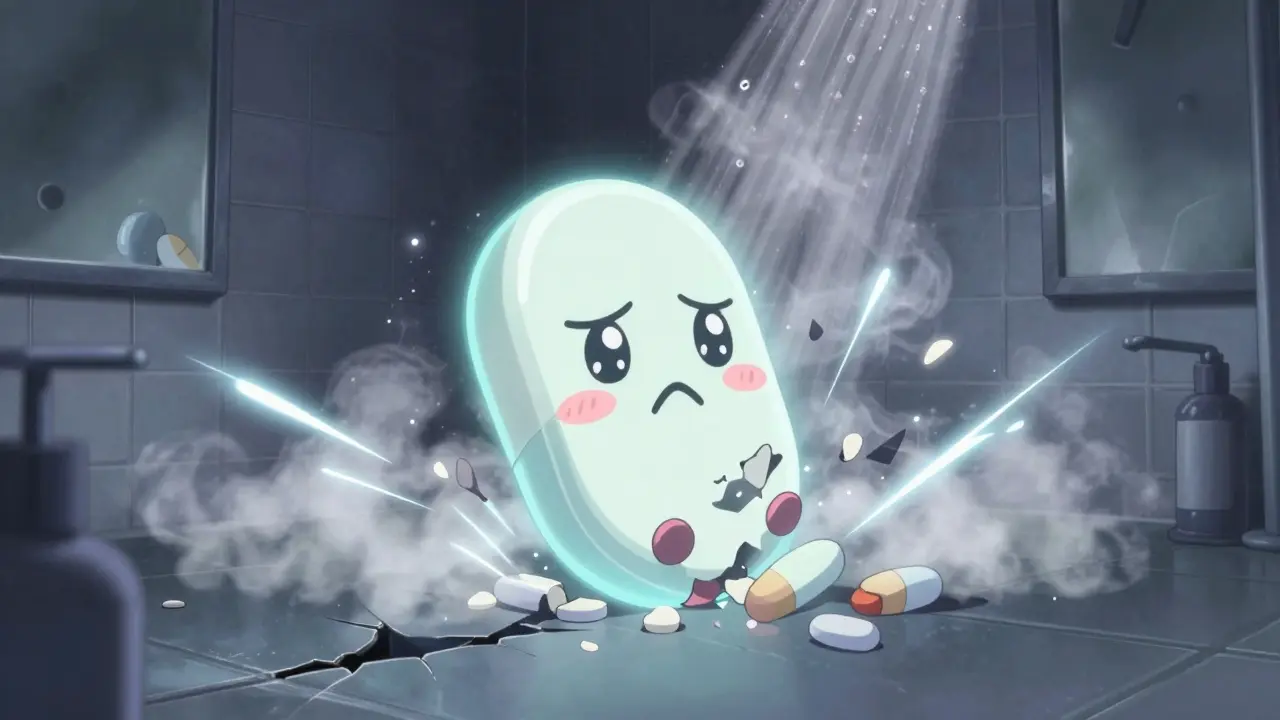
Most people keep their medications in the bathroom. It’s convenient - right next to the sink, easy to grab in the morning, and that little cabinet above the toilet seems made for it. But here’s the truth: storing medications in the bathroom is one of the most common and dangerous mistakes you can make with your health.
It’s not just about expired pills or clutter. It’s about whether your blood pressure medicine still works. Whether your insulin still lowers your sugar. Whether your antibiotics can actually kill the infection. And the bathroom? It’s actively sabotaging them.
Why the Bathroom Is a Drug Killer
The bathroom isn’t just humid - it’s a chemical disaster zone for medications. Every time you take a hot shower, steam fills the air. Humidity levels spike to 80-100%. Temperatures jump 20-30°F in minutes. That’s not just uncomfortable - it’s destructive.
Tablets absorb moisture like sponges. That causes hydrolysis - a chemical breakdown of the active ingredient. Capsules get sticky or brittle. Powders clump. Insulin, a protein-based drug, denatures when exposed to heat above 86°F. Nitroglycerin, used for heart attacks, loses potency in minutes under humid conditions. Birth control pills? The FDA found humidity can reduce their effectiveness by up to 35%.
And it’s not theoretical. A study in Circulation showed that patients storing beta-blockers in bathrooms had inconsistent blood pressure control 30.2% of the time. That’s not a fluke - that’s a direct link between storage and clinical failure. Blood glucose test strips, which aren’t even drugs, give wrong readings 68% of the time when stored in bathrooms. If strips fail that badly, imagine what’s happening to your prescriptions.
What Happens When Medications Lose Potency
Think your pill still works because it looks the same? That’s the trap. Degraded medication doesn’t always look different. It doesn’t always smell bad. It just doesn’t work like it should.
Antibiotics that have lost strength don’t just fail to cure infections - they help bacteria evolve into resistant strains. The WHO calls this one of the biggest global health threats. If your amoxicillin is weakened by bathroom humidity, you’re not just risking your own health - you’re fueling a public health crisis.
Anticoagulants like warfarin are even more dangerous. If their potency drops, clots can form. If they’re too strong, you bleed internally. There’s no middle ground. WELLFOR’s 2023 analysis found real cases where degraded warfarin led to emergency hospitalizations because patients thought they were protected - but their pills had turned to dust.
And don’t forget mental health meds. Antidepressants, anti-anxiety drugs, and seizure medications need precise dosing. Even a 10% drop in potency can trigger relapse, panic attacks, or seizures. One nurse reported that 42% of patients’ bathroom-stored medications showed visible signs of degradation - crumbling, discoloration, odd smells - while only 8% of those stored elsewhere did.
The Hidden Danger: Kids, Pets, and Theft
It’s not just about heat and moisture. Bathroom cabinets are rarely locked. They’re at eye level for kids. Easy for pets to reach. And if someone’s looking for pills - they know where to go.
According to CDC data, 70% of misused prescription opioids come from home medicine cabinets. Most of those are in bathrooms. The American Academy of Pediatrics says all medications should be locked away. Yet, 63% of households with children and 57% with pets still keep high-risk drugs within easy reach.
It’s not just accidental ingestion. It’s intentional misuse. Teens grabbing Xanax from the cabinet. Grandparents sharing painkillers. A visitor stealing codeine. The bathroom cabinet is a free pharmacy - and that’s not safe for anyone.
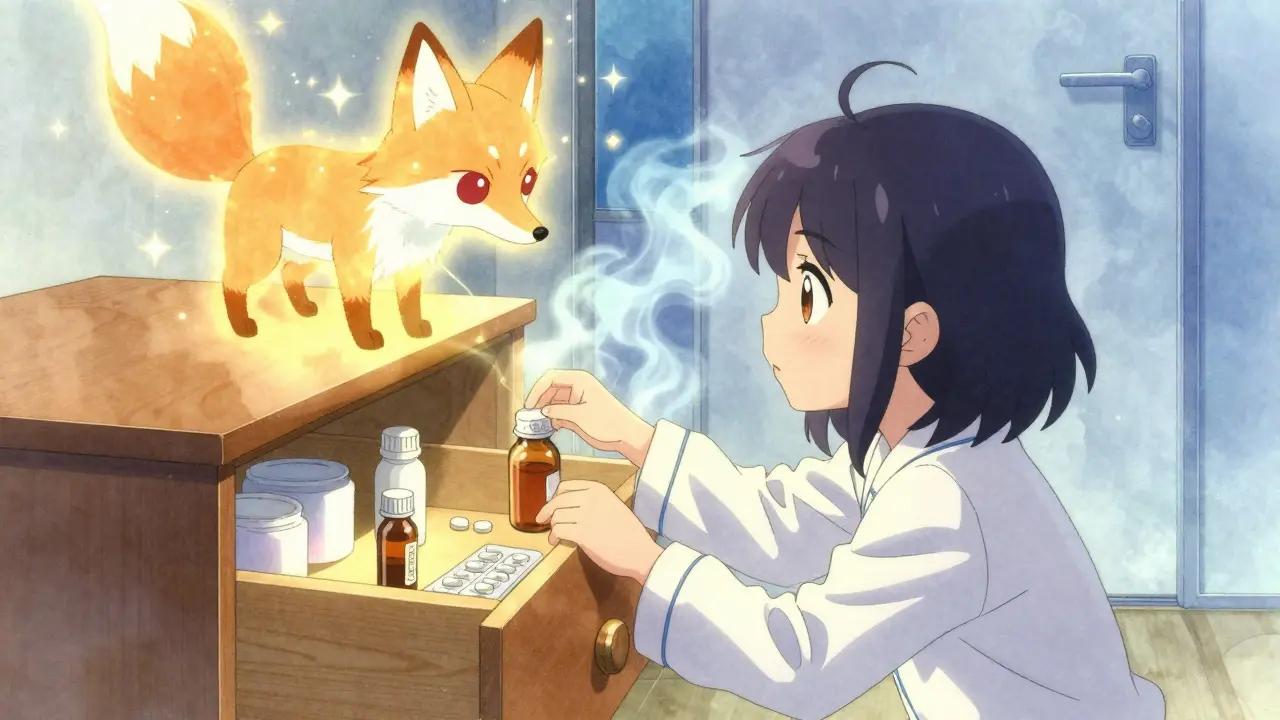
Where You Should Store Medications Instead
Find a cool, dry, dark place. That’s the golden rule.
Best options:
- A bedroom dresser drawer - away from windows and heat vents
- An interior closet - temperature stays steady
- A locked storage box on a high shelf - out of reach of kids and pets
Avoid: windowsills, kitchen cabinets (too much heat from the stove), cars (summer temps can hit 140°F), and yes - the bathroom.
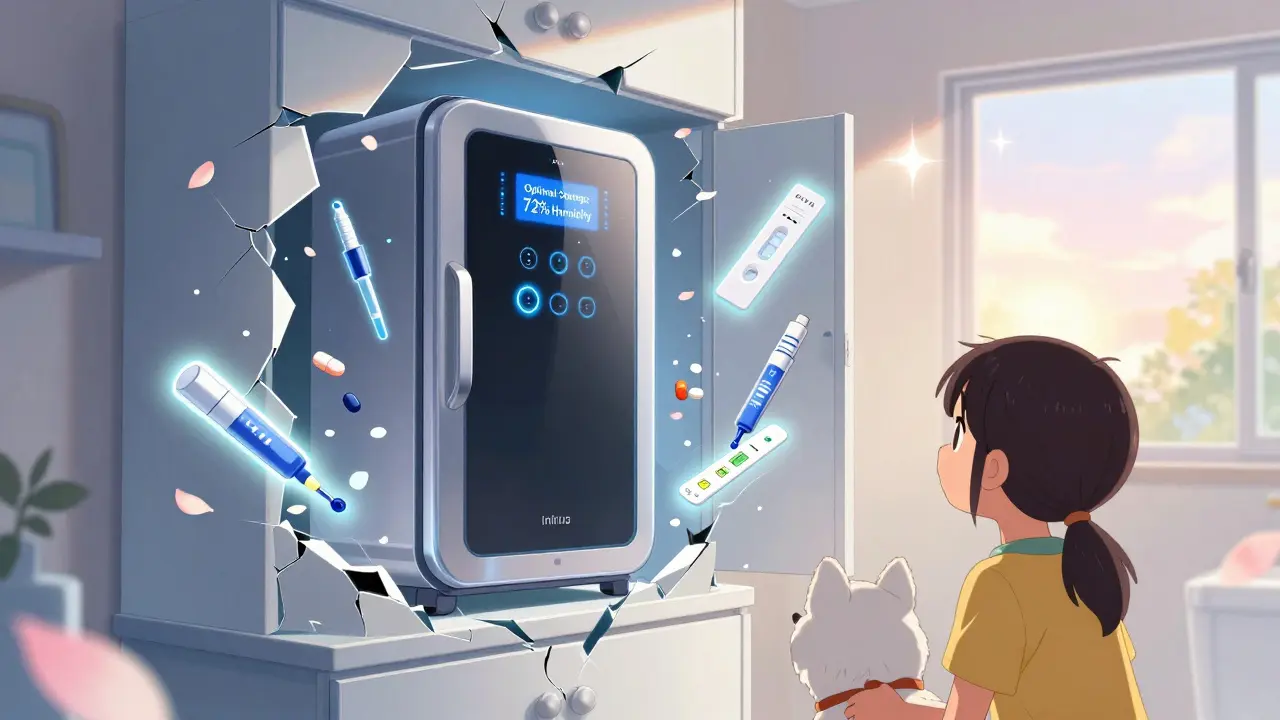
For refrigerated meds like insulin, pens, or some eye drops, use a dedicated fridge - not the one you use for food. Kitchen fridges open and close constantly, causing temperature swings. A small, labeled pharmaceutical fridge or even a sealed container in the back of the fridge (away from the freezer) works better.
Studies show medications stored properly retain 98.7% of their potency after six months. Bathroom-stored ones? Only 72.3%. That’s a 26% drop in effectiveness - just from where you put them.
How to Know If Your Medication Has Gone Bad
Check for these signs:
- Tablets that crumble, change color, or have a strange odor
- Capsules that are sticky, swollen, or leaking
- Liquids that are cloudy or have particles
- Insulin that looks cloudy when it should be clear
- Test strips that look faded or warped
Even if nothing looks wrong, if your symptoms return after a refill - especially if you’ve been storing it in the bathroom - consider potency loss. Talk to your pharmacist. They can test some meds or advise if a replacement is needed.
What About Expired Medications?
Don’t keep them. Don’t flush them. Don’t throw them in the trash.
Expired or degraded meds don’t just sit there. They leach into water systems. The NIH estimates $98 million worth of unused medications are stored in U.S. homes. Improper disposal contributes to 46% of pharmaceutical pollution in rivers and lakes.
Use a drug take-back program. Many pharmacies, hospitals, and police stations offer free drop-off bins. If none are nearby, mix pills with coffee grounds or cat litter, seal them in a container, and throw them in the trash. Never flush unless the label says to.
What’s Changing? New Tools for Safer Storage
Pharmacies are finally catching up. In 2023, 73% of prescription bottles included storage instructions - up from 41% in 2015. Many now come with humidity-indicating desiccant packets. Some labels change color if exposed to heat or moisture.
Smart medicine cabinets are starting to appear - they monitor temperature and humidity and send alerts to your phone. The National Association of Boards of Pharmacy is working on certification standards for home storage products, launching in early 2024.
And apps? Medication reminder apps that include storage alerts increased proper storage habits by 47% in a 2023 study. If you use an app for refills, check if it has a storage reminder too.
Final Check: Is Your Medicine Safe?
Ask yourself these questions:
- Is my medicine cabinet in the bathroom? → Move it.
- Do I leave pills on the counter after taking them? → Put them away immediately.
- Are my kids or pets able to reach them? → Lock them up.
- Do I know the expiration date? → Write it on the bottle.
- Do I still use meds from last year? → Check potency. Discard if unsure.
Medications are not like canned food. You can’t just wait until they look old to worry. Their effectiveness can vanish quietly - in the steam of your morning shower, in the heat of your afternoon sunbeam, in the humidity you never even noticed.
Don’t risk your health on convenience. Your pills deserve better than a bathroom cabinet.
Can I store my insulin in the bathroom?
No. Insulin is extremely sensitive to heat and humidity. Exposure to temperatures above 86°F (30°C) or high moisture levels can cause it to break down and lose effectiveness. Store insulin in a cool, dry place like a bedroom drawer or a dedicated fridge - never in the bathroom or near a window.
What if my medicine cabinet is the only place I have?
If your bathroom is the only option, move your meds to a sealed, airtight container and store it in a closet, under the sink, or on a high shelf away from the shower. Avoid placing it directly next to the sink or mirror where steam collects. Even a small change in location can make a big difference.
Do all medications degrade the same way in humidity?
No. Some are more vulnerable than others. Tablets and capsules are most affected by moisture. Insulin, nitroglycerin, and birth control pills degrade quickly in heat and humidity. Antibiotics and antidepressants may lose potency without obvious signs. Always check the label for specific storage instructions - if it says "keep in a dry place," avoid the bathroom.
Is it safe to store medications in the car?
No. Cars get extremely hot in summer - often over 120°F - even on mild days. Cold in winter can also damage some medications. Never store pills, insulin, or test strips in your car. Keep them with you in a bag or at home in a stable environment.
How often should I check my medicine cabinet?
Every three to six months. Look for changes in color, texture, or smell. Discard anything expired or damaged. Keep a list of your meds with expiration dates. Many hospitals and pharmacies offer free disposal days - use them. Don’t wait for something to go wrong.







Dayanara Villafuerte
January 18, 2026 at 03:41
OMG I just moved all my meds out of the bathroom after reading this 🙌 I had my insulin in there for 2 years… yikes. Also my anxiety pills were sticking together like glue. Never again. 🏠💊