Returning to work with chronic pain isn’t about pushing through discomfort-it’s about creating a sustainable plan that lets you keep your job without making the pain worse. Millions of people live with chronic pain-defined as pain lasting longer than three months-and many of them are still working. The key isn’t just medical treatment; it’s how your workplace responds. Whether you’re coming back from leave or trying to stay on the job, knowing your rights and what accommodations are possible can make all the difference.
What Counts as a Disability Under the ADA?
Chronic pain isn’t just a symptom-it can be a disability. Under the Americans with Disabilities Act (ADA), if your pain limits major life activities like sitting, standing, walking, or concentrating for long periods, you’re protected. This includes conditions like fibromyalgia, arthritis, nerve damage, and even long COVID. The Equal Employment Opportunity Commission (EEOC) made it clear in 2021: if your pain affects your ability to do core job functions, your employer must consider reasonable changes. You don’t need a diagnosis from a specialist to qualify-just documented limitations that impact your work.
Common Accommodations That Actually Work
Accommodations aren’t luxury perks-they’re practical fixes. Many cost little or nothing. The Job Accommodation Network found that 56% of accommodations for chronic pain cost employers nothing. Here’s what works:
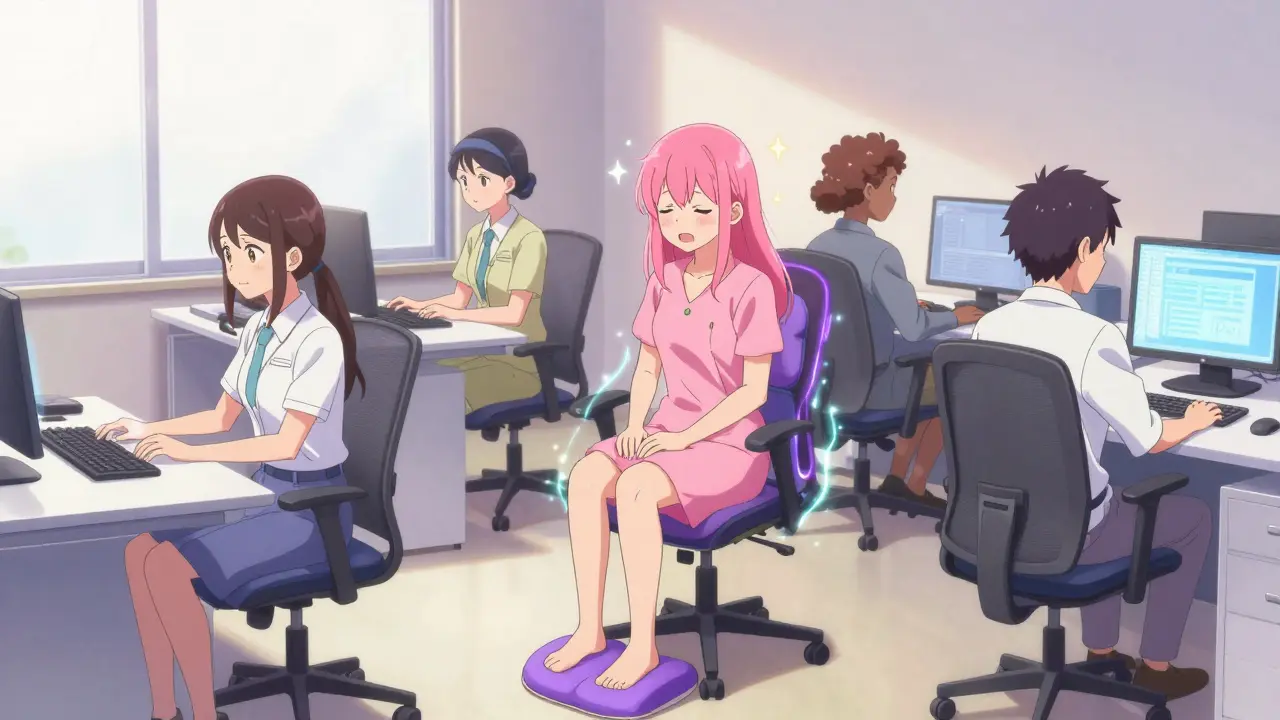
- Ergonomic workstations: Adjustable standing desks ($300-$1,200), ergonomic chairs ($200-$1,000), and cushioned footrests ($25-$150) reduce pressure on joints and muscles. A sit-stand desk lets you shift positions every 30 minutes, cutting flare-ups by up to 40% in some cases.
- Time-based adjustments: Flexible hours, extra breaks (5-15 minutes every 1-2 hours), and staggered start/end times help manage fatigue. One study showed employees who took regular short breaks reported 35% less pain escalation during the workday.
- Remote work: Working from home full-time or part-time removes commuting stress and lets you control your environment-temperature, lighting, noise. This is especially helpful for people with conditions like multiple sclerosis, where heat can trigger symptoms.
- Modified duties: Temporarily shifting tasks that involve heavy lifting, repetitive motion, or long standing can prevent setbacks. Reassigning minor duties (like filing or answering phones) while keeping core responsibilities intact keeps you engaged without overexertion.
- Assistive tech: Voice recognition software ($100-$300) cuts down on typing strain. Specialized mouse devices, keyboard trays, and heated cushions ($50-$200) offer targeted relief.
California’s Fair Employment and Housing Act goes further than federal law, requiring accommodations for employers with just five employees. If you’re in California or a similar state, your rights are broader.
The Interactive Process: How to Ask Without Getting Rejected
Asking for help is the hardest part-and the most important. The ADA doesn’t require you to wait until you’re in crisis. You should start the conversation early. Here’s how to do it right:
- Get medical documentation: Your doctor doesn’t need to write a novel. A simple note stating your diagnosis, how your pain affects your work (e.g., “can’t sit for more than 45 minutes without increased lower back pain”), and recommended accommodations is enough.
- Be specific: Don’t say, “I need help with pain.” Say, “I need a heated seat cushion that plugs into a standard outlet and 10-minute breaks every 90 minutes.” Vague requests lead to 55% higher denial rates.
- Put it in writing: Email your manager or HR. Mention the ADA. Document everything. If you say it out loud, it can be forgotten. If it’s written, it’s a paper trail.
- Propose solutions: Don’t just ask for help-offer options. “I’ve researched sit-stand desks. The model I’m suggesting costs $500 and has been shown to reduce pain-related absenteeism by 30%.” Employers respond better when you show you’ve done the work.
Employers can’t force you to accept a specific accommodation. They must work with you to find one that works. If they refuse, they have to prove it would cause “undue hardship”-meaning it’s too expensive or disruptive for their size. A small business with 10 employees has a lower threshold than a corporation with 1,000 staff.

What Employers Get Wrong
Many employers think accommodations are permanent or only for obvious disabilities. They’re not. Chronic pain flares up. One week you’re fine. The next, you can’t stand for more than 10 minutes. Accommodations aren’t about fixing you-they’re about adjusting the environment. Yet, 41% of accommodation denials happen because employers assume the need is temporary. That’s a mistake.
Another myth: accommodations hurt productivity. Data says otherwise. Employees with proper accommodations are more likely to stay in their jobs. One study found that 78% of workers who received personalized accommodations stayed employed long-term, compared to just 42% who got generic fixes like “take more breaks.” The difference? Customization.
Supervisor attitude matters too. Employees with supportive managers were 2.3 times more likely to have accommodations approved. If your boss sees your pain as a weakness, they’re more likely to push back. If they see it as a solvable problem, they’ll help.
What If You’re Denied?
Denial doesn’t mean you’re out of options. First, ask for clarification in writing. If they say “it’s too expensive,” ask for a cost breakdown. If they say “we don’t have the equipment,” ask if they can borrow or lease it. Many companies have partnerships with occupational therapists or workplace consultants who can help identify low-cost solutions.
You can also contact the Job Accommodation Network (JAN). It’s a free, confidential service run by the U.S. Department of Labor. They’ve helped resolve 82% of accommodation inquiries without formal complaints. They’ll help you draft letters, understand your rights, and even talk to your employer if needed.
If you’re still blocked, you can file a complaint with the EEOC. But most cases don’t need to go that far. The threat of a complaint often prompts action. Keep records of every email, meeting, and denial.
Gradual Return: A Smarter Way Back
Jumping back to full-time work after months off is a recipe for relapse. A growing number of employers are using “graduated return-to-work” plans. This means starting with 20-50% hours, slowly increasing over weeks or months. One study showed this approach led to 63% higher long-term retention than immediate full-time returns.
For example: You return three days a week for four hours each day, with a 15-minute break every hour. After two weeks, you add one more day. By week six, you’re at full time-with the same accommodations in place.
This isn’t just kinder-it’s smarter. It gives your body time to adjust. It lets your employer see you’re still productive. And it reduces the risk of another leave.

Why People Don’t Ask-And What Happens When They Don’t
62% of people with chronic pain delay asking for accommodations. Why? Fear. Fear of being seen as weak. Fear of being passed over for promotions. Fear of losing their job. And it’s real: 31% of workers with chronic pain end up quitting because they didn’t feel safe asking.
But here’s the truth: asking doesn’t make you look less capable. It makes you look responsible. Employers who handle accommodations well report higher morale, lower turnover, and fewer workers’ comp claims. You’re not a burden-you’re part of the solution.
What’s Changing in 2026
The Department of Labor launched its “Return to Work Initiative” in early 2023, funding state programs to standardize RTW plans for chronic pain. More states are aligning with California’s stricter rules. Wearable tech is starting to play a role-some employers now accept data from pain-tracking devices to objectively measure functional limits. And long COVID is now officially recognized under the ADA, opening doors for thousands who were previously ignored.
Legislative proposals are also underway to extend FMLA protections to smaller employers. Right now, only companies with 50+ employees must offer unpaid leave. That’s changing. If you’re in a smaller company, don’t assume you’re out of luck-state laws may still protect you.
Final Checklist: What to Do Now
- Write down exactly how your pain affects your job (e.g., “I can’t type for more than 20 minutes without wrist pain”)
- Ask your doctor for a one-page note with diagnosis, limitations, and suggested accommodations
- Research low-cost solutions-JAN.org has free guides for every condition
- Email your manager with a clear, specific request
- Keep copies of everything
- If denied, contact JAN for free help
You don’t need to suffer to keep your job. You just need to know what’s possible-and how to ask for it.
Can my employer fire me because I have chronic pain?
No. Under the ADA, firing someone because of a disability-including chronic pain-is illegal. Employers must provide reasonable accommodations unless it causes undue hardship. If you’re terminated after requesting accommodations, you may have grounds for a discrimination claim with the EEOC.
Do I need to tell my boss about my diagnosis?
You don’t need to disclose your exact diagnosis. You only need to explain how your pain affects your work-like “I have difficulty sitting for long periods” or “I need breaks to manage fatigue.” Medical details aren’t required. Focus on functional limitations, not labels.
What if my job doesn’t have an HR department?
Talk directly to your manager or owner. Even small businesses with five or more employees must comply with state laws like California’s FEHA. Send a written request. If they refuse, contact the Job Accommodation Network (JAN) for guidance-they’ll help you navigate even the smallest workplaces.
Can I get accommodations if I work remotely?
Yes. Remote workers have the same rights as on-site employees. You can request ergonomic equipment, flexible hours, or assistive tech-even if you never step into an office. Your employer must provide reasonable adjustments regardless of location.
How long does it take to get accommodations approved?
Federal agencies typically respond within 10 business days. Private employers aren’t legally required to meet a deadline, but they must respond “promptly.” If you don’t hear back in two weeks, follow up in writing. Delaying is a violation of the ADA.







Angel Wolfe
February 28, 2026 at 05:35
This whole ADA thing is just another government scam to make employers pay for people who can't handle real work
My uncle had back pain and got a standing desk - now he's on disability and collects checks while playing video games
They're turning America into a nation of whiners who think they deserve special treatment just because they're too weak to sit in a chair
Why don't they just quit and let real workers take their spot?