Gastrointestinal Bleeding: Causes, Risks, and What You Need to Know
When you hear gastrointestinal bleeding, uncontrolled blood loss from the digestive tract. Also known as GI bleeding, it can happen anywhere from your esophagus to your colon—and it’s not always obvious. Some people notice bright red blood in their stool. Others just feel tired, dizzy, or weak without knowing why. That’s the danger: gastrointestinal bleeding doesn’t always come with warning signs.
It’s often tied to things you already take. NSAIDs like ibuprofen can wear down your stomach lining. Blood thinners like warfarin make even small tears dangerous. Even long-term acid reflux can lead to ulcers that bleed slowly over time. This isn’t rare—it’s one of the top reasons people end up in the ER. And while older adults are more at risk, anyone on certain meds or with chronic gut issues should pay attention.
Not all GI bleeding is the same. upper GI bleed, bleeding from the esophagus, stomach, or first part of the small intestine usually means dark, tarry stools or vomiting blood. lower GI bleed, bleeding from the colon or rectum often shows up as bright red blood on toilet paper or in the bowl. The cause? Could be a bleeding ulcer, diverticulosis, hemorrhoids, or even colon cancer. Some cases come from medications—like when someone takes aspirin daily and doesn’t realize it’s quietly damaging their gut lining.
What you’ll find here isn’t just theory. These are real cases—people who ignored mild fatigue, didn’t connect their joint pain meds to dark stools, or thought a little blood was just from hemorrhoids. The articles below break down how drugs like warfarin, SSRIs, or even herbal supplements can quietly increase bleeding risk. You’ll see how stress, aging, and gut health interact with meds. And you’ll learn what tests actually matter—because not every GI bleed needs an endoscopy right away.
This isn’t about scaring you. It’s about giving you the facts so you can ask the right questions. If you’re on long-term meds, have a history of ulcers, or just feel off for no reason, this collection gives you the context to act—before it becomes an emergency.
Medications
15
Comments
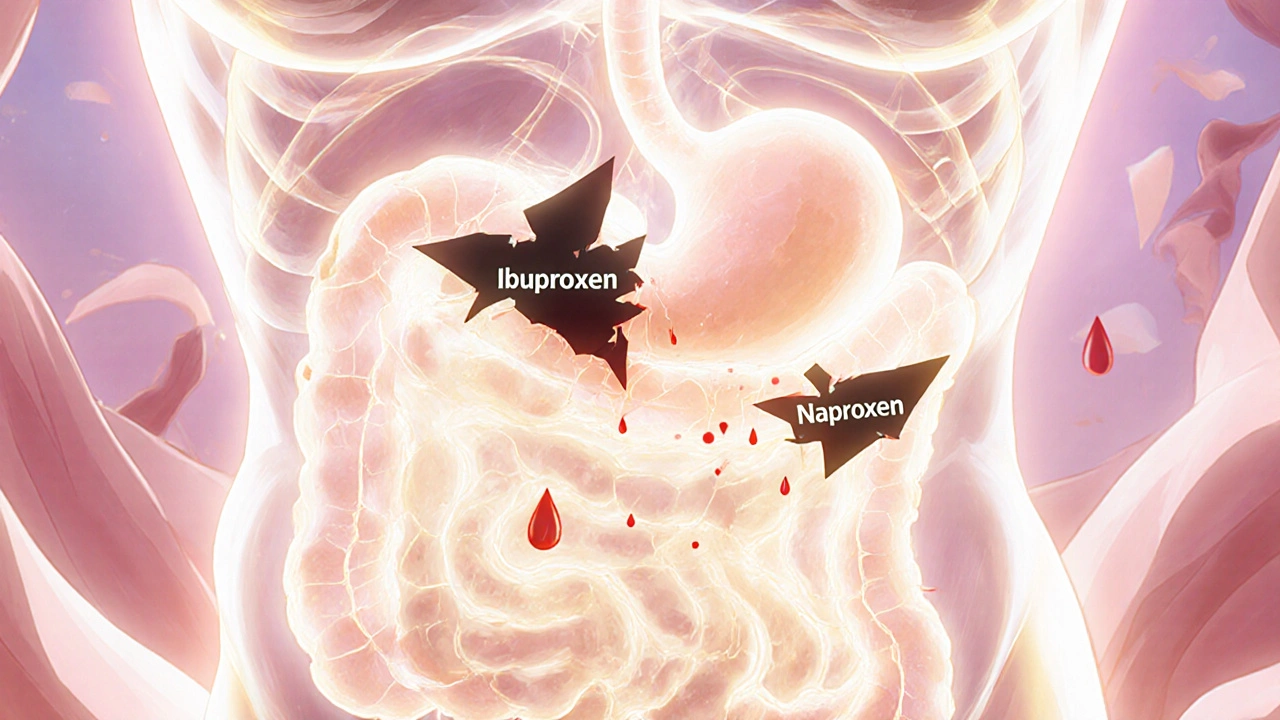
NSAIDs and Peptic Ulcer Disease: Understanding the Risk of Gastrointestinal Bleeding
NSAIDs like ibuprofen and naproxen can cause serious gastrointestinal bleeding, especially in older adults or those with risk factors. Learn how to recognize the signs, reduce your risk, and use safer alternatives.
About
Medications
Latest Posts


Labor Cost Differences: Generic vs Brand-Name Drug Production
By Marcel Kornblum Feb 27, 2026

Arcalion (Sulbutiamine) vs Top Alternatives - Benefits, Risks & Best Uses
By Marcel Kornblum Oct 21, 2025

How Support Groups and Community Programs Improve Medication Compliance
By Marcel Kornblum Nov 26, 2025