Nail Psoriasis: Causes, Treatments, and What Really Works
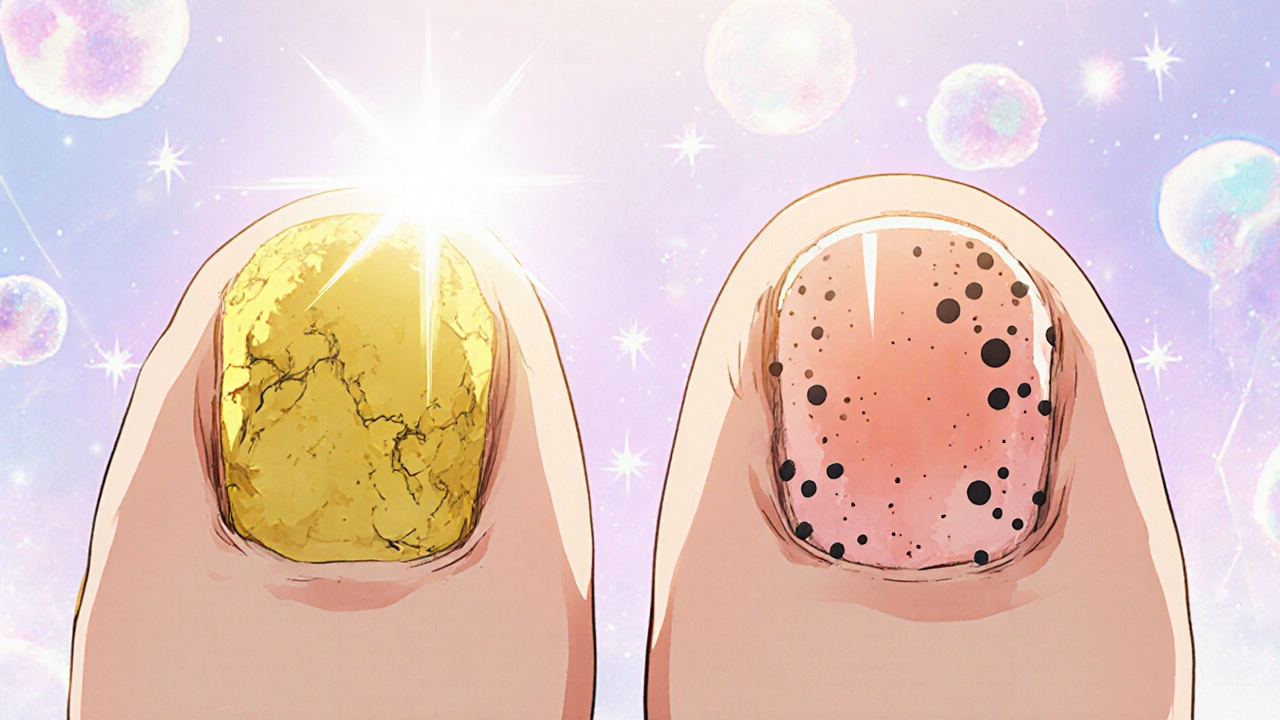
When your nails turn yellow, thicken, or develop pits, it’s easy to assume it’s a nail psoriasis, a skin condition that affects the nail bed and matrix, often linked to psoriasis elsewhere on the body. Also known as psoriatic nail dystrophy, it’s not a fungus—it’s your immune system attacking your own nail tissue. Many people waste months treating it like a fungal infection with antifungal creams or pills, only to see no improvement. That’s because nail psoriasis and fungal nails, while they look similar, need completely different approaches.
Nail psoriasis doesn’t just show up in isolation. It’s often tied to psoriatic arthritis, a type of inflammatory arthritis that affects people with psoriasis, causing joint pain, stiffness, and swelling. If you’ve got pitted nails and stiff fingers in the morning, that’s a red flag. It’s not just cosmetic—this is a sign your body is in overdrive. Studies show up to 50% of people with plaque psoriasis develop nail changes, and nearly 80% of those with psoriatic arthritis will have affected nails. The nails are often the first clue doctors miss. What makes it worse? Stress, injury to the nail, or even certain medications. Some people notice their nails get worse after a bad sunburn or a bout of strep throat. It’s not random—it’s your immune system reacting.
Most over-the-counter treatments won’t touch it. Antifungals? Useless if there’s no fungus. Nail polish? Just hides the problem. What actually helps? Topical steroids applied directly under the nail, steroid injections into the nail bed, or newer biologic drugs that calm the immune system. Some patients see big improvements with phototherapy or oral meds like methotrexate. But here’s the catch: treatment takes time. You won’t see results in a week. Nails grow slowly, and healing the root means waiting months for a clean nail to grow out.
It’s also not just about what you put on your nails. What you eat, how you manage stress, and whether you smoke all play a role. People who quit smoking often notice their nails improve. Cutting back on sugar and processed foods can help reduce inflammation. And don’t ignore your feet—tight shoes or trauma from walking can make nail psoriasis flare. Protect your nails. Don’t bite them. Don’t pick at them. Even manicures can trigger flares if the tools aren’t sterile.
You’ll find posts here that dig into exactly what works—like how biologics change the game, why some people respond to one drug and not another, and how to tell the difference between psoriasis and fungus without a lab test. There are also guides on managing pain, dealing with embarrassment, and what to ask your dermatologist when you walk in. This isn’t about quick fixes. It’s about understanding the real cause, avoiding dead-end treatments, and finding what actually brings relief.
Skin Care and Dermatology
11
Comments
Nail Disorders: How to Tell Fungal Infections Apart from Psoriatic Changes
Fungal nail infections and psoriatic nail changes look similar but require totally different treatments. Learn the key signs, diagnostic tests, and effective treatments for each condition to avoid misdiagnosis and wasted time.
About
Skin Care and Dermatology
Latest Posts


Alcohol and Diabetes: Safe Drinking Guidelines and Hypoglycemia Risks
By Marcel Kornblum Dec 31, 2025

Insurance Appeals: Fighting Denials When a Generic Medication Doesn't Work
By Marcel Kornblum Dec 27, 2025
Medication-Related Liver Damage: Warning Signs and When to Seek Help Immediately
By Marcel Kornblum Dec 12, 2025