Beta-Blocker Selection Tool
Find Your Best Beta-Blocker
Select your medical condition to see which beta-blockers are most appropriate
Recommended Beta-Blockers
Why This Matters
Important: Never adjust medication without consulting your doctor
When doctors prescribe beta-blockers, they’re not just picking a drug-they’re choosing a specific tool with unique effects. Not all beta-blockers are the same. Some slow your heart without touching your lungs. Others open up your blood vessels. A few even help your heart heal after damage. The difference isn’t just chemical-it changes how you feel, what side effects you get, and whether the drug works at all for your condition.
How Beta-Blockers Actually Work
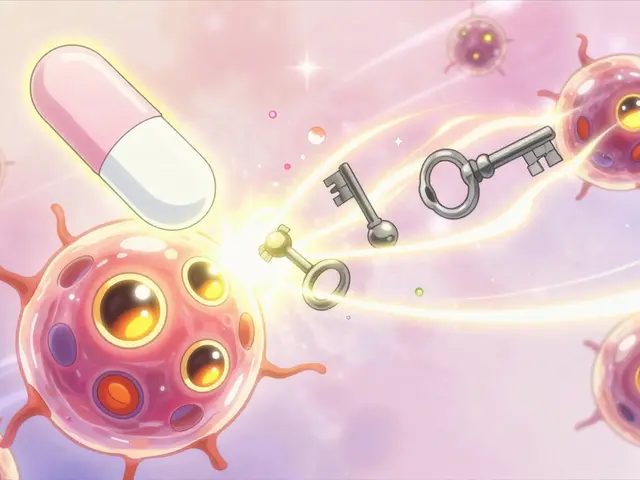
Beta-blockers don’t just lower your heart rate. They block adrenaline from binding to beta receptors in your heart and blood vessels. These receptors are like locks, and adrenaline is the key. When adrenaline fits in, your heart beats faster, harder, and your blood pressure rises. Beta-blockers jam the lock. No key, no response.
This is why they’re used after a heart attack. Less adrenaline means less strain on damaged heart muscle. It’s also why they help with angina-less workload means less chest pain. But the same mechanism can cause problems. If a beta-blocker blocks receptors in your lungs, it can trigger wheezing. If it slows your heart too much, you feel tired. The trick is picking the right one for your body.
The Three Generations of Beta-Blockers
There are three main types of beta-blockers, each with different targets and side effects.
First-generation drugs like propranolol block both beta-1 (heart) and beta-2 (lungs, blood vessels) receptors. They’re effective but blunt. They can cause asthma attacks, cold hands, and fatigue because they affect too many systems. Propranolol still gets used for migraines and tremors, but it’s rarely the first choice for heart conditions anymore.
Second-generation beta-blockers like metoprolol, atenolol, and bisoprolol are more selective. They mainly target beta-1 receptors in the heart. This makes them safer for people with asthma or COPD. You still get the heart-protective benefits without as much risk to your lungs. But even among these, there are differences. Metoprolol tartrate needs to be taken twice a day. Metoprolol succinate is long-acting-once daily. That matters for sticking to the regimen.
Third-generation agents like carvedilol and nebivolol do something extra. They don’t just block adrenaline-they also relax blood vessels. Carvedilol blocks alpha-1 receptors, which opens up arteries. Nebivolol triggers your blood vessels to release nitric oxide, a natural vasodilator. This dual action makes them especially powerful for heart failure.
Why Carvedilol and Nebivolol Stand Out in Heart Failure
If you have heart failure with reduced ejection fraction, carvedilol and nebivolol are often the top choices. Why? Because they do more than slow the heart. They help the heart heal.
Carvedilol cuts oxidative stress in heart tissue by 30-40% in studies. That means less damage from free radicals. It also reduces scarring and cell death. In the US Carvedilol Heart Failure Study, patients on carvedilol had a 35% lower risk of death compared to placebo. That’s not a small number-it’s life-changing.
Nebivolol works differently. It activates beta-3 receptors, which boosts nitric oxide. This improves blood flow, reduces stiffness in arteries, and may even help with erectile dysfunction. In the SENIORS trial, elderly heart failure patients on nebivolol had 14% fewer cardiovascular deaths. And unlike older beta-blockers, many men report better sexual function on nebivolol.
Both are recommended by the European Society of Cardiology as first-line for heart failure. But they’re not easy to start. Carvedilol must be titrated slowly-starting at 3.125 mg twice daily and creeping up over 8-16 weeks. If you rush it, you risk low blood pressure and dizziness. Patients who stick with the slow ramp-up report far fewer side effects.

Side Effects: Not All Beta-Blockers Are Created Equal
Side effects vary wildly between drugs. One person might feel fine on metoprolol. Another might be too tired to get out of bed.
Propranolol has a reputation. Patient reviews on Drugs.com show 38% report moderate to severe side effects: sleep problems (27%), depression (19%), and trouble exercising (33%). That’s because it crosses the blood-brain barrier easily and affects brain receptors.
Bisoprolol, on the other hand, has a 7.1/10 average rating. Only 18% report sleep issues, 11% depression, and 22% exercise intolerance. Why? It doesn’t cross into the brain as much. It’s also more selective for the heart.
Cold hands? That’s common with nonselective beta-blockers. They block beta-2 receptors in blood vessels, causing them to constrict. Cardioselective agents like bisoprolol or nebivolol are much less likely to cause this.
And then there’s fatigue. In a survey from the American Heart Association, 42% of people on metoprolol felt tired. But 65% of men over 50 on nebivolol said their sexual function improved. That’s not a coincidence-it’s pharmacology.
Who Gets Which Drug-and Why
Choosing a beta-blocker isn’t one-size-fits-all. Here’s how doctors decide:
- Heart failure: Carvedilol or nebivolol. They reduce death risk better than older drugs.
- Post-heart attack: Metoprolol succinate or bisoprolol. Propranolol is rarely used now.
- Hypertension: Not first-line anymore. But if used, cardioselective agents like bisoprolol are preferred over propranolol.
- Asthma or COPD: Avoid nonselective beta-blockers. Use metoprolol or bisoprolol with caution. Nebivolol is often safest.
- Migraines or tremors: Propranolol still has a role here.
- Elderly patients: Avoid high doses. Start low. Nebivolol and bisoprolol are better tolerated.
One big mistake? Stopping suddenly. The FDA warns that quitting beta-blockers abruptly can raise your risk of heart attack by 300% in the first two days. Always taper under medical supervision.

What’s New in 2026?
The field is evolving. In 2023, the FDA approved entricarone, a new drug that combines beta-3 activation with beta-1 blockade for heart failure with preserved ejection fraction. Early results show a 22% drop in hospitalizations.
By 2024, a combination pill of nebivolol and valsartan (an ARB) is expected. It’s designed to tackle both blood pressure and heart remodeling in one tablet.
Researchers are also testing gene-based selection. The GENETIC-BB trial is looking at whether your DNA can predict which beta-blocker will work best for you. Imagine a simple blood test telling you whether metoprolol or carvedilol is right for your body.
Meanwhile, hospital systems are using AI tools to cut inappropriate prescribing. One study found clinical decision support reduced bad choices by 25%. That’s huge-because too many patients still get the wrong beta-blocker.
Bottom Line: It’s Not Just About the Class
Beta-blockers aren’t a single group. They’re a family of drugs with different jobs. Propranolol isn’t better than carvedilol-it’s just different. Carvedilol isn’t just a stronger version of metoprolol-it’s a different kind of medicine entirely.
If you’re on a beta-blocker and feeling tired, cold, or depressed, don’t assume it’s just part of the deal. Ask: Is this the right one for me? Could switching help? The answer might be simpler than you think.