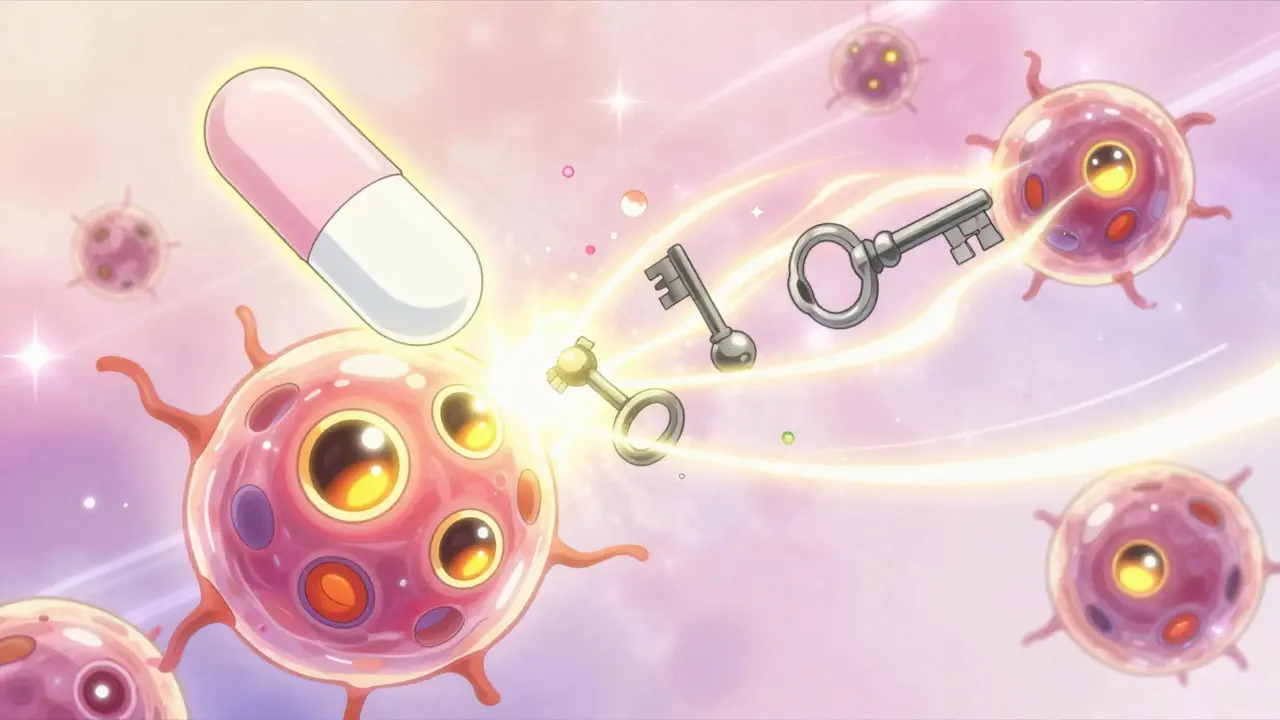
Ever wonder how a tiny pill can change how you feel - whether it’s calming your anxiety, lowering your blood pressure, or killing an infection? It’s not magic. It’s pharmacology. This science explains exactly how medications interact with your body at the molecular level. And understanding it isn’t just for doctors - it helps anyone make smarter choices about their health.
What Pharmacology Really Means
Pharmacology is the study of how chemicals - whether they’re made in a lab or found in nature - affect living systems. It’s not just about drugs working. It’s about why and how they work. This field started in the 1800s with Oswald Schmiedeberg, who built the first lab in Strasbourg to test chemicals on animals and measure their effects. Today, it’s the backbone of modern medicine. Nearly 92% of all drugs approved by the FDA between 2010 and 2020 were developed using pharmacological research.
Think of pharmacology as a bridge. It connects biology, chemistry, and medicine. Without it, we’d be guessing how to treat diseases. With it, we can design drugs that target specific problems - like blocking a receptor that causes pain or stopping an enzyme that makes cancer cells grow.
The Two Sides of Drug Action: PK and PD
Every drug’s journey in your body breaks down into two main parts: pharmacokinetics (PK) and pharmacodynamics (PD). One is about what your body does to the drug. The other is about what the drug does to your body.
Pharmacokinetics - or PK - describes the four stages of a drug’s path through your system, often called ADME:
- Absorption: How the drug enters your bloodstream. Pills are usually absorbed in the small intestine. Injections go straight in. Inhalers get absorbed through the lungs.
- Distribution: Once in the blood, the drug travels to tissues. Some drugs cross the blood-brain barrier; others don’t. Fat-soluble drugs can build up in fatty tissue.
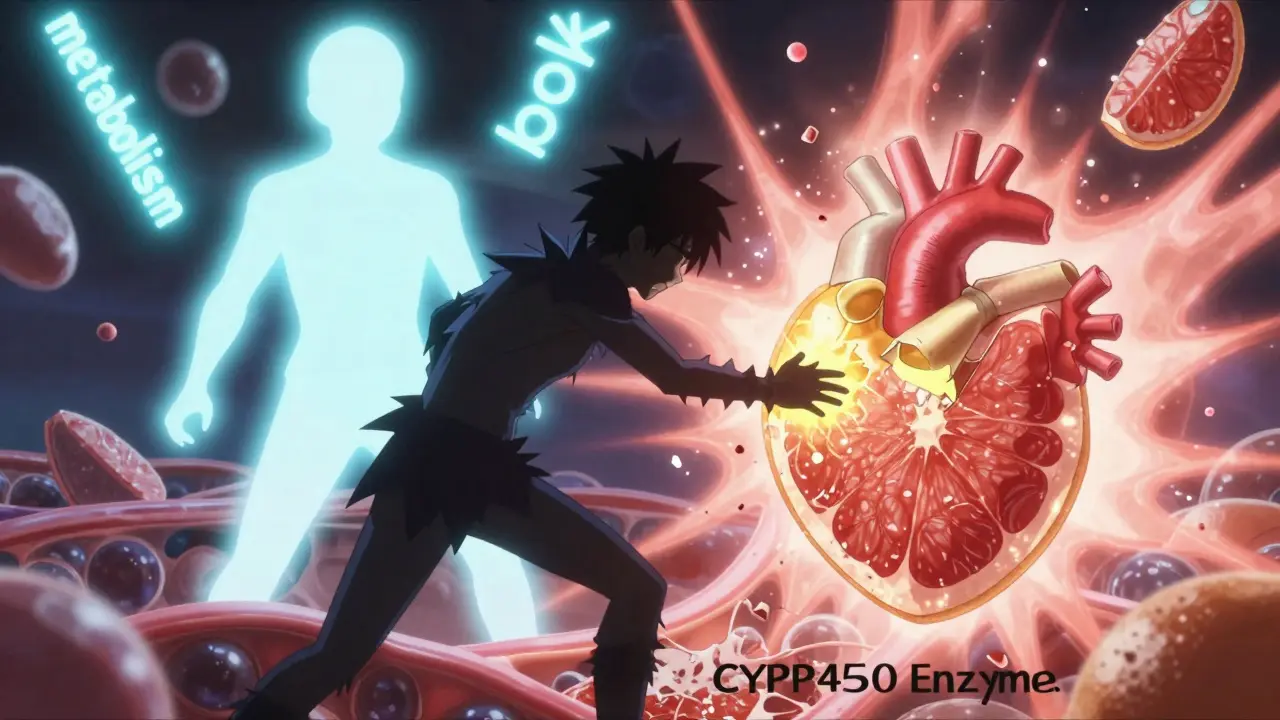
- Metabolism: Most drugs are broken down in the liver. Enzymes - especially the CYP450 family - change their chemical structure so they can be removed. This is why some medications interact badly with grapefruit juice or alcohol.
- Excretion: The kidneys filter out the leftovers. If your kidneys aren’t working well, drugs can build up to dangerous levels.
These steps determine how long a drug lasts, how often you need to take it, and whether it’s safe for people with liver or kidney disease. A 2023 study in JAMA Internal Medicine found that adjusting doses based on kidney and liver function cut adverse drug events by 27%.
Pharmacodynamics - or PD - is the flip side. It answers: How does the drug actually create its effect? This is where things get cellular.
How Drugs Talk to Your Cells
Your body is full of proteins that do important jobs: receptors that receive signals, enzymes that speed up reactions, transporters that move molecules. Drugs work by interacting with these proteins.
Here are the three main ways:
- Receptor binding: This is the most common method. About 60% of drugs work this way. Receptors are like locks. Drugs are keys. If the key fits, it turns the lock. Agonists turn the lock to activate a response - like adrenaline binding to heart receptors to speed up your pulse. Antagonists block the lock so nothing else can turn it - like beta-blockers stopping stress hormones from overworking your heart.
- Enzyme control: About 20% of drugs target enzymes. Some block them (inhibitors), others boost them (stimulators). For example, statins block an enzyme that makes cholesterol. MAOIs, used for depression, block the enzyme that breaks down serotonin, so more of it stays in your brain.
- Physical or chemical action: The remaining 20% don’t bind to proteins at all. Magnesium citrate, for instance, pulls water into your intestines to soften stool. Antacids neutralize stomach acid. These are simple chemistry tricks, not complex biological signals.
It’s important to know the difference between mechanism of action and mode of action. The mechanism is the molecular interaction - like blocking an enzyme. The mode is the visible result - like less stomach pain or easier bowel movements.
Biologics: The New Frontier
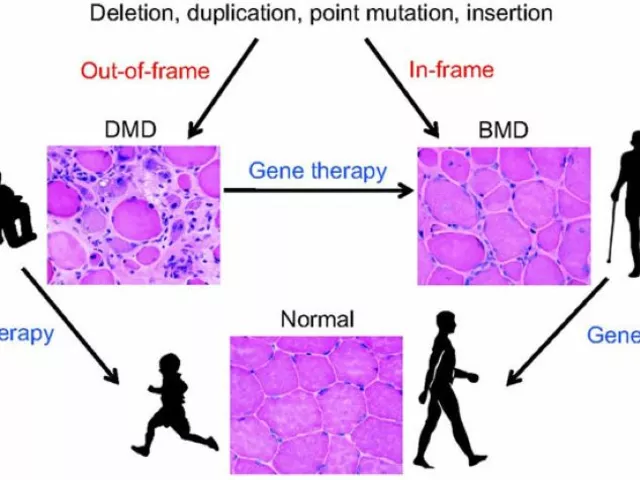
Not all drugs are small pills. A growing class - called biologics - are large, complex molecules made from living cells. These include antibodies, proteins, and gene therapies. They’re used for autoimmune diseases, cancer, and rare conditions.
Biologics work by targeting specific signals in your immune system. For example, drugs like adalimumab block TNF-alpha, a molecule that causes inflammation in rheumatoid arthritis. These drugs account for 35% of all new drug approvals since 2015. They’re powerful - but also expensive and often given by injection or IV.
Why People React Differently to the Same Drug
Two people take the same dose of the same medication. One feels great. The other gets sick. Why?
Genetics. Your DNA affects how your body processes drugs. About 17% of people have genetic variations in their CYP450 enzymes. This means they metabolize drugs too fast (the drug doesn’t work) or too slow (it builds up and causes side effects). A common example is warfarin, a blood thinner. Too little, and you risk clots. Too much, and you bleed. Genetic testing can now guide dosing for many patients.
Age, weight, diet, other medications, and even gut bacteria also play roles. The FDA and European Medicines Agency now require pharmacokinetic data for every new drug - including how it behaves in older adults or those with organ problems. Still, many prescriptions are given without checking these factors. A 2022 survey found that 62% of doctors feel unsure explaining pharmacodynamics to patients. That’s a gap - and it’s dangerous.
Real-World Consequences
Not understanding pharmacology can lead to real harm. One Reddit user, a nursing student, described how a patient on an MAOI (an old antidepressant) was given an SSRI (a newer one). The combination caused serotonin syndrome - a life-threatening spike in brain serotonin. The nurses didn’t recognize the symptoms because no one explained the drug’s mechanism.
On the flip side, another user shared how knowing warfarin’s sensitivity to antibiotics and vitamin K helped prevent a hospitalization. These aren’t rare stories. They happen daily.
And it’s not just patients. Doctors rely on this knowledge. A 2022 American Medical Association survey showed 78% of physicians consider pharmacokinetics essential for prescribing. But without clear communication, patients are left guessing.
What’s Next? AI and Personalized Medicine
Pharmacology is changing fast. In May 2024, DeepMind released AlphaFold 3, an AI tool that predicts how drugs bind to proteins with 89% accuracy - far better than older methods. This could cut years off drug development.
The FDA has approved 12 new biomarkers to measure how drugs behave in the body, especially for patients with kidney disease. And research is moving toward personalized pharmacodynamics: using a person’s gene profile, protein levels, and lifestyle to tailor drug choices.
But there’s a catch. As the science gets more complex, the gap widens between researchers and front-line clinicians. The National Institutes of Health predicts a 25% increase in pharmacology specialist roles by 2030 just to keep up.
For now, the basics still matter most. Whether you’re taking a daily pill or a new injection, knowing how it works helps you ask better questions, avoid dangerous interactions, and recognize when something’s off.
Key Takeaways
- Pharmacology is the science behind how drugs work - not just what they do, but how and why.
- Pharmacokinetics (PK) = what your body does to the drug (absorption, distribution, metabolism, excretion).
- Pharmacodynamics (PD) = what the drug does to your body (receptor binding, enzyme control, chemical action).
- Most drugs target receptors (60%), enzymes (20%), or work through physical means (20%).
- Genetics, age, liver/kidney function, and other drugs change how you respond - one size doesn’t fit all.
- Understanding your medication’s mechanism can prevent harm and improve outcomes.



Andrew Poulin
March 7, 2026 at 08:39
Pharmacology is the backbone of modern medicine. Period. No guesswork. Just science. If you don't get this, you're flying blind.