Why Light-Sensitive Medications Need Special Care
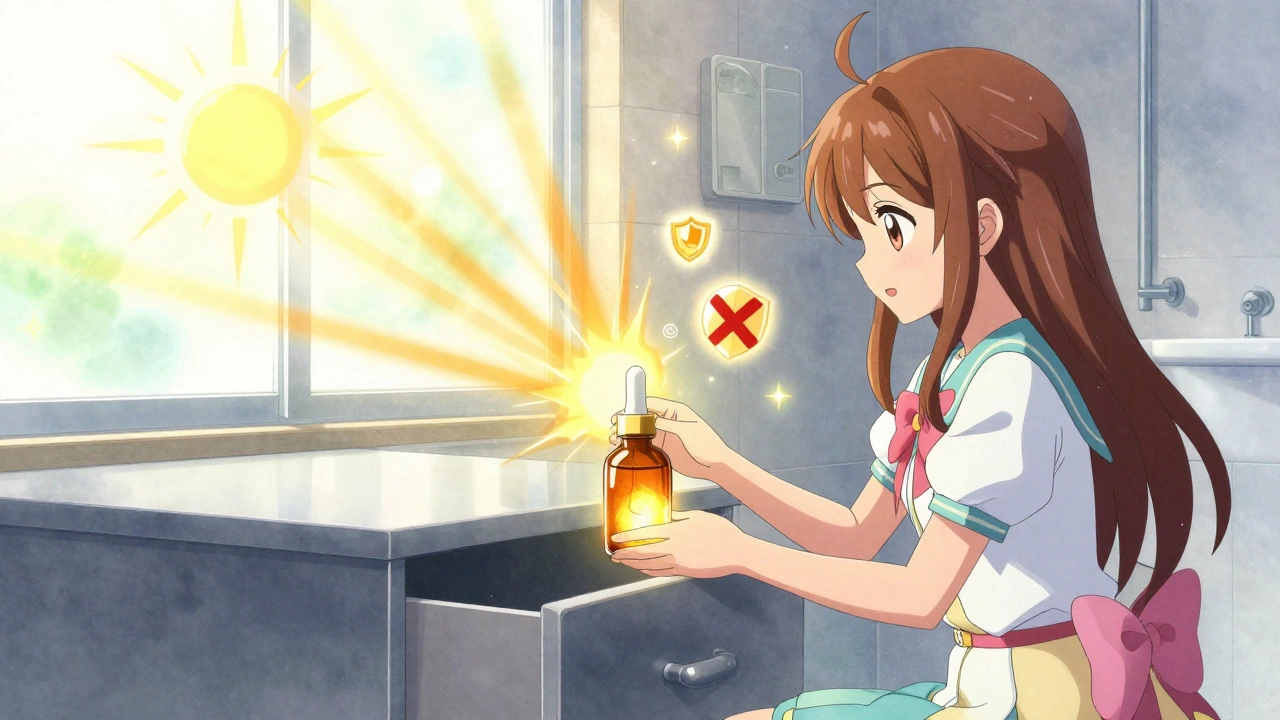
Not all medications are created equal when it comes to storage. Some pills, creams, and eye drops can lose their power-or even turn harmful-if they’re exposed to light. It’s not just about keeping them dry or cool. Sunlight, even through a window, can break down the active ingredients in certain drugs. You might not see it happening, but inside that bottle, chemical reactions are quietly weakening the medicine.
Take tretinoin cream, for example. One user on Reddit reported their once-white cream turned yellow after just two weeks sitting in a bathroom cabinet. That’s not a cosmetic change-it means the drug stopped working. The same thing happens with eye drops like latanoprost, used for glaucoma. When stored in clear containers or left on a sunny windowsill, they can lose up to 40% of their strength in under a week. That’s not a small drop in effectiveness. It’s the difference between controlling your eye pressure and risking permanent vision loss.
The pharmaceutical industry has known this since the 1900s. Back then, pharmacists noticed nitroglycerin and tetracycline would go bad fast in sunlight. Today, we have science to back it up: the U.S. Pharmacopeia (USP) says 470 injectable drugs require light protection. And it’s not just injections. Over half of all eye drops, most antibiotics, and many hormone-based medications-including birth control and chemotherapy drugs-are vulnerable. The FDA recorded over 300 adverse events in 2022 linked directly to light exposure. These aren’t rare cases. They’re preventable.
What Makes a Container Light-Protective?
Not every dark bottle is created equal. The difference between a good container and a bad one comes down to how much light gets through. The USP requires that light-sensitive packaging block at least 90% of UV light between 300 and 450 nanometers. That’s the range that causes the most damage to drugs.
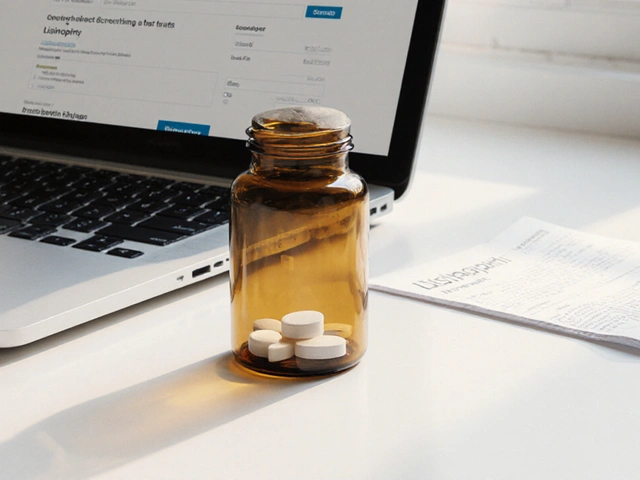
Amber glass bottles are the gold standard. They block 98% of harmful UV rays. That’s why most eye drops and sensitive oral medications come in brown bottles. Opaque plastic works too, but only if it’s high-quality. Lower-grade plastic can still let in 15% of UV light, which adds up over time. A 2022 study found that some plastic containers reduced eye drop potency by 35% in just 14 days compared to amber glass.
Some newer options include bottles with UV-blocking internal coatings-like those from Bausch + Lomb-which keep the medication stable 25% longer than standard amber bottles. Then there’s aluminum foil pouches. They block 100% of light, but you have to take the medication out to use it. That’s a problem. A 2021 study showed 32% of patients stopped using their meds because the foil packaging was too inconvenient.
Here’s the bottom line: if your medication came in an amber bottle, don’t transfer it to a clear one. Even if the new bottle looks like it holds the same amount, it’s not protecting the drug. And if you’re buying refills or generics, check the packaging. If it’s clear, ask your pharmacist if it’s safe.
Where to Store Eye Drops and Other Sensitive Medications
Temperature and light go hand in hand. Most medications should be kept between 59°F and 77°F (15°C-25°C). But eye drops? They’re even more sensitive. After opening, they need to stay between 40°F and 77°F. That means your bathroom cabinet is a bad idea. Humidity from showers, heat from the dryer, and sunlight through the window all combine to ruin them.
The best spot? A cool, dry drawer in your bedroom or kitchen. Not near the stove, not near the sink. A cabinet with no windows is ideal. If you live in a hot climate-like Adelaide in summer-consider a small insulated box with a UV-blocking lining. These cost around $25 and keep meds stable even when it’s 95°F outside.
For eye drops, some people keep them in the fridge after opening. That’s fine-as long as they’re not frozen. The American Academy of Ophthalmology says refrigeration can extend shelf life by up to 2 weeks. But don’t leave them in the freezer. Ice crystals can break down the solution.
And never leave eye drops in your car. Even on a mild day, the temperature inside a parked car can hit 120°F. That’s enough to ruin insulin, chemotherapy drugs, and many eye drops in hours.
How to Tell If Your Medication Has Gone Bad
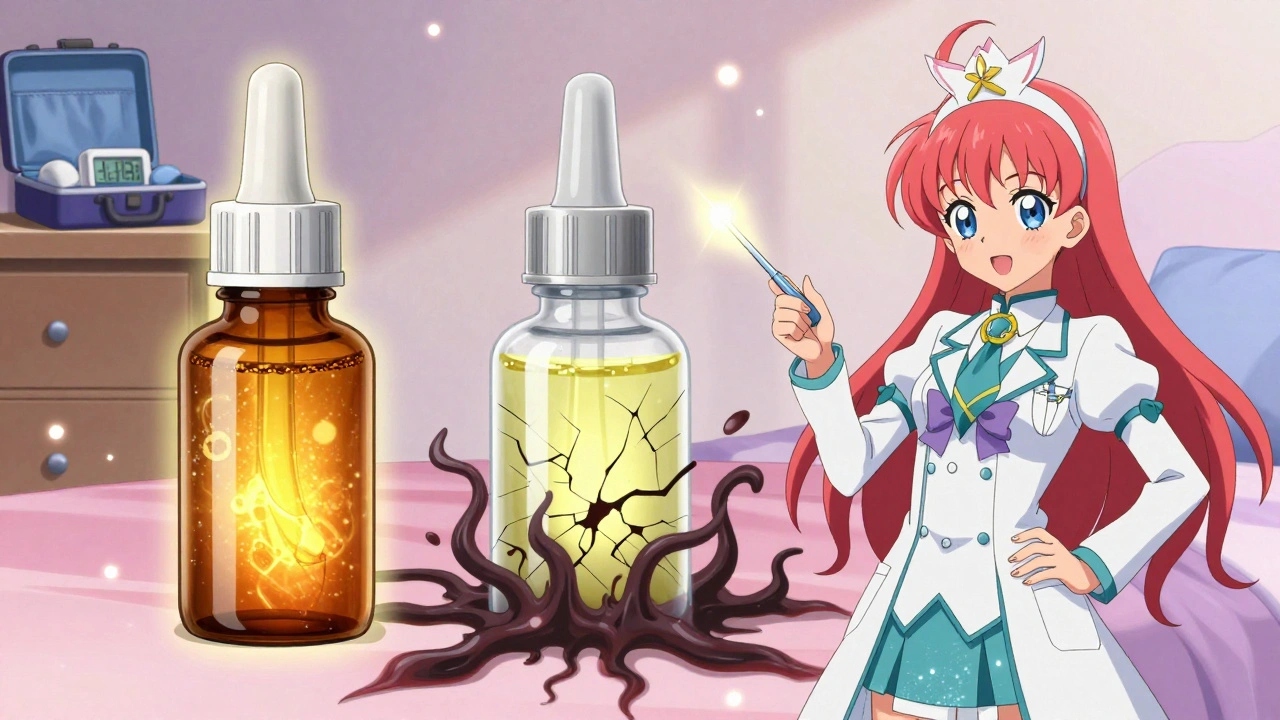
You can’t always tell by looking, but there are signs. For creams and ointments, color changes are a red flag. Tretinoin turning yellow? Pitch it. Hydrocortisone cream turning brown? Don’t use it. For tablets, look for cracks, sticking, or an odd smell. Aspirin that smells like vinegar? It’s degraded. That’s acetic acid forming from broken-down acetylsalicylic acid.
Eye drops are trickier. If they look cloudy, have floating particles, or smell strange, throw them away-even if they’re before the expiration date. Some drops, like pilocarpine, can turn greenish when exposed to light. Others, like travoprost, may become thicker or separate. If you’re unsure, don’t guess. Call your pharmacist. They can tell you if the change is normal or dangerous.
The FDA’s MedWatch program logged over 1,800 reports in 2022 tied to storage issues. Over 300 mentioned light exposure. Most of these could’ve been avoided. A simple check of the bottle’s color and storage spot could’ve saved someone from ineffective treatment-or worse.
What to Do When Traveling
Traveling with light-sensitive meds? You need a plan. A regular purse or suitcase won’t cut it. Sunlight through a car window, airport X-ray machines, or even bright hotel lights can do damage over time.
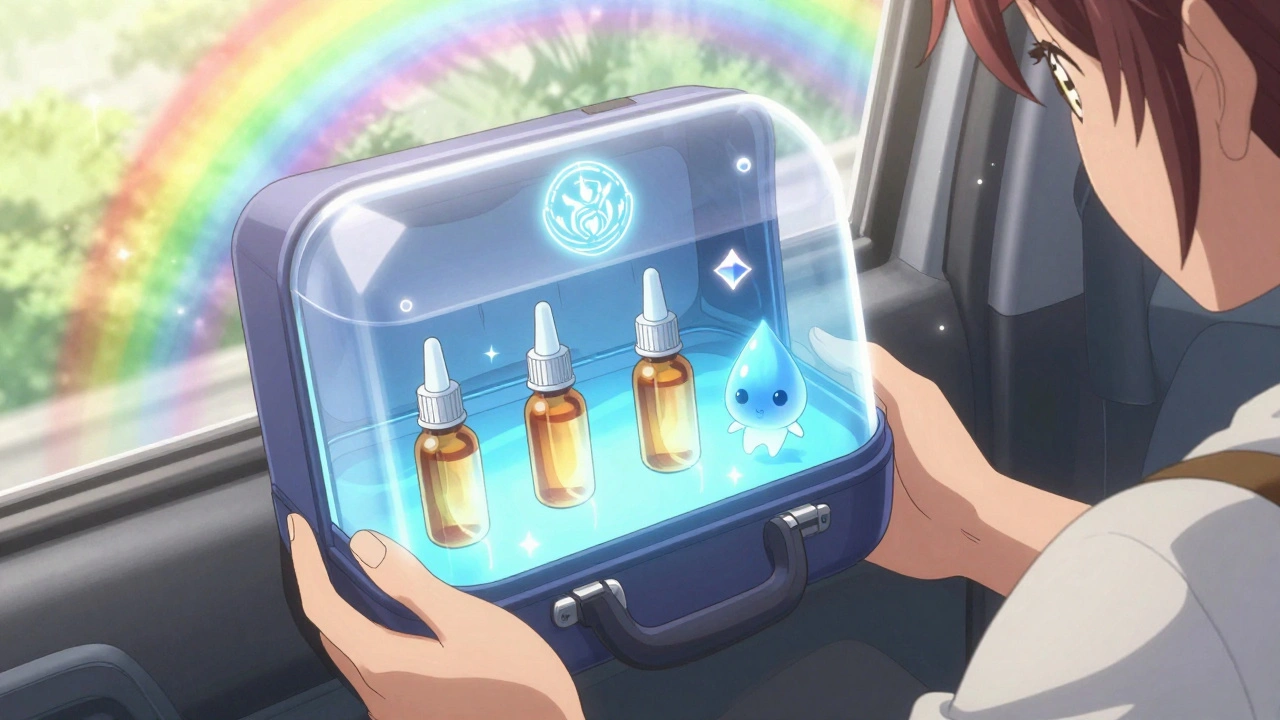
The best solution? A travel case with UV-blocking lining. These are designed to block light and keep temperature stable for up to 12 hours. Look for ones with insulated walls and a dark interior. Some even have built-in temperature sensors. MedMinder’s beta version sends alerts to your phone if the meds were exposed to too much light-but those aren’t widely available yet.
If you don’t have one, wrap your amber bottle in aluminum foil and tuck it into a padded bag. Don’t leave it on the dashboard. Don’t put it in the overhead bin if you’re flying in bright sunlight. Keep it in your carry-on, close to your body where it’s cooler. And always carry your original prescription label. Airlines and security may ask.
What Not to Do
Here are the top mistakes people make:
- Transferring to clear containers. Even if it’s easier to see how much is left, you’re risking potency. A 2023 survey found 18% of eye drop failures happened because patients moved them to clear bottles.
- Storing in the bathroom. Humidity and light make this the worst place in the house. The National Community Pharmacists Association found 68% of patients store meds here-despite knowing better.
- Ignoring the expiration date after opening. Most eye drops expire 4-6 weeks after opening, even if the bottle says 2 years. That’s because once you open it, bacteria and light get in.
- Assuming refrigeration fixes everything. Cold doesn’t block light. A fridge with clear bottles still lets UV in. Always keep them in amber or opaque containers, even in the fridge.
- Using expired meds. Degraded antibiotics can fail to treat infections. Degraded eye drops can cause eye damage. Don’t risk it.
Resources and Support
If you’re ever unsure, don’t guess. Use the tools available:
- The FDA Medication Storage Hotline (1-855-543-3784) can tell you if your drug needs special care.
- The ASHP Online Storage Checker lets you search over 12,000 medications for exact storage rules.
- Reddit’s r/pharmacy community has 45,000+ members who share real-life tips. One top post recommends keeping meds in a kitchen cabinet with a humidity monitor-simple, cheap, and effective.
Pharmacists are your best ally. If you’re buying a new medication, ask: "Does this need protection from light?" If the answer is yes, make sure you understand how to store it. Don’t rely on the bottle alone. Read the leaflet. Ask questions. Your health depends on it.
Final Thoughts
Storing light-sensitive medications isn’t complicated. It’s about consistency. Keep them in their original amber bottles. Store them away from windows, heat, and moisture. Check for changes in color or texture. When in doubt, toss it and get a new one.
The cost of a new bottle of eye drops or cream is nothing compared to the cost of untreated glaucoma, infection, or a failed treatment. You wouldn’t drive a car with worn brakes. Don’t use medicine that’s been damaged by light. It’s not just about following rules-it’s about protecting your health.
Can I store eye drops in the fridge?
Yes, most eye drops can be stored in the refrigerator after opening, between 36°F and 46°F (2°C-8°C). Refrigeration can extend their shelf life by up to two weeks. But never freeze them, and always keep them in their original amber or opaque container-even in the fridge. Cold doesn’t block light, so a clear bottle in the fridge is still risky.
What if my medication came in a clear bottle?
If your medication is light-sensitive but came in a clear bottle, ask your pharmacist for a replacement in an amber container. Some pharmacies offer this service for free. If not, you can buy USP-compliant amber bottles online. Never transfer the medication to a regular container, even if it’s clean. The risk of degradation is too high.
How long do eye drops last after opening?
Most eye drops expire 4 to 6 weeks after opening, regardless of the printed expiration date. This is because once the seal is broken, bacteria can enter, and light exposure begins to degrade the formula. Always write the opening date on the bottle. If you’re unsure, throw it out after 6 weeks-or sooner if it looks cloudy, smells odd, or has changed color.
Are all antibiotics light-sensitive?
No, but many are. Tetracycline, doxycycline, and some fluoroquinolones are highly sensitive to light. Others, like amoxicillin, are not. Always check the label for "protect from light" or ask your pharmacist. If the bottle is amber, treat it as light-sensitive. If it’s clear, assume it’s safe unless told otherwise.
What should I do if I accidentally left my eye drops in the sun?
If your eye drops were exposed to direct sunlight for more than a few hours, especially in a clear container, it’s safest to discard them. Even if they look fine, the potency may have dropped by 30-50%. Using degraded drops can lead to ineffective treatment, worsening symptoms, or even eye damage. When in doubt, replace them. Your vision isn’t worth the risk.



Linda Migdal
December 2, 2025 at 01:20
This is exactly why the USP standards matter. Amber glass isn't optional-it's a pharmacopeial requirement. If your pharmacy gives you clear bottles for latanoprost, file a complaint. 40% potency loss isn't a 'maybe'-it's a clinical failure. We're talking about preventing blindness here, not optimizing your bathroom aesthetics.