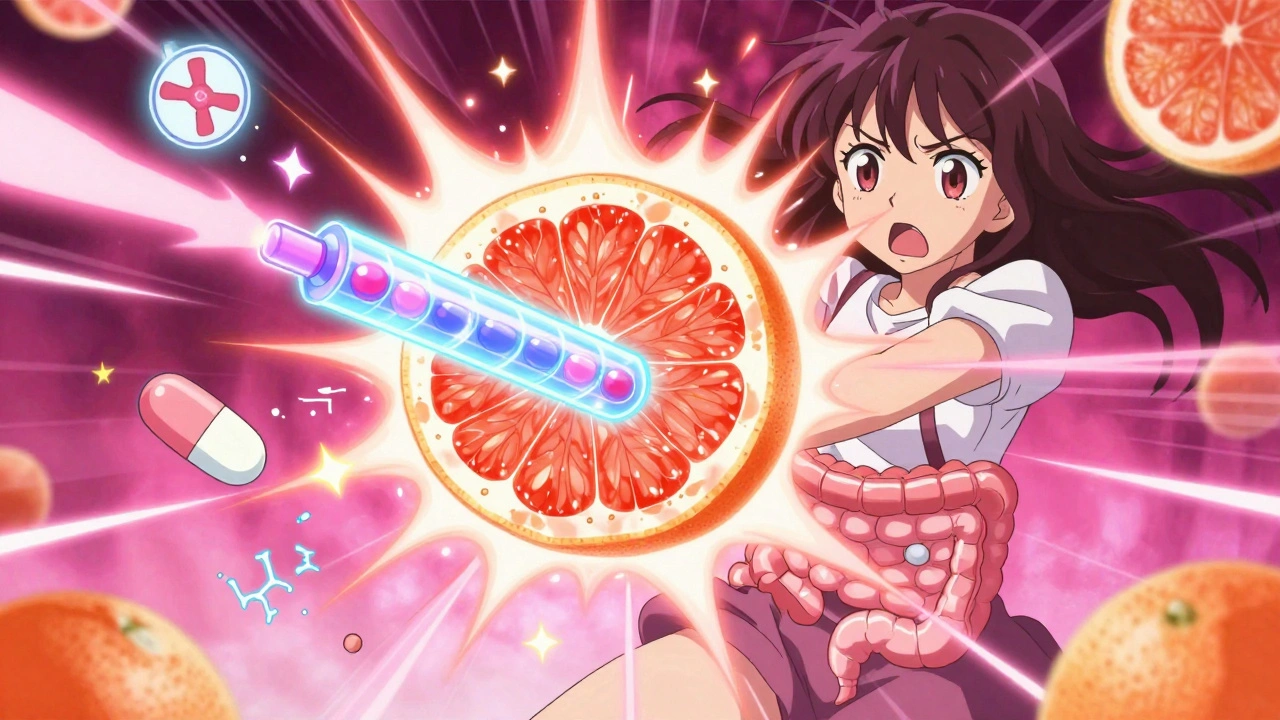
Statins and Grapefruit Interaction Checker
Check Your Statin Safety
Select your statin to see if grapefruit is dangerous
When you’re taking a statin to lower your cholesterol, the last thing you want is for your morning glass of grapefruit juice to turn into a silent health risk. This isn’t a myth or a warning from an overcautious doctor-it’s a well-documented, potentially life-threatening interaction backed by decades of clinical research. Grapefruit doesn’t just change the taste of your breakfast; it can dramatically increase the amount of certain statins in your bloodstream, turning a safe dose into a dangerous overload.
Why Grapefruit Changes How Statins Work
Grapefruit contains chemicals called furanocoumarins. These aren’t sugar, vitamins, or fiber-they’re powerful compounds that shut down an enzyme in your gut called CYP3A4. This enzyme normally breaks down many drugs before they enter your bloodstream, acting like a filter. When furanocoumarins block it, your body absorbs way more of the statin than it should.This isn’t a temporary glitch. The inhibition is irreversible. Once CYP3A4 is turned off, your body has to make new enzyme molecules to restore normal function-and that takes about 72 hours. So even if you drink grapefruit juice in the morning and take your statin at night, you’re still at risk. The enzyme is still blocked.
The result? Blood levels of certain statins can spike by 5 to 16 times normal. That’s not a small increase. That’s the difference between a 10 mg dose and a 160 mg dose-without you changing your prescription.
Which Statins Are Affected?
Not all statins react the same way. The interaction depends entirely on how the drug is processed in your body. Statins that rely heavily on CYP3A4 for breakdown are the problem.- High risk: Simvastatin (Zocor), lovastatin (Mevacor), and atorvastatin (Lipitor). These are the most affected. Simvastatin sees the biggest spike-up to 16 times higher blood levels after just one glass of grapefruit juice.
- Moderate risk: Atorvastatin has a lower but still significant interaction. The FDA allows small amounts (like half a grapefruit or 8 oz of juice per week) for some patients, but it’s not risk-free.
- Low to no risk: Pravastatin (Pravachol), rosuvastatin (Crestor), fluvastatin (Lescol), and pitavastatin (Livalo). These are metabolized differently and don’t interact meaningfully with grapefruit.
If you’re on simvastatin or lovastatin, the advice is simple: avoid grapefruit entirely. No exceptions. Even one glass a week can be dangerous. If you’re on atorvastatin, talk to your doctor about whether occasional small amounts are safe for you.
The Real Danger: Muscle Damage and Kidney Failure
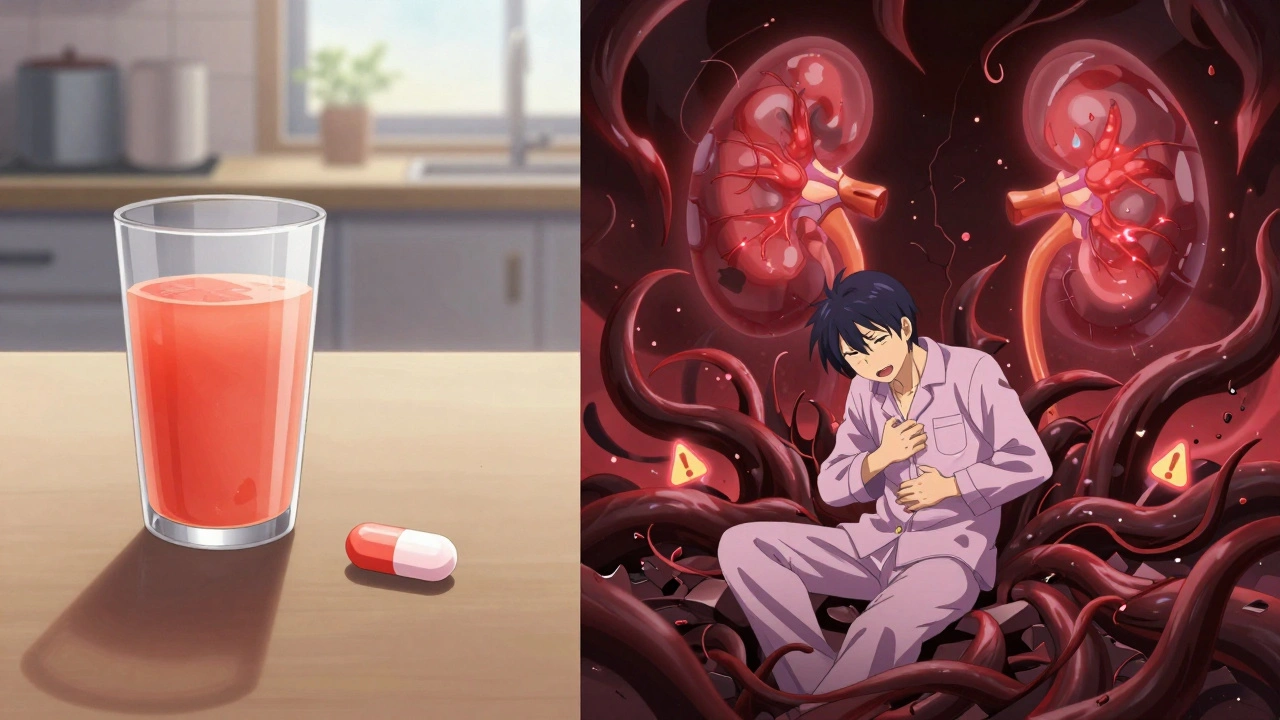
The most feared side effect of this interaction is rhabdomyolysis. This rare but severe condition happens when muscle tissue breaks down rapidly, spilling a protein called myoglobin into your blood. Your kidneys can’t filter it out fast enough, leading to acute kidney injury-or even kidney failure.Symptoms include:
- Severe muscle pain or weakness (especially in the thighs, shoulders, or lower back)
- Dark, tea-colored urine (a red flag for myoglobin)
- Unexplained fatigue or nausea
You don’t need all three symptoms to be in danger. One study documented a 40-year-old woman who developed rhabdomyolysis after eating grapefruit daily for 10 days while taking simvastatin. She didn’t have a history of muscle problems. She wasn’t on a high dose. Just grapefruit and statin.
While rhabdomyolysis affects fewer than 1 in 10,000 statin users annually, that risk jumps significantly when grapefruit is involved. The FDA’s adverse event database shows that cases spike in patients consuming grapefruit with high-risk statins.
What About Other Citrus Fruits?
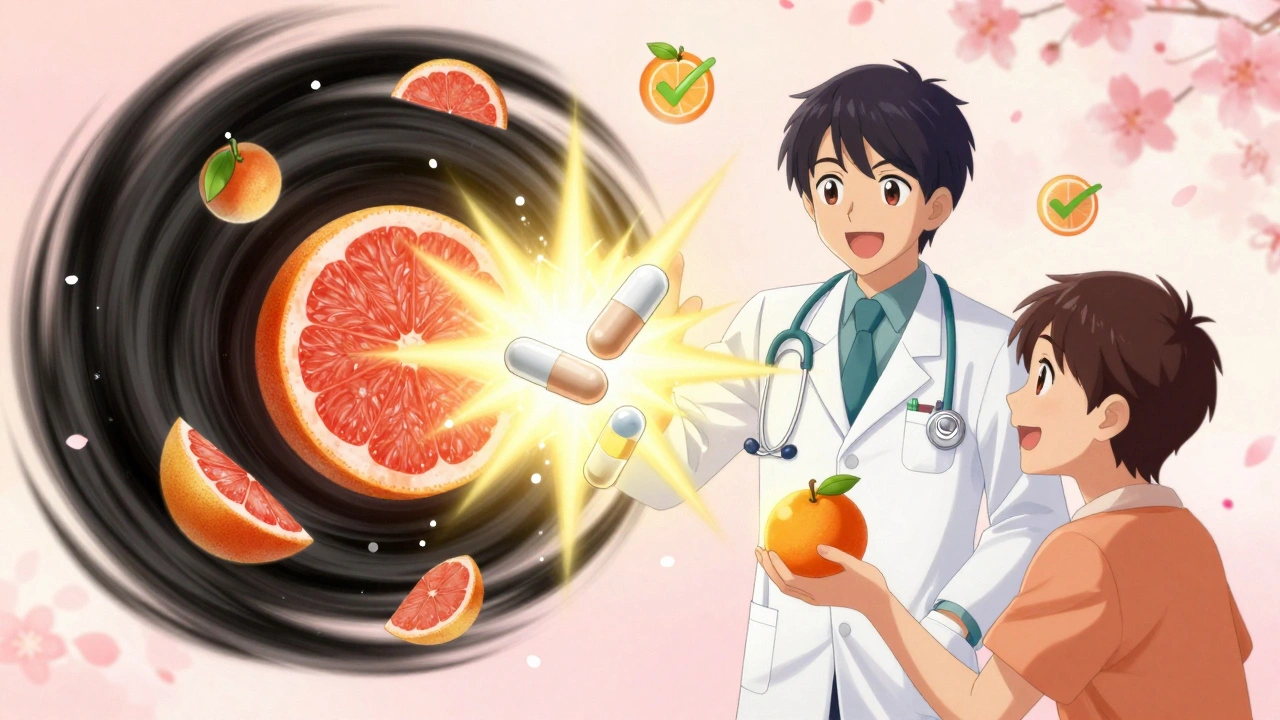
You don’t have to give up all citrus. Only grapefruit, Seville oranges (used in marmalade), and pomelos contain enough furanocoumarins to cause this interaction.Regular oranges, tangerines, lemons, and limes are safe. They don’t block CYP3A4. So if you love citrus, switch to an orange or a lime wedge in your water. You’ll still get vitamin C without the risk.
Also, be careful with grapefruit supplements, extracts, or flavored products. Some energy drinks, teas, or “detox” blends contain concentrated grapefruit extracts-sometimes without listing it clearly on the label.
What Should You Do?
If you’re taking a statin, here’s what to do right now:- Check your prescription. Look up your statin’s name. Is it simvastatin, lovastatin, or atorvastatin? If yes, stop grapefruit immediately.
- Ask your pharmacist. Pharmacists are trained to spot these interactions. They can tell you if your statin is risky and suggest alternatives.
- Don’t stop your statin. Stopping your medication increases your risk of heart attack or stroke far more than grapefruit does. The goal isn’t to quit the drug-it’s to switch to a safer one or eliminate the grapefruit.
- Consider switching statins. If you love grapefruit and are on a high-risk statin, ask your doctor about switching to pravastatin or rosuvastatin. Both are just as effective at lowering cholesterol and don’t interact with grapefruit.
- Be honest with your doctor. Many patients don’t mention grapefruit because they think it’s harmless. But doctors can’t help if they don’t know. A 2021 study found that only 42% of doctors routinely ask about grapefruit use.
Why This Matters More Than You Think
About 39 million Americans take statins. Around 1 in 8 of them also consume grapefruit regularly. That’s over 5 million people at potential risk. And because the interaction is delayed and subtle, many people don’t connect their muscle pain or fatigue to what they ate days earlier.Pharmacists who actively screen patients for grapefruit use have cut dangerous combinations by 78%. That’s not magic-it’s awareness. You don’t need to be a scientist to protect yourself. You just need to know your medication and your habits.
There’s even hope on the horizon. Researchers at the University of Florida are breeding new grapefruit varieties with almost no furanocoumarins. In a decade, you might be able to enjoy grapefruit without worry. But until then, the old rule still stands: if you’re on simvastatin or lovastatin, grapefruit has no place in your diet.
Bottom Line
Grapefruit isn’t evil. Statins aren’t dangerous when used correctly. But together, they create a hidden hazard that can turn a routine medication into a medical emergency. The science is clear. The risks are real. And the solution is simple: know your statin, know your fruit, and talk to your doctor.If you’re on a high-risk statin and drink grapefruit juice, stop today. If you’re unsure, ask your pharmacist. Your muscles-and your kidneys-will thank you.
Can I drink grapefruit juice if I take a low dose of simvastatin?
No. Even low doses of simvastatin can become dangerously high when mixed with grapefruit. The interaction isn’t about dose-it’s about how the drug is processed. A 5 mg dose of simvastatin with grapefruit can act like a 50 mg dose. There’s no safe threshold.
How long after drinking grapefruit juice should I wait to take my statin?
You can’t wait it out. Grapefruit permanently disables the CYP3A4 enzyme in your gut for up to 72 hours. Separating the timing by hours or even a full day won’t help. If you’re on simvastatin or lovastatin, avoid grapefruit completely.
Is grapefruit juice worse than eating the whole fruit?
They’re equally risky. The active compounds (furanocoumarins) are in both the juice and the pulp. A whole grapefruit and 8 oz of juice contain roughly the same amount. The form doesn’t matter-only the presence of the fruit.
What are the safest statins to take if I like grapefruit?
Pravastatin (Pravachol), rosuvastatin (Crestor), fluvastatin (Lescol), and pitavastatin (Livalo) have little to no interaction with grapefruit. These are excellent alternatives if you want to keep eating grapefruit. Talk to your doctor about switching.
Can grapefruit interact with other cholesterol meds besides statins?
Yes. Other drugs metabolized by CYP3A4 can also be affected, including some blood pressure medications (like felodipine), anti-anxiety drugs (like buspirone), and immunosuppressants. But for cholesterol, the main concern is statins. Always check with your pharmacist if you’re on any new medication.





David Palmer
December 11, 2025 at 10:17
So grapefruit is just out? Man, I love that stuff. Guess I’m switching to orange juice now. Sad day.