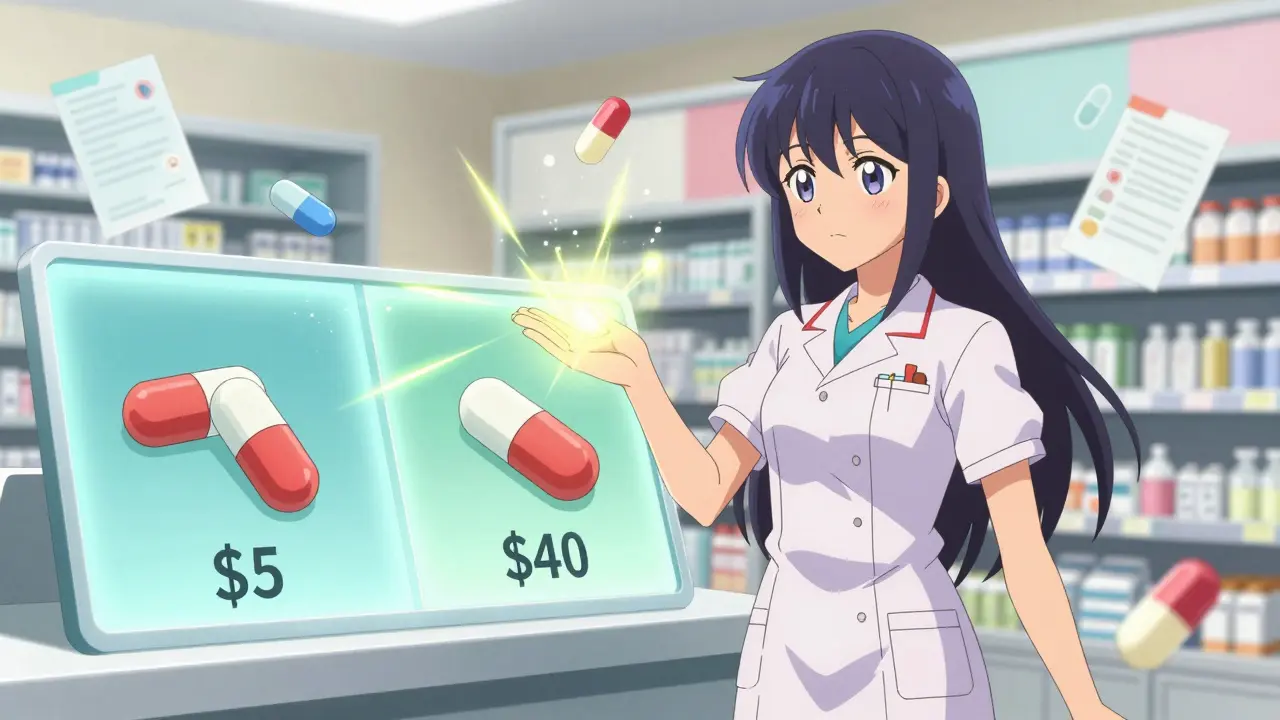
When you’re on multiple medications for high blood pressure, diabetes, or cholesterol, you might notice something strange: your insurance covers two separate generic pills for $5 each, but the generic combination pill that has the same two drugs in one tablet costs $40. It doesn’t make sense - until you understand how insurance formularies work.
Why Generic Combinations Are Treated Differently
Generic combination drugs are single pills that contain two or more active ingredients, each already available as a standalone generic. For example, a pill with amlodipine and lisinopril for high blood pressure. These combinations were originally branded (like Caduet or Exforge), but now many have generic versions. Yet, insurance plans don’t always treat them the same as buying the two generics separately. The reason? It’s not about safety or effectiveness - the FDA says generic combinations are bioequivalent to their brand-name versions and to the individual generics. It’s about cost structure and formulary design. Insurers use tiered systems to control spending. Most plans have four or five tiers, with Tier 1 being the cheapest. Generic drugs usually land here, with copays as low as $0-$5. But combination drugs? They often get placed in Tier 2 or even Tier 3, even when they’re generic. A 2022 analysis of Medicare Part D plans found that 84% of all plan-product combinations covered only generics, not brand names. That’s a huge shift from 2012, when it was only 69%. But within that 84%, the rules aren’t uniform. Some plans cover the combo as a single unit. Others cover the individual generics but not the combo. And some cover the combo - but at a higher cost than the sum of the two separate pills.How Your Plan Decides What to Cover
Insurance plans don’t make these decisions randomly. Pharmacy Benefit Managers (PBMs) like CVS Caremark, Express Scripts, and OptumRx - who control 80% of the market - build formularies based on cost, patient adherence, and negotiated rebates. They prefer drugs that save money overall, not just at the pharmacy counter. Here’s how it plays out:- If the combo drug is cheaper than buying two generics separately, the plan will usually cover it in Tier 1.
- If the combo costs more, even if it’s generic, the plan may exclude it from coverage - pushing you to buy two pills instead.
- If the combo has only one manufacturer (a "single-source generic"), it may not face price competition and could be priced higher than expected.
Real Stories: Paying More for Convenience
One Medicare beneficiary in Ohio told a local health advocate: "My combo pill for diabetes and blood pressure went generic, but my plan won’t cover it unless I pay $48 a month. The two separate generics? $8 total. I had to ask my doctor to write two prescriptions. I feel like I’m playing a game just to afford my meds." On the flip side, a retiree in Florida shared: "My blood pressure combo was $45 before it went generic. Now it’s $7. I didn’t even know I could get it cheaper - my pharmacist told me. I switched and never looked back." The difference? Plan design. The first person’s plan didn’t list the combo as preferred. The second person’s plan did. It’s not about the drug - it’s about the plan.
Medicare Part D and the 2024 Changes
Starting January 1, 2024, Medicare Part D eliminated the annual deductible and capped out-of-pocket spending at $2,000 per year. That’s huge. But it doesn’t change how formularies are structured. You still need to know your plan’s tier list. Before 2024, many seniors hit the "coverage gap" - the donut hole - where they paid full price for meds. Now, that’s gone. But the cost-sharing between combo and individual generics still matters. If your combo is on Tier 3 and costs $30, but two generics cost $12, you’re still paying more. And until you hit your $2,000 cap, every dollar counts. Also, a September 2023 court ruling banned copay accumulator programs. These programs used to block manufacturer coupons from counting toward your out-of-pocket maximum. That change helps people on brand-name drugs - but it also means insurers may adjust formularies again. Expect more pressure to push patients toward the cheapest option, even if it’s two pills.What You Can Do to Save Money
You don’t have to accept whatever your plan says. Here’s how to take control:- Check your plan’s formulary - every year during open enrollment. Look up your exact drugs by name and strength. Don’t assume the combo is covered.
- Compare total monthly cost - add up the copay for two separate generics. Then check the combo. Sometimes the combo wins. Sometimes it doesn’t.
- Ask your doctor to prescribe individual generics if they’re cheaper. Most doctors are happy to do this - especially if it saves you money.
- Request a coverage determination - if your plan denies the combo but you think it’s better for you, your doctor can submit a formal appeal. It takes 72 hours for a standard request, 24 for urgent cases.
- Use the Medicare Plan Finder - it shows average copays for every drug in every plan. Use it before choosing a plan.
Why This Matters Beyond Cost
Taking multiple pills a day is hard. Studies show patients are 20-30% more likely to stick with a regimen if they take one pill instead of two. That’s why doctors push for combination drugs - not because they’re cheaper, but because they work better for real life. But if your insurance makes the combo unaffordable, you might skip doses, split pills, or stop one of the meds. That leads to hospital visits, higher long-term costs, and worse health outcomes. The system is designed to save money - but sometimes it saves money at the expense of your health. The goal should be to align financial incentives with better outcomes. Right now, that’s not always happening.
The Bigger Picture: Generics Are Winning
Ninety percent of all prescriptions in the U.S. are filled with generics. They’re safe, effective, and cost 80-85% less than brand names. In some cases, when six or more generics compete, prices drop by 95%. Combination generics are growing fast. About 15% of all prescriptions are for combo drugs, but they make up 28% of top-selling medications. As more patents expire, more combos will become generic - and insurers will have to decide: do we cover them as a single unit, or keep pushing two pills? The FDA’s Generic Drug User Fee Amendments (GDUFA) III, running through 2027, is speeding up approval of complex generics, including combos. That means more options soon. But until then, you’re stuck navigating a maze of tiers, copays, and formularies.Final Thought: Know Your Plan, Advocate for Yourself
Insurance coverage for generic combinations vs individual generics isn’t about which drug is better. It’s about which one saves the plan money. And sometimes, that’s the two separate pills. But you have power. Ask your pharmacist: "Is the combo covered? What’s the copay? What if I get the two generics?" Talk to your doctor: "Can we try the separate pills to save money?" Use online tools. Call your plan’s customer service. Write down the names, strengths, and prices. You’re not just a patient. You’re a consumer. And you deserve to know why you’re paying what you’re paying.Are generic combination drugs as safe as individual generics?
Yes. The FDA requires generic combination drugs to be bioequivalent to their brand-name versions and to the individual generics they contain. This means they deliver the same amount of active ingredients into your bloodstream at the same rate. There’s no clinical evidence that combo generics are less safe or effective than taking two separate pills.
Why is my combo drug more expensive than two separate generics?
Insurance plans often place combination drugs in higher tiers if they cost more than buying the two generics separately. Even if the combo is generic, if the manufacturer sets a higher price and the plan doesn’t negotiate a good rebate, the plan may cover the individual pills instead - because it’s cheaper for them. This isn’t about the drug’s value - it’s about cost control.
Can I ask my doctor to prescribe individual generics instead of the combo?
Absolutely. Many doctors will write separate prescriptions if it saves you money. You just need to ask. Some patients prefer the combo for convenience, but if the cost difference is $40 vs $10, it’s worth discussing. Your doctor can check your plan’s formulary and suggest the most affordable option.
Does Medicare Part D cover generic combinations better than private insurance?
Medicare Part D plans have a strong preference for generics - 84% of plan-product combinations cover only generics. But private plans follow similar patterns. The difference isn’t in coverage rates - it’s in formulary design. Some private plans are more aggressive about excluding combo drugs to push patients toward cheaper alternatives. Always check your specific plan’s formulary, whether it’s Medicare or private.
What if my plan doesn’t cover my combo drug at all?
You can request a coverage determination - a formal appeal. Your doctor submits a letter explaining why the combo is medically necessary (e.g., you have trouble taking multiple pills, or you’ve had side effects with separate drugs). The plan must respond within 72 hours for a standard request, or 24 hours if it’s urgent. If denied, you can appeal again or switch plans during open enrollment.
Are there any new laws helping with generic combination coverage?
Yes. Starting in 2024, Medicare Part D eliminated the deductible and capped out-of-pocket costs at $2,000 a year. Also, a 2023 court ruling banned copay accumulator programs, meaning manufacturer coupons now count toward your out-of-pocket limit. These changes make it easier to afford expensive drugs - including some combo generics - but they don’t force plans to cover them. You still need to shop smart.




Skye Kooyman
January 25, 2026 at 22:25
So you're telling me I'm paying $40 for one pill when two pills cost $10? And my plan calls this "cost-saving"? This isn't health care, it's a puzzle game with my life on the line.