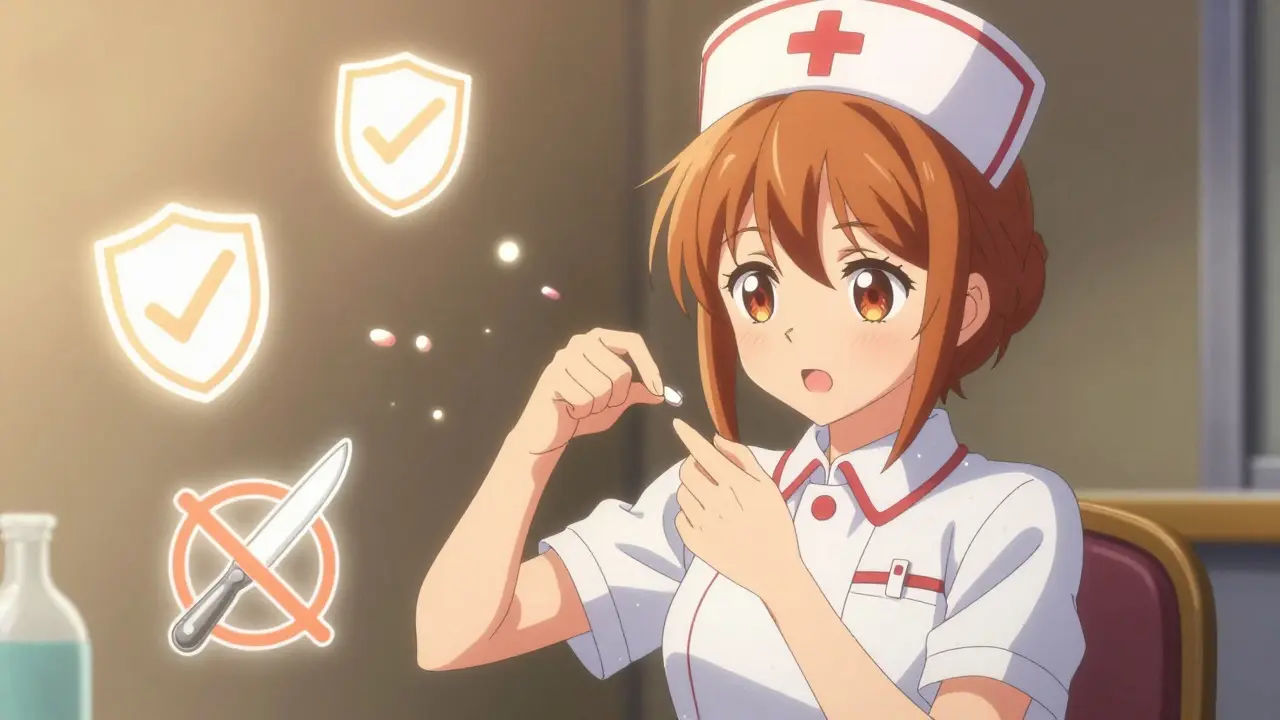
Splitting or crushing pills might seem like a simple fix-maybe you need a smaller dose, or someone has trouble swallowing tablets. But if you do it wrong, you could be putting health at risk. Contamination, uneven dosing, and even toxic exposure aren’t just theoretical dangers. They happen. And they can be deadly.
Why Contamination Matters
When you split or crush a pill, you’re not just changing its shape. You’re exposing the medication to air, dust, and other substances. A single pill can carry active ingredients that stick to tools, hands, or surfaces. If that same tool is used for another person’s medication-or even another drug for the same person-you’re risking cross-contamination. Take warfarin, for example. It’s a blood thinner. Even tiny traces left on a splitter can cause dangerous bleeding in someone else. Or consider chemotherapy drugs like cyclophosphamide. When crushed improperly, they can become airborne. Healthcare workers have been found with measurable levels of these drugs on their gloves-levels high enough to cause long-term harm. The FDA says about 23% of long-term care residents need their pills split or crushed. But studies show that nearly 40% of those procedures are done without proper safeguards. That’s not just sloppy. It’s unsafe.What You Should Never Split or Crush
Not all pills are made the same. Some are designed to release medicine slowly over hours. Others have coatings to protect the stomach or prevent absorption until they reach the intestines. Never crush or split:- Extended-release (ER) or sustained-release (SR) tablets
- Enteric-coated pills (often labeled "enteric" or have a shiny coating)
- Capsules with beads or pellets inside
- Hazardous drugs (like chemotherapy, hormone therapies, or certain antivirals)
- Tablets without a score line
The Right Tools for the Job
Using scissors, a knife, or your fingers? That’s how mistakes happen. A 2021 study found that manual methods led to inaccurate doses 36% of the time. Proper equipment cuts that risk in half. Use a dedicated pill splitter: Look for one with a v-shaped holder and a stainless steel blade. The blade should have a tolerance of 0.05mm or less for even splitting. Models like the Med-Plus Pro (2024) include visual guides to help align scored tablets correctly. Avoid cheap plastic splitters-they crack, bend, and don’t clean well. For crushing: Use a closed-system crusher. The Silent Knight model is the gold standard. It traps all particles inside a sealed container. No dust escapes. No residue lingers. This is non-negotiable for hazardous drugs. Open crushing? That’s asking for trouble.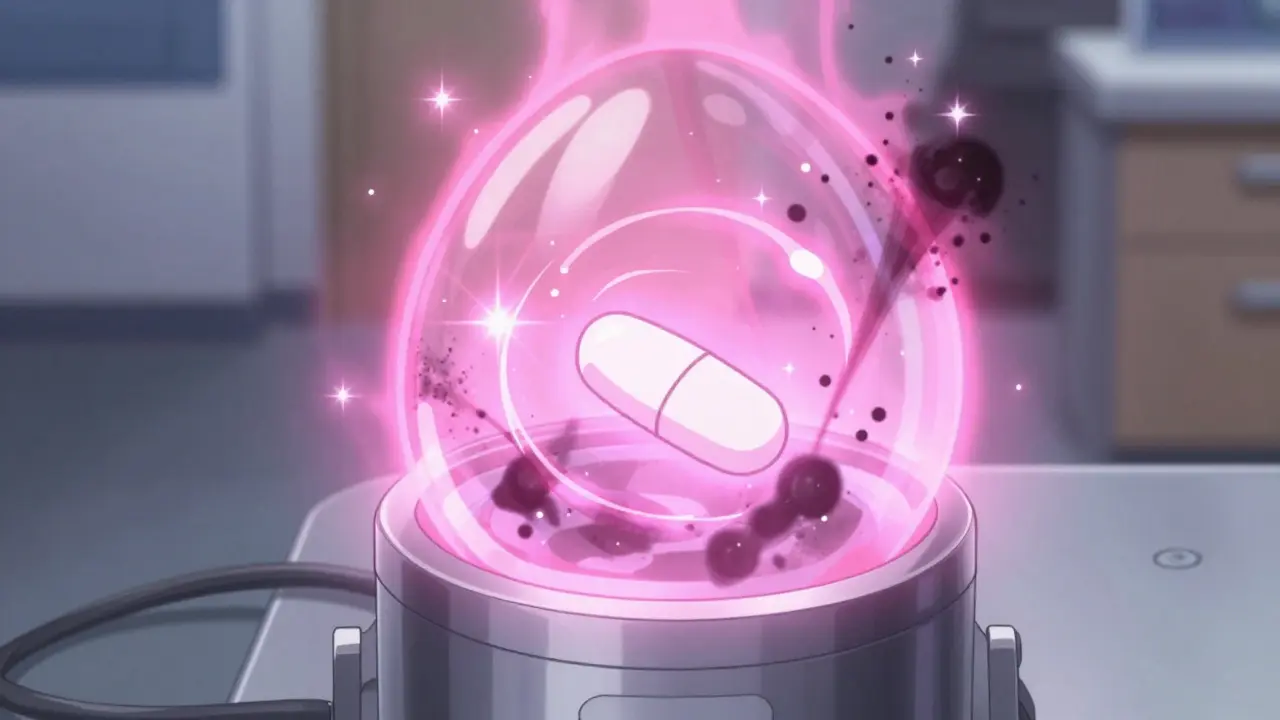
Step-by-Step: How to Split or Crush Safely
Follow these steps every single time. No shortcuts.- Wash your hands. Use soap and water for at least 20 seconds. Dry with a clean towel.
- Put on gloves. Disposable nitrile gloves are best. Change them between each pill.
- Disinfect the tool. Wipe the splitter or crusher with a 70% isopropyl alcohol wipe. Let it air dry. Don’t skip this-even if it looks clean.
- Use one pill at a time. Never split an entire bottle’s supply and store the pieces. Medication can degrade, absorb moisture, or get contaminated.
- Split or crush immediately before giving the dose. Don’t prepare ahead. Even a few hours can affect stability.
- Dispose of gloves and wipes properly. Put them in a sealed bag. Don’t reuse.
- Label the medication container. If you split a pill, write the date and time on the bottle. Include the dose given.
One Tool, One Person
Sharing a pill splitter between residents or family members? That’s a major red flag. A 2023 survey found 41.7% of home caregivers didn’t realize cross-contamination was even a risk. In care homes, the safest approach is to assign one splitter per resident. Label it with their name. Store it in their medication drawer. If that’s not possible, clean it thoroughly with alcohol after every single use. And even then, don’t use it for different types of drugs. A case study from Sunrise Senior Living showed a 32.5% drop in medication errors after switching to resident-specific splitters. That’s not luck. That’s protocol.What About Cost? Isn’t This Expensive?
Yes, a good pill splitter costs $15-$30. A closed-system crusher runs $80-$120. But compared to the cost of a hospital visit from a wrong dose? It’s pennies. The FDA estimates that improper pill splitting contributes to 8.3% of medication errors in institutional settings. Those errors cost the U.S. healthcare system over $1 billion a year. Investing in proper tools doesn’t just save lives-it saves money. And if you’re on Medicare Part D, some plans now cover the cost of these devices. Ask your pharmacy. They may even provide them for free.
What to Do If You’ve Been Doing It Wrong
If you’ve been using scissors, crushing pills in a coffee grinder, or reusing the same splitter for multiple medications-stop. Now. Don’t panic. But do take action:- Call your pharmacist. Ask: "Which of my medications can be safely split or crushed?"
- Get a proper splitter or crusher. Don’t wait.
- Throw away any old tools that have been used for multiple drugs.
- Wipe down any surfaces where pills were crushed-use alcohol wipes.
- Ask your doctor or nurse to show you the correct technique.






Maddi Barnes
February 19, 2026 at 19:22
So let me get this straight - we’re risking our lives because we’re too lazy to go to the pharmacy and get pre-split pills? 🤦♀️ I’ve seen grandmas crush pills in coffee mugs like it’s a TikTok challenge. The FDA says 23% of residents need this done? I say 100% of them need a pharmacist on speed dial. Also - why is this even a thing in 2025? We have 3D printers. We could print custom doses. But nope. We’re still using plastic splitters from Walmart. 😭