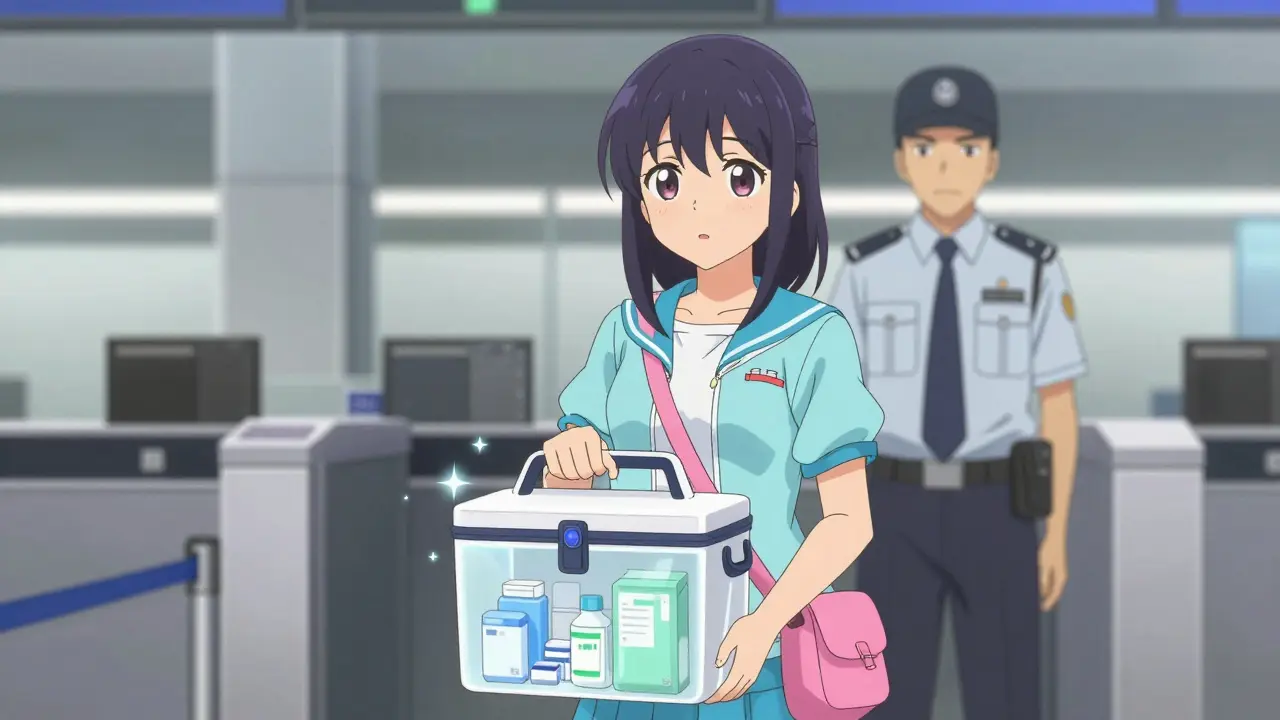
Flying with medical gear shouldn't feel like a high-stakes obstacle course, but we know it often does. You stand at the security checkpoint, holding your cooler bag, heart pounding because one wrong move means confiscation or a missed flight. If you rely on injectables like insulin, blood thinners, or emergency auto-injectors, the rules have changed significantly over the last few years to make your journey smoother. In 2026, thanks to updated policies, you generally have more flexibility than ever before, provided you follow specific packing protocols.
The confusion usually stems from mixing up general security rules with the specific exceptions for medical necessities. When you walk through that metal detector, the primary concern of the officers is safety, not denying your health needs. Understanding exactly what the authorities call "medically necessary" versus what they classify as prohibited weapons is the key to getting through without drama. We aren't going to waste time on vague advice; instead, we will look at the concrete steps, packaging standards, and screening tactics that work right now.
Understanding the Core TSA Rules for Liquids and Needles
You might be thinking about the infamous "3-1-1" liquids rule, where containers must be 3.4 ounces or less. That standard applies to cosmetics and toiletries, but it does not apply to your medicine. The Transportation Security Administration, commonly known as TSA, explicitly allows medically necessary liquids in quantities larger than 3.4 ounces. This covers everything from vials of insulin to liquid antibiotics. However, there is a catch: you must declare these items.
When you reach the bin area, do not simply drop your cooler bag in. Tell the officer you have medical supplies before the X-ray machine starts moving. According to guidelines updated recently, declaring your items upfront reduces screening time significantly. While you aren't legally required to show a doctor's note for domestic flights within the United States, having the medication clearly labeled in its original container with your name on the label helps avoid questions. If you arrive with unlabeled liquid in a random bottle, security might treat it as an unidentified substance.
Syringes are another major category. You might be worried that they count as sharp weapons. Technically, a syringe is considered a sharp object, but it is permitted if it accompanies the medication. This means you cannot bring loose syringes just for the sake of traveling light. You need the corresponding injectable medication with you. For example, if you travel with insulin pumps or vials, bringing ten pre-filled syringes is acceptable because they are part of the delivery method. If you bring a syringe without the drug, it becomes a prohibited item.
| Item Type | Allowed? | Conditions |
|---|---|---|
| Liquid Meds | Yes | Quantity limits waived; must be declared |
| Syringes | Yes | Must accompany medication |
| Ice Packs | Yes | No quantity limit if meds require cooling |
| Used Sharps | Yes | Must be in puncture-proof disposal container |
Safely Packing Sharps and Used Needles
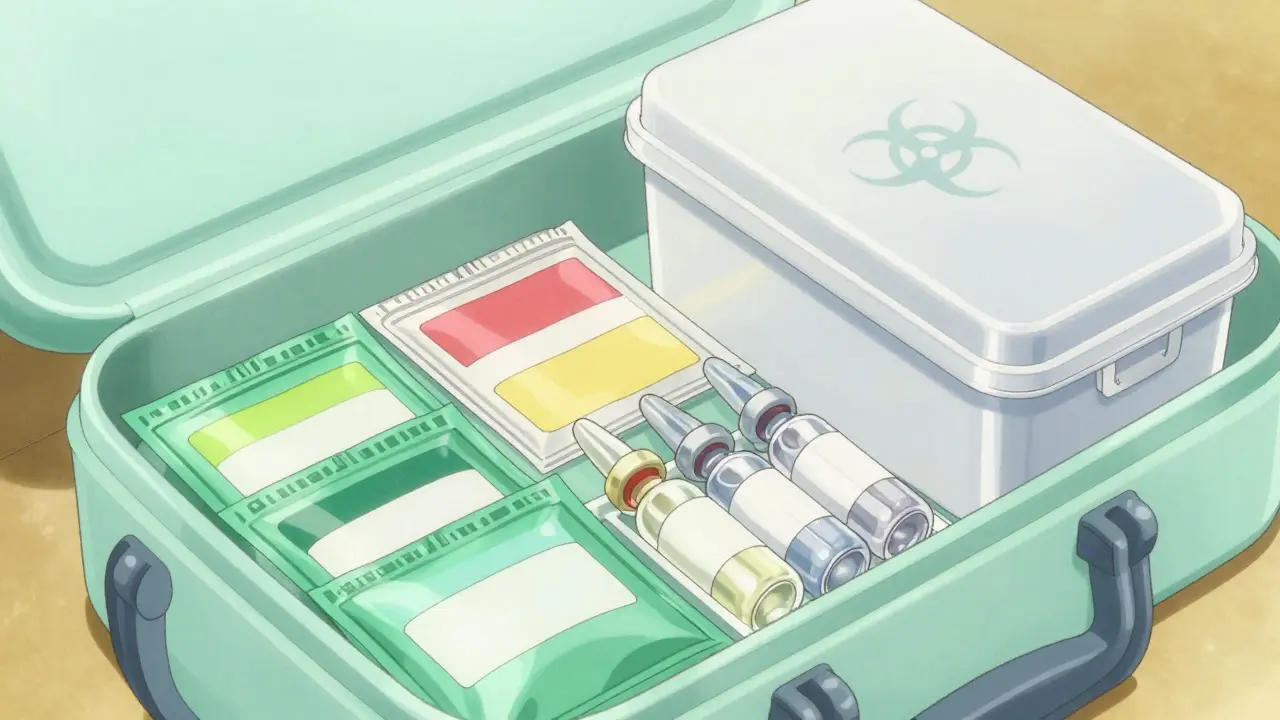
This is where many travelers get stuck. If you plan to discard your needles during a layover or return trip, you cannot just throw them loosely into your suitcase. The risk of needlesticks is real for baggage handlers and security staff. To transport used Sharps Disposal Container, you must use a device that meets specific safety standards. A rigid plastic container designed for this purpose is essential.
The container must be puncture-resistant and leak-proof. Many pharmacies sell specialized travel sharps containers, often made of heavy-duty plastic. These containers should ideally display the universal biohazard symbol, which aligns with safety regulations like OSHA standards. Do not try to improvise with a coffee jar or a water bottle. Improvised containers can shatter under pressure changes in the cargo hold or fail to stop a needle from piercing through to other luggage contents.
If you are checking bags, never place your sharps container in checked luggage. It is always better to keep them in your carry-on so you retain control over their movement. Once you arrive at your destination, finding a proper disposal site is your responsibility. Most airports have hazardous waste bins near restrooms or information desks, but don't rely on this being true at every terminal. Having a dedicated travel container allows you to take the waste home safely rather than leaving it behind in an unknown bin.
Temperature Control and Cooling Methods
Some medications, particularly biologic agents and certain hormones, lose effectiveness if they heat up above 77 degrees Fahrenheit. This creates a challenge when your luggage sits in a hot plane cabin. Fortunately, security personnel allow Ice Packs for this exact reason. They are exempt from the liquid restriction regardless of whether they are slushy or frozen solid.
If your ice pack is frozen solid when it enters the scanner, it should pass without issue. However, if it is thawing and turning into slush, it may trigger a secondary inspection to confirm it's actually a cooling source. To minimize hassle, pack your coolers tightly. Leave minimal air gaps between the ice packs and the medication. You don't want to carry a massive block of ice that takes up half your carry-on space. Gel packs are generally preferred because they freeze flat and conform to the shape of the vial.
In warmer climates, especially during summer months, relying solely on a small gel pack might be risky for long hauls. Consider using a hard-sided cooler bag rather than a soft fabric pouch. The insulation holds the cold longer against external heat. Some airlines even provide access to onboard refrigerators for passengers requesting assistance, though this requires asking a flight attendant upon boarding. If you have an Insulin Pump, remember that the battery compartment usually keeps the device slightly warm, but extreme temperatures below freezing can damage the pump itself.

Navigating International Flights and EASA Rules
Domestic rules in the U.S. are quite lenient compared to many other countries. As soon as you step foot in Europe, Asia, or South America, different regulatory bodies take over. In the European Union, aviation security follows EASA (European Union Aviation Safety Agency) directives. These rules are often stricter regarding documentation.
While the TSA doesn't demand a letter from your doctor for domestic US flights, foreign customs agencies frequently do. For instance, Japan and Australia sometimes require permits for importing large quantities of controlled substances, even if they are legal in your home country. Carrying EpiPen or opioid painkillers across borders requires checking local laws before you leave. What is prescribed in Adelaide might be illegal to import without a specific visa or medical certificate in another jurisdiction.
To handle this complexity, keep all prescription medication in its original pharmacy packaging. Do not consolidate pills into weekly pill organizers if you are crossing international borders. The pharmacist label shows the patient's name, the prescribing doctor, and the dosage, acting as your passport for the medication. Additionally, keeping a copy of the prescription or a letter from your physician on your phone adds a layer of reassurance if officials question the origin of the supplies. The goal here is transparency. If you hide your medication, suspicion rises immediately.
Dealing with Delays and Screening Issues
Despite following every rule, glitches happen. Perhaps the scanner flags the silver foil of a blister pack, or an officer misunderstands your setup. When this occurs, your behavior dictates the outcome. Staying calm and cooperative is more effective than demanding rights. Ask politely for a supervisor who specializes in medical screening if the first officer seems unsure.
TSA PreCheck members enjoy significant benefits here. The dedicated lanes often have officers more trained on handling complex equipment and medical supplies. Even if you aren't enrolled in PreCheck, signing up for the program is worth the background check fee because it bypasses the busiest lines where patience wears thin faster. If you face repeated issues at specific airports, request a private screening room. You have the right to keep your supplies away from the general public view if needed for privacy.
If you suspect a delay is imminent due to the volume of liquid or unusual shapes of your gear, arrive at the airport 30 to 45 minutes earlier than usual. This buffer prevents missing your gate departure when security decides to manually inspect your cooler bag. Remember that the screening process exists to protect everyone, including you. Officers are not trying to cause harm, but they lack clinical training. Educating them gently-by explaining what each vial does-can turn a stressful interaction into a routine procedure.