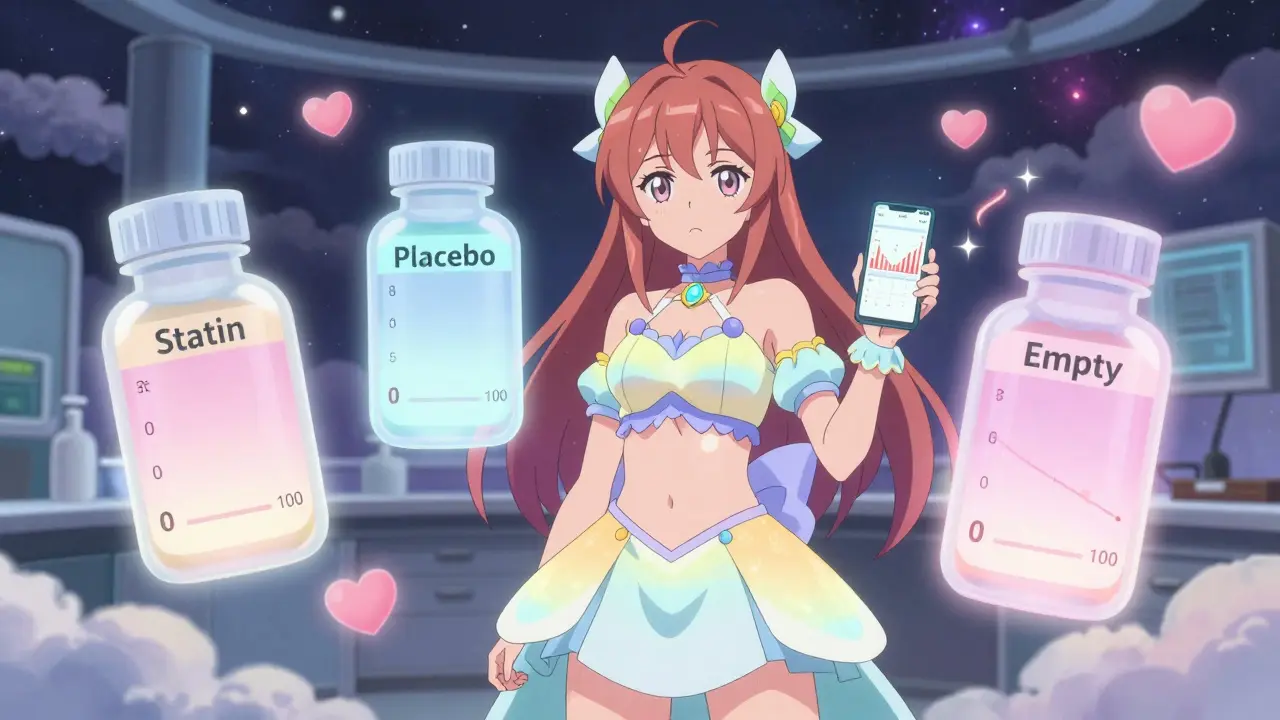
Statin Nocebo Effect Calculator
Based on the landmark SAMSON trial, this calculator helps you understand how much of your reported symptoms might be due to the nocebo effect rather than the actual statin medication. Enter your symptom scores below to see the estimated contribution of expectation.
Your Nocebo Effect Analysis
Your Symptom Scores
Statin Score:
Placebo Score:
Nocebo Ratio
(Higher value = more likely nocebo effect)
What this means: In the SAMSON trial, the nocebo ratio was 0.90 (90% of symptoms reported on statins also occurred on placebo). Your result shows how your symptoms compare to this benchmark.
Interpretation: A ratio above 70% indicates the nocebo effect is likely the main contributor to your symptoms.
Many people stop taking statins because they feel muscle pain, fatigue, or weakness. They blame the drug. But what if the drug isn’t the real culprit? What if the problem isn’t in the pill - it’s in the expectation?
The Real Reason People Quit Statins
Statins save lives. They lower LDL cholesterol, reduce plaque buildup in arteries, and cut the risk of heart attacks and strokes by up to 30%. Yet, between 40% and 70% of people who start statins stop taking them within the first year. The most common reason? Side effects - especially muscle pain. But here’s the twist: in well-designed, double-blind clinical trials, where neither patients nor doctors know who’s getting the real drug or a sugar pill, the difference in muscle pain between statins and placebo is tiny. Almost nonexistent. So why do so many people feel worse on statins in real life? The answer lies in the nocebo effect. The nocebo effect is the dark twin of the placebo effect. Where placebo makes you feel better because you believe you’re getting help, nocebo makes you feel worse because you expect harm. If you’ve read online that statins cause muscle pain, or heard a friend complain about them, your brain starts looking for symptoms - and often finds them, even when the drug isn’t doing anything harmful.The SAMSON Trial: Proof in Numbers
In 2021, a landmark study called SAMSON changed how doctors understand statin side effects. Led by James Philip Howard at Imperial College London, it followed 60 people who had quit statins because of side effects. These weren’t people with mild discomfort - they were those who had stopped because the symptoms were bad enough to give up on life-saving medication. Here’s how the trial worked: each person got 12 bottles over 12 months. Four contained atorvastatin (20 mg). Four contained a sugar pill. Four were empty - no pill at all. The bottles were labeled randomly. Participants used a smartphone app to rate their symptoms every day on a scale from 0 to 100. The results were shocking. - Symptoms during statin months: average score of 16.3 - Symptoms during placebo months: average score of 15.4 - Symptoms during no-pill months: average score of 8.0 There was no meaningful difference between the real statin and the fake pill. But when there was no pill at all, symptoms dropped by nearly half. The nocebo ratio? 0.90. That means 90% of the symptoms people blamed on statins were also present when they took nothing but a sugar pill. The drug wasn’t causing the pain. Their expectation was.Why Statins Are Unique
Statins aren’t the only drugs with side effects. But they’re one of the few where the nocebo effect is this strong. A 2021 meta-analysis of over 18,000 people found no difference in muscle symptoms between statins and placebo in blinded trials. Yet in real-world observational studies - where people know they’re taking statins - up to 20% report muscle pain. That’s a huge gap. Other medications don’t show this pattern. If you take a blood pressure pill and feel dizzy, it’s likely the drug. But with statins? The timing of symptoms doesn’t match the drug’s action. Pain often starts within days of beginning the pill - and disappears just as fast when you stop. That’s not how pharmacology works. Drugs don’t cause symptoms that vanish in 48 hours after stopping. But expectations? They do.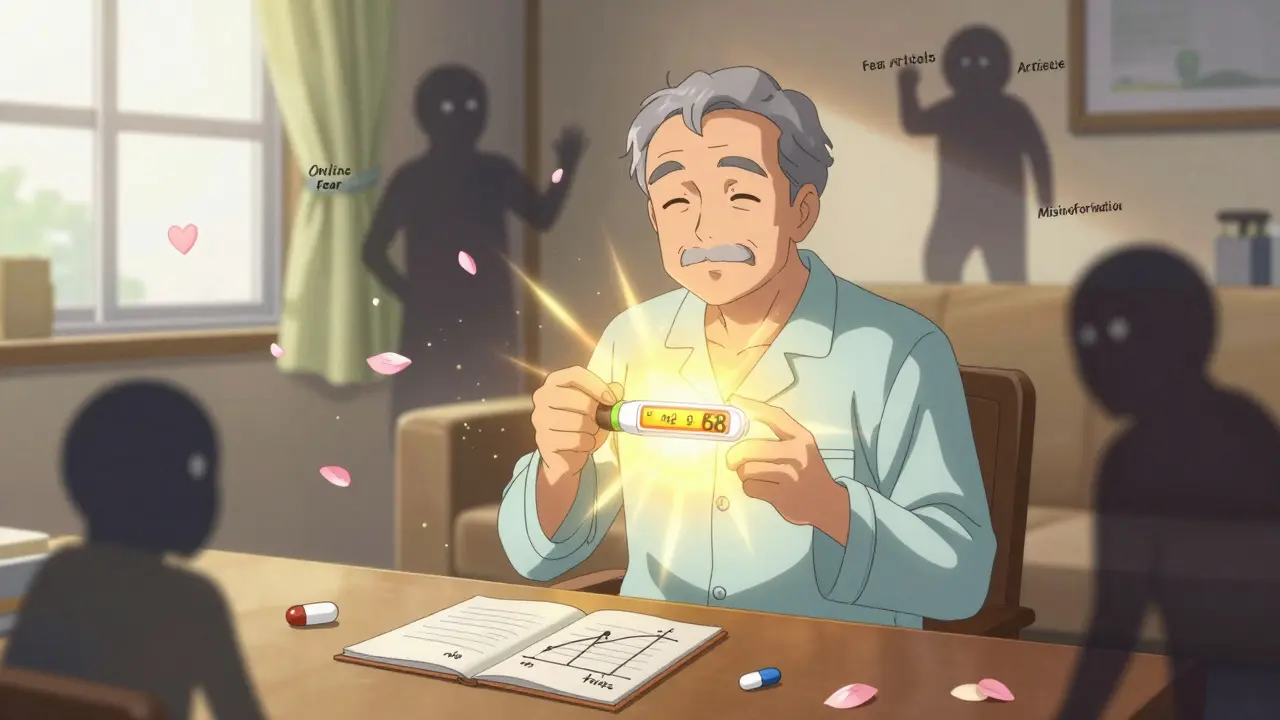
What About Real Muscle Damage?
Some people worry: isn’t this just dismissing real pain? It’s not. True statin-induced muscle damage - called myopathy - is extremely rare. About 5 in 10,000 people on statins develop it. Rhabdomyolysis, the most severe form, affects fewer than 1 in a million people per year. These cases show up in blood tests: CPK levels spike, kidney function drops, muscles break down. That’s not the nocebo effect. That’s real toxicity. The SAMSON trial specifically excluded these people. It only studied those with subjective symptoms - pain, tiredness, weakness - with no lab evidence of muscle damage. If you’ve had a blood test showing high CPK or muscle breakdown, your case is different. You need a different approach. But if your only problem is feeling worse after starting a statin - and your blood work is normal - then the nocebo effect is likely the biggest factor.How Doctors Are Changing Their Approach
Before SAMSON, many doctors assumed patients were either exaggerating or had another cause for their pain. Now, they’re using the trial’s method. Cardiologists are starting to say: “Let’s test this.” They give patients a few weeks of placebo, then a few weeks of statin, and track symptoms daily. When patients see their own data - how the pain was just as bad on sugar pills - it changes everything. In the SAMSON trial, half the participants restarted statins after seeing their results. One 72-year-old man, who had refused statins for five years, restarted rosuvastatin at 5 mg. His LDL dropped from 142 to 68. He’s been symptom-free for over a year. Clinics now use simple tools: symptom trackers, visual graphs, and clear explanations. The American College of Cardiology and the American Heart Association now recommend this approach in their guidelines. A 2022 survey found that cardiologists who used nocebo education saw statin restart rates nearly double - from 22% to 49%.
What You Can Do If You’ve Stopped Statins
If you stopped statins because of side effects, here’s what to try:- Track your symptoms. Use a notebook or phone app. Rate pain, fatigue, or weakness daily on a scale of 0 to 10.
- Try a placebo test. Ask your doctor if you can take sugar pills for 4 weeks while tracking symptoms. Then try a low-dose statin for another 4 weeks.
- Start low. If you restart, begin with the lowest dose - 5 mg rosuvastatin or 10 mg atorvastatin. Most people tolerate this fine.
- Don’t read the side effect leaflet. Seriously. The list of possible side effects is long and scary. But most don’t happen. Your brain will latch onto them.
- Give it time. If symptoms return after restarting, wait 2-4 weeks. Sometimes the body adjusts.



Amy Ehinger
January 16, 2026 at 00:07
Wow, this is one of those posts that makes you rethink everything you thought you knew about medicine. I’ve been on statins for five years, and yeah, I did blame them for my occasional muscle twinges. But reading about the SAMSON trial? It’s like someone flipped a switch in my brain. I never realized how much my own fear, fueled by YouTube videos and Reddit threads, was making me feel worse. The fact that symptoms dropped even on empty bottles? That’s wild. I’m going to talk to my doctor about a placebo test - I’ve got nothing to lose and everything to gain.