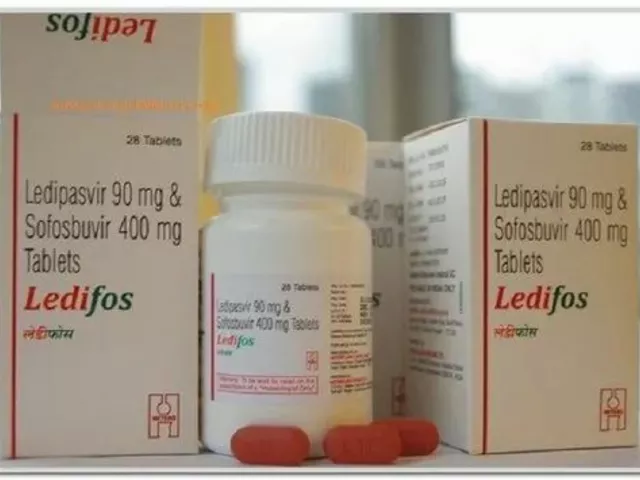
Ever wondered if that cheaper generic pill actually does the same thing as the expensive brand-name version? It's a common worry. You might think a lower price means lower quality or that the drug takes longer to kick in. However, the science used to approve these drugs is incredibly strict. To get on the market, a generic must pass a process called Bioequivalence Testing is a scientific methodology used to demonstrate that a generic drug performs in the same manner as its brand-name counterpart within the human body . This isn't just a formality; it's a rigorous set of tests designed to ensure you get the same medical result regardless of the label on the bottle.
The Shortcut to Safety: The ANDA Pathway
Developing a brand-name drug from scratch is a marathon. It involves years of research and massive Phase I-III clinical trials with thousands of people to prove the drug is safe and actually works. Generic manufacturers don't have to repeat those specific trials, and that's why they can sell their versions for so much less. Instead, they use the ANDA (Abbreviated New Drug Application) pathway. This legal route, established by the Hatch-Waxman Act of 1984, allows a company to "bridge" to the existing safety data of the brand drug as long as they can prove their version behaves the same way in the bloodstream.
To use this shortcut, the generic must first be pharmaceutically equivalent. This means it has the exact same active ingredient, strength, dosage form (like a tablet or capsule), and route of administration. While they can change the inactive ingredients-like the dyes, flavors, or fillers-the core medicine must be identical.
Measuring the Bloodstream: AUC and Cmax
So, how do scientists actually "prove" two drugs are the same? They don't just give them to sick people and see if they get better; they use Pharmacokinetics, which is the study of how the body absorbs, distributes, and eliminates a drug. They focus on two main numbers: AUC (Area Under the Curve) and Cmax (Maximum Plasma Concentration).
- Cmax tells us the peak concentration of the drug in the blood. It essentially measures the rate of absorption. If the Cmax is too high, the drug might be too potent; too low, and it might not work.
- AUC measures the total exposure of the drug over time. This tells us the extent of absorption-how much of the medicine actually made it into your system.
For a generic to be approved, the FDA requires that the 90% confidence interval for the ratio of these two values between the generic and the brand name falls between 80% and 125%. This narrow window ensures that any difference is clinically insignificant. In plain English: your body won't notice the difference.
| Feature | Brand-Name Drug | Generic Drug |
|---|---|---|
| Clinical Trials | Full Phase I, II, and III trials | Bioequivalence studies only |
| Patient Pool | Thousands of patients | Typically 24-36 healthy volunteers |
| Primary Goal | Prove safety and efficacy | Prove equivalence to reference drug |
| Cost of Entry | Extremely high (Billions) | Relatively low |

How a Bioequivalence Study Actually Works
If you've ever seen a call for "healthy volunteers" for a medical study, this is often what they're doing. A typical study uses a crossover design. This means a group of 24 to 36 healthy people takes the brand-name drug, waits for it to leave their system, and then takes the generic version (or vice versa). By having the same person take both, scientists remove the "noise" caused by individual differences in metabolism.
Blood samples are taken at very specific intervals-sometimes every few minutes after dosing-to map out the drug's journey through the body. This precise mapping is what allows regulators to verify that the generic doesn't hit the system too fast or linger too long compared to the original.
When the Standard Tests Aren't Enough
Most pills you swallow are easy to test because they go straight into the blood. But what about an inhaler for asthma or a cream for a rash? These are called Complex Generics. Because these drugs work locally-right in the lungs or on the skin-measuring them in the blood (systemic exposure) doesn't tell the whole story.
In these cases, the FDA and the EMA (European Medicines Agency) require more sophisticated tests. This might include pharmacodynamic studies, which look at the actual biological effect (like how much a bronchial tube opens) rather than just the blood concentration. They are also starting to use computer modeling, like physiologically based pharmacokinetic (PBPK) models, to simulate how drugs behave in complex environments.

The Real-World Impact of Bioequivalence
This scientific framework isn't just about regulation; it's about accessibility. Because we can prove equivalence without spending billions on new trials, generic drugs have become the backbone of healthcare. In the US, generics make up about 90% of all prescriptions. In 2020 alone, this saved the healthcare system roughly $313 billion.
But what about the people who say, "I can feel that the generic doesn't work as well"? Usually, this comes down to inactive ingredients. While the active medicine is the same, the binders or coatings might differ. Some people are sensitive to a specific dye or filler, which can cause a different side effect or a slight change in how the pill dissolves, even if the overall dose delivered to the blood is identical. This is a matter of individual chemistry, not a failure of the drug's potency.
Checking the "Orange Book"
If you're ever unsure about a medication, there is a gold-standard resource called the Orange Book. Officially known as the Approved Drug Products with Therapeutic Equivalence Evaluations, this is the FDA's master list. It doesn't just list generics; it gives them a rating. A "TH" rating means the FDA has determined the generic is therapeutically equivalent to the brand name, meaning it can be swapped without any risk to the patient's health.
Do generic drugs take longer to start working?
No. Bioequivalence testing specifically measures the "rate" of absorption via the Cmax value. If a generic took significantly longer to reach peak concentration in the blood, it would fail the 80%-125% criteria and would not be approved by the FDA.
Why do some generics look different than the brand name?
By law, generic drugs are often required to look different (different color, shape, or flavor) to distinguish them from the original brand-name product. These changes involve inactive ingredients and do not affect the active drug's performance.
Are there any drugs that shouldn't be swapped for generics?
For most people, generics are identical. However, for "narrow therapeutic index" (NTI) drugs-where a tiny change in dose can be dangerous-doctors may prefer the brand name. These drugs often have even tighter bioequivalence requirements than the standard 80-125% range.
What happens if a generic fails a bioequivalence test?
If the generic's AUC or Cmax falls outside the accepted range, the FDA will not approve the ANDA. The manufacturer must then reformulate the drug-changing the binders or the manufacturing process-and run the tests again until they can prove it matches the brand name.
Is bioequivalence the same as therapeutic equivalence?
They are very close, but not identical. Bioequivalence is the scientific measurement of how the drug moves through the body. Therapeutic equivalence is the broader conclusion that the drug will produce the same clinical effect in the patient. Bioequivalence is the primary evidence used to prove therapeutic equivalence.