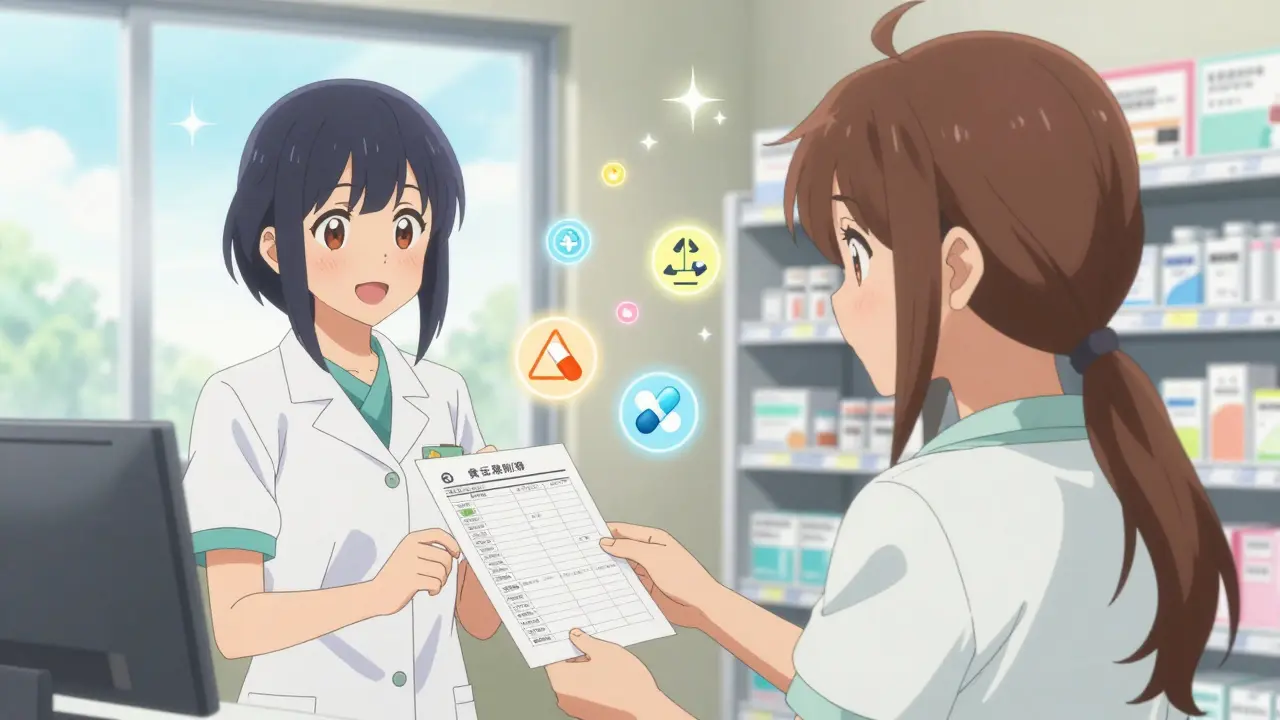
Walking into the pharmacy to pick up your prescription should be simple. But if you’ve ever been asked the same allergy questions again - even after filling out forms online - you know it’s not. That’s because confirming allergies and drug interactions at pickup isn’t just a formality. It’s the last line of defense against a preventable hospital visit. In 2022, medication errors led to 6.7% of all hospital admissions in the U.S., and nearly half of those were tied to uncaught allergies or dangerous drug combinations. This isn’t about bureaucracy. It’s about survival.
Why This Step Can’t Be Skipped
Pharmacists don’t ask about your allergies just to check a box. They’re looking for hidden risks. For example, someone labeled as “penicillin allergic” might be told to avoid amoxicillin for a throat infection - even though 90% of those labels are wrong. A 2023 study from Baylor College of Medicine found that fewer than 1 in 5 patients with a penicillin allergy history actually have a true IgE-mediated reaction. Yet, without proper verification, they’re stuck with less effective, more expensive, or more dangerous alternatives. The same goes for drug interactions. Take a common combo: warfarin and ibuprofen. Alone, both are safe. Together, they can cause internal bleeding. Or consider SSRIs and certain migraine meds - together, they can trigger serotonin syndrome, a life-threatening condition. These aren’t rare. They happen daily in pharmacies across the country.What Happens at the Pickup Counter
When you hand over your prescription, the pharmacist doesn’t just grab the bottle. They run a three-part check - and you’re part of it.- System Check: The pharmacy software pulls your profile from the electronic health record. It scans for documented allergies - like “amoxicillin,” “sulfa,” or “shellfish” - and matches them against every ingredient in the new drug, including fillers and dyes. Systems like Epic or Cerner use SNOMED CT terminology to avoid false alerts from inactive ingredients like aspartame or FD&C red dye.
- Interaction Scan: The system checks your current meds against the new one using Lexicomp or Micromedex databases. These tools flag over 1,000 known drug-drug interactions. If you’re on lisinopril and get prescribed a diuretic, the system will warn about low blood pressure risk.
- Face-to-Face Confirmation: The pharmacist asks: “Do you have any new allergies since your last visit?” or “Have you had any unusual reactions to any meds lately?” This isn’t redundant. It’s essential. Studies show that 32.7% of allergy records in EHRs are over five years old - and many are inaccurate.
What Patients Need to Do
You can’t rely on the system. You’re the only one who knows your body.- Update your list every time you see a doctor. If your allergist says you’re no longer allergic to penicillin, get that documented in writing and bring it to the pharmacy. Don’t assume your doctor sent it over.
- Know your exact reaction. Saying “I’m allergic to penicillin” isn’t enough. Was it a rash? Swelling? Trouble breathing? The difference matters. A mild rash doesn’t mean you can’t take related antibiotics. True anaphylaxis does.
- Bring a current med list. Even if you think the pharmacy has it, bring a printed or digital list of everything you take - including supplements, OTC painkillers, and herbal teas. St. John’s Wort can mess with antidepressants. Grapefruit juice can turn blood pressure meds toxic.
- Speak up if something feels off. If the pharmacist says, “This is safe,” but you’ve had a bad reaction before, say so. Your experience overrides any algorithm.
Common Mistakes and How to Avoid Them
Pharmacists see the same errors over and over:- “I’m allergic to sulfa” - but you mean sulfites in wine. These are completely different. Sulfa drugs are antibiotics. Sulfites are preservatives. One triggers asthma. The other can cause hives. Confusing them leads to unnecessary restrictions.
- “I had a reaction once, years ago.” That might have been a virus, not the drug. Many patients carry outdated labels for decades. Ask your doctor for a re-evaluation if you’ve never been tested.
- Ignoring OTC meds. People forget that Advil, Tylenol, or allergy pills can interact. Mixing NSAIDs with blood thinners? Dangerous. Taking diphenhydramine with antidepressants? Risk of confusion or falls in older adults.
- Assuming the system got it right. EHRs don’t auto-update. If your old doctor wrote “allergy: penicillin” in 2018 and your new doctor never reviewed it, the system still thinks you’re allergic. You have to fix it.
What Pharmacists Are Doing to Improve
The field is changing fast. In 2024, Epic rolled out “allergy severity stratification” - meaning if you’ve listed 10 allergies, the system stops screaming about low-risk ones. That cuts down alert fatigue. Pharmacists can now focus on the real threats. Walgreens and CVS now require pharmacists to log override reasons when they ignore an alert. That way, if another pharmacist sees the same prescription later, they know why it was cleared. It’s a small change - but it’s cut repeat checks by 28%. Mayo Clinic uses “allergy timeouts” for complex cases. If a patient has a history of multiple drug reactions, the pharmacist stops everything, calls the prescriber, and waits for clarification before dispensing. That extra 5 minutes has reduced errors by 24.6%.
What’s Coming Next
By late 2025, the FDA will require all drug labels to use standardized allergy terminology in their packaging. That means “penicillin allergy” will be clearly defined as IgE-mediated, non-IgE, or unknown - not just a vague note. AI tools are starting to scan clinical notes for hidden clues. Google Health’s pilot program found 31.7% more undocumented allergies by analyzing doctor’s handwriting in notes - like “patient broke out in hives after amoxicillin” - that never made it into structured fields. The goal? Not to eliminate alerts. To make them meaningful.Final Reminder: You’re the Key
No system is perfect. Algorithms miss things. Doctors forget to update records. Pharmacists are human. But you? You know your body better than anyone. When you pick up your prescription, treat it like a safety check - not a transaction. Ask: “Is this safe with everything I’m taking?” Show your list. Clarify your history. If something feels wrong, say so. That one conversation could prevent a trip to the ER. The pharmacy isn’t just handing you pills. They’re protecting you. But they can’t do it alone.What should I bring to the pharmacy to confirm allergies and interactions?
Bring a current list of all medications you take - including prescriptions, over-the-counter drugs, vitamins, and supplements. Also bring any written documentation from your doctor about allergies, especially if you’ve had recent testing or changes. A photo of your pill bottles or a note on your phone works too.
Can I trust the allergy info in my electronic health record?
Not always. Studies show over a third of allergy records are outdated - some dating back more than five years. Many are vague or inaccurate. Always verify with your pharmacist and update your record after any new reaction or test.
Why do pharmacists ask the same allergy questions every time?
Because systems can’t always communicate perfectly. Your doctor’s office might not send updates to the pharmacy’s system. Or the system might have flagged an old note as “confirmed,” even if you’ve since been tested and cleared. Pharmacists ask to confirm what the system says - and to catch anything it missed.
Are food allergies the same as drug allergies in pharmacy checks?
No. Pharmacy systems check for drug allergies only - not food allergies like peanuts or shellfish - unless the drug contains an ingredient derived from that food (like certain antibiotics made from penicillin mold). If you have a food allergy that could affect a medication (like soy in some injectables), tell the pharmacist directly.
What if I’m told I can’t take a medication because of an allergy I don’t remember having?
Ask for clarification. Many people are mislabeled as allergic to penicillin based on childhood rashes that weren’t true allergies. Request a referral to an allergist for testing. You might be able to safely take the drug - and avoid less effective alternatives.
Do herbal supplements count in interaction checks?
Yes - and they’re often overlooked. St. John’s Wort can reduce the effectiveness of birth control, antidepressants, and blood thinners. Garlic and ginkgo can increase bleeding risk with aspirin or warfarin. Always include them on your list.
Can pharmacists override an allergy alert?
Yes - but only if they document why. For example, if a patient has a history of a mild rash but needs a critical antibiotic, the pharmacist may override the alert after consulting the prescriber. They must enter a reason, which gets shared with other providers to prevent future confusion.
Is there a way to avoid long waits at pickup for allergy checks?
Keep your allergy and medication list updated in your pharmacy’s online portal. Many pharmacies now allow you to submit updates ahead of time. If you have a complex history, ask if they offer a “medication review appointment” - a 15-minute slot with the pharmacist to go over everything at once.




Lindsey Wellmann
January 10, 2026 at 08:17
OMG I JUST HAD THIS HAPPEN LAST WEEK 😭 I said I was allergic to penicillin in 2017 and they refused to give me amoxicillin for my sinus infection - even though I’ve taken it 3 times since then with zero issues. The pharmacist actually cried when I told her I’d been mislabeled for 7 years. We called my allergist on the spot. She’s now my hero. 🥺💊