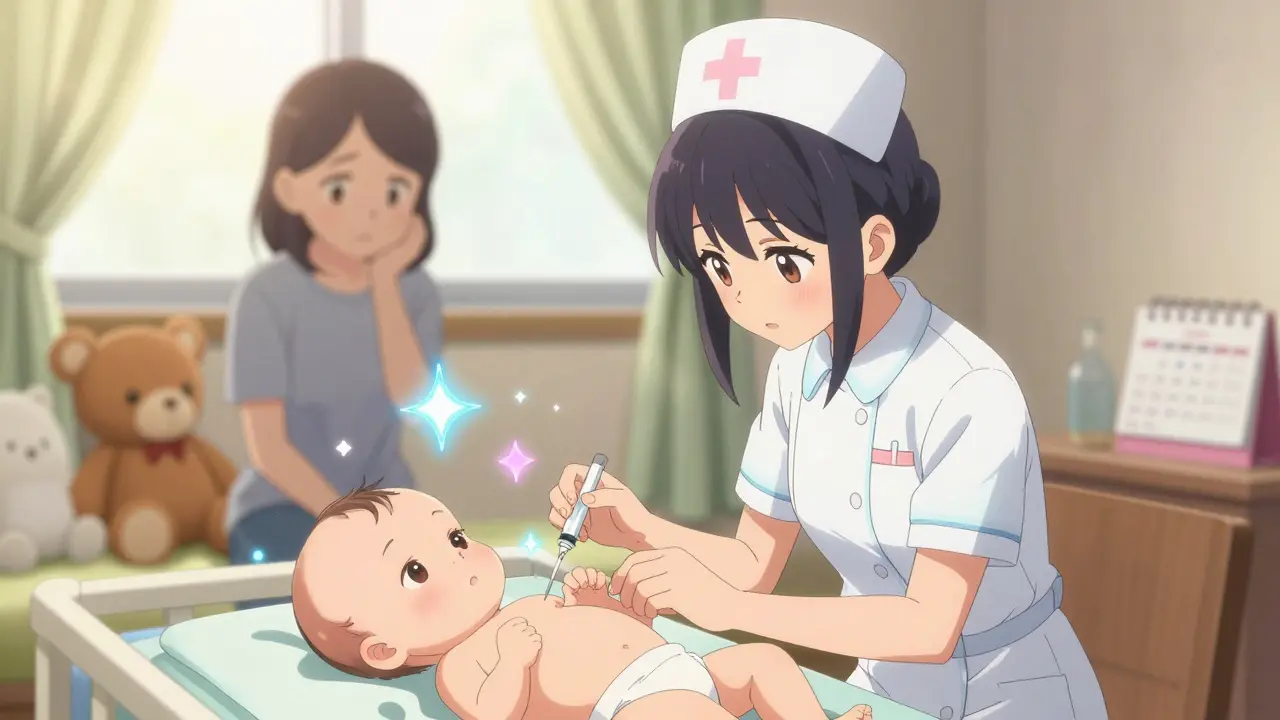
Every year, as the weather turns cooler, a quiet but powerful virus begins to spread-RSV. It doesn’t make headlines like the flu or COVID-19, but for babies and older adults, it can be deadly. Respiratory Syncytial Virus (RSV) is responsible for more hospitalizations in infants under one year than any other single pathogen. In older adults, it’s a hidden threat that worsens heart and lung conditions, often leading to long-term decline. The good news? We now have real tools to stop it.
What Is RSV, Really?
RSV is a common virus that hits the respiratory system-from the nose down to the lungs. Most healthy adults get it like a bad cold: runny nose, sore throat, cough, maybe a fever. But for infants and people over 65, it can turn into pneumonia or bronchiolitis in days. It’s not new. Scientists first found it in 1956. But until recently, we didn’t have vaccines or easy prevention tools for the most vulnerable.
RSV spreads fast. It lives on doorknobs, toys, and countertops for up to 10 hours. One sneeze can send droplets flying through the air. If you kiss a baby with a runny nose, you’re not just being affectionate-you could be passing on a serious infection. Kids under two and adults over 65 are the ones who pay the highest price.
Why Infants Are at Greatest Risk
Babies, especially those under six months, have tiny airways and underdeveloped immune systems. When RSV hits, their lungs swell, mucus clogs their breathing tubes, and they struggle to get enough oxygen. About 2-3% of infants under six months end up in the hospital each season. That’s tens of thousands of babies in the U.S. alone.
Some babies are at even higher risk:
- Preemies born before 29 weeks
- Babies with congenital heart disease
- Children with chronic lung disease from birth
These kids are 10 to 25 times more likely to need intensive care. Signs of severe RSV in infants include:
- Fast, shallow breathing (over 60 breaths per minute)
- Chest muscles pulling in with each breath
- Refusing to eat or drink
- Lethargy or extreme fussiness
Parents often think, “It’s just a cold.” But if your baby is breathing harder than usual, isn’t feeding well, or seems unusually tired, don’t wait. Get help immediately.
Older Adults: The Silent Crisis
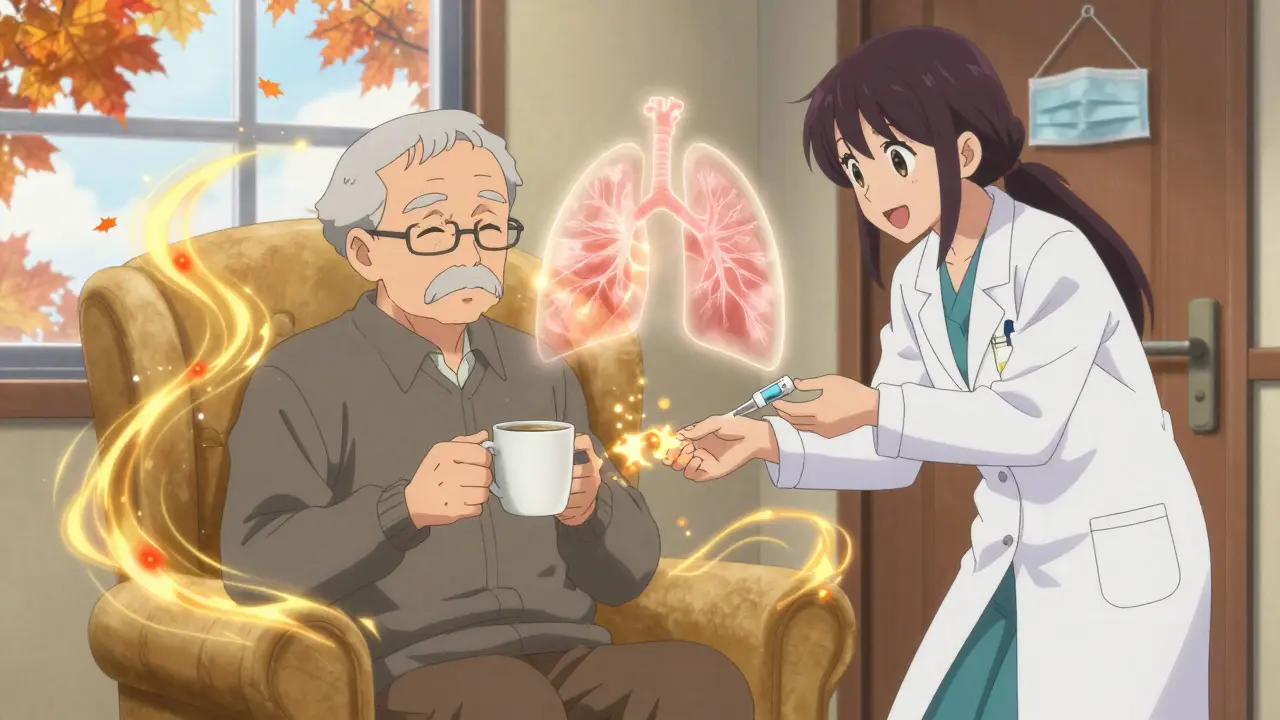
Most people assume RSV is just a kid’s virus. It’s not. Every year in the U.S., RSV sends 60,000 to 160,000 adults over 65 to the hospital. Around 10,000 die. That’s more than the annual flu deaths in this age group.
Why is it so dangerous for older adults? Aging weakens the immune system. Many already have heart failure, COPD, or other chronic conditions. RSV doesn’t just cause a cough-it makes those conditions flare up. One study found that 78% of hospitalized older adults with RSV saw their heart or lung disease get worse. Nearly one-third needed intensive care.
And the damage doesn’t end when they leave the hospital. Over 40% of seniors who survive a severe RSV infection develop new problems with daily tasks-like bathing, dressing, or walking. Many end up needing help at home or in a care facility. For someone who was independent just weeks before, that’s a life-changing blow.
How RSV Spreads-and How to Stop It
RSV doesn’t need a pandemic to spread. It’s everywhere: in classrooms, nursing homes, grocery stores, and family gatherings. Here’s how it moves:
- Through coughs and sneezes (65% of cases)
- By touching contaminated surfaces (like phones, remotes, or cribs)
- By direct contact-kissing, hugging, sharing utensils
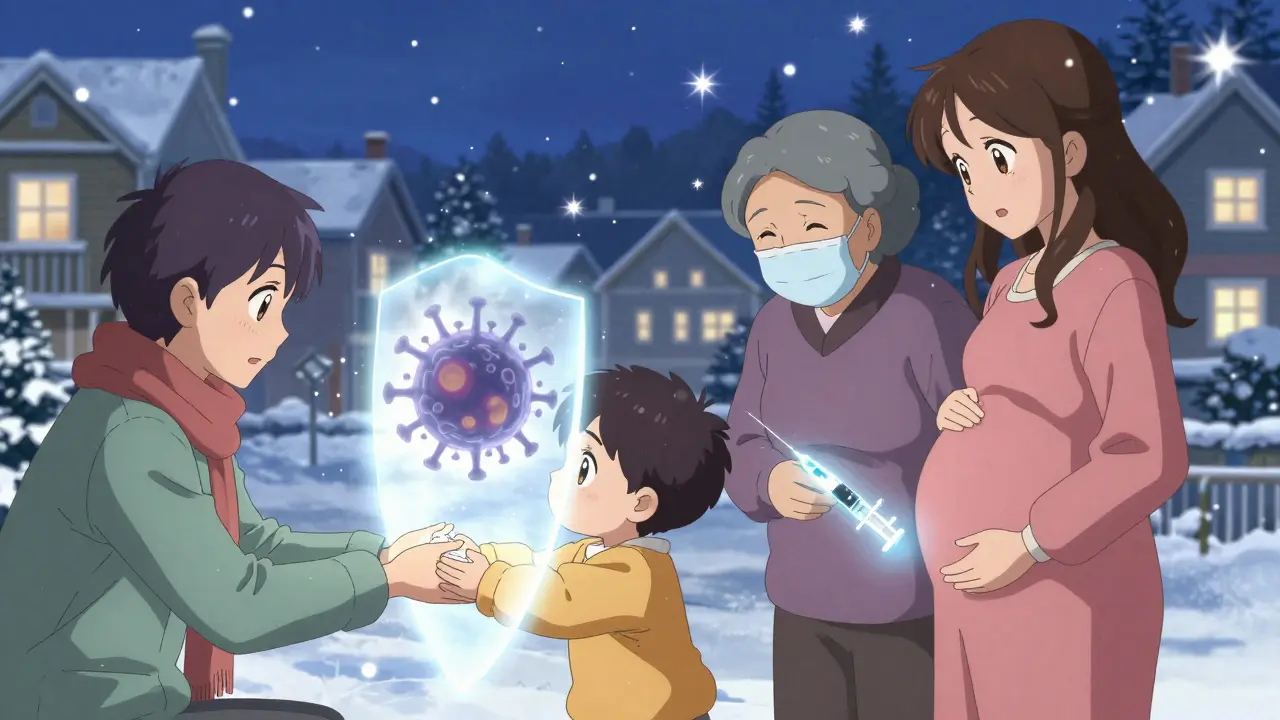
The virus survives on hard surfaces for up to 9.8 hours. That’s why cleaning matters. Use EPA-registered disinfectants on high-touch areas daily. Wash hands with soap for at least 20 seconds-sing "Happy Birthday" twice. Avoid touching your face, especially your eyes and nose.
Simple steps make a big difference:
- Keep sick people away from babies and older adults
- Wash hands before holding a baby
- Don’t let people smoke near children
- Use masks in crowded places during peak RSV season (December-January)
The Big Breakthroughs: Vaccines and Antibodies
For decades, we had almost nothing to protect the most vulnerable. Then, in 2023, everything changed.
For Infants: A new monoclonal antibody called nirsevimab (brand name Beyfortus™) was approved in July 2023. It’s a single shot given before or during RSV season. It provides protection for about five months-long enough to cover the worst months. Studies show it cuts hospitalizations by 75%. The CDC now recommends it for all infants under 8 months entering their first RSV season, and for high-risk toddlers up to 19 months in their second season.
For Older Adults: Two RSV vaccines are now available: GSK’s Arexvy and Pfizer’s Abrysvo. Both were approved in May 2023. Arexvy showed 82.6% effectiveness in preventing severe lower respiratory disease. Abrysvo was 66.7% effective. The CDC recommends shared decision-making: talk to your doctor if you’re over 60. If you have heart or lung disease, the vaccine is likely worth it.
There’s also a new option for pregnant people: Abrysvo can be given between 32 and 36 weeks of pregnancy. It passes protective antibodies to the baby before birth, offering protection from day one. This is a game-changer for newborns too young to get their own shot.
What About the Future?
These tools are powerful-but not equally available. In the U.S., access is improving. But in low-income countries, RSV kills nearly 100,000 children every year. Why? No vaccines. No antibodies. No oxygen. No ICU beds. The cost of one dose of Arexvy in the U.S. is $295. In many places, that’s a year’s salary.
Global health leaders are pushing for equitable access. But until then, the burden falls hardest on families with the least resources.
Long-term effects are also being studied. Kids who had severe RSV as babies are 4 times more likely to develop asthma by age 7. Their lung function doesn’t fully recover. For older adults, severe RSV can trigger a cascade of decline-leading to permanent loss of independence.
What You Can Do Right Now
You don’t need to wait for a doctor’s appointment to protect someone you love.
- If you’re pregnant: Ask about Abrysvo between weeks 32 and 36.
- If you have a baby under 8 months: Ask your pediatrician about nirsevimab.
- If you’re over 60: Talk to your doctor about the RSV vaccine, especially if you have heart or lung disease.
- If you’re around infants or older adults: Wash your hands. Stay home if you’re sick. Wear a mask if you’re coughing.
RSV isn’t going away. But we’re no longer defenseless. The tools are here. The science is clear. The question is no longer whether we can prevent it-it’s whether we will.
Is RSV the same as the flu or COVID-19?
No. RSV is a different virus, though it causes similar symptoms like cough, fever, and runny nose. Unlike flu, RSV doesn’t have a rapid test everyone gets. Unlike COVID-19, it doesn’t cause loss of taste or smell as a key sign. But it’s just as dangerous for infants and older adults. Testing is needed to tell them apart.
Can adults get RSV more than once?
Yes. You can get RSV multiple times in your life. Immunity doesn’t last long, and the virus changes slightly each season. That’s why even healthy adults can catch it again-even if they had it last year. But repeat infections are usually milder.
Are RSV vaccines safe for older adults?
Yes. Both Arexvy and Abrysvo were tested in tens of thousands of adults over 60. Side effects are mild: sore arm, fatigue, headache, or muscle pain. Serious reactions are rare. The benefits far outweigh the risks, especially for those with heart or lung conditions.
Can my baby get the RSV vaccine?
No. Babies under 8 months get a monoclonal antibody called nirsevimab, not a vaccine. It’s a one-time shot that gives immediate, temporary protection. Vaccines teach the body to make its own antibodies. Nirsevimab gives ready-made antibodies-like borrowing protection. It’s safe and effective for infants.
When is RSV season?
In temperate climates like the U.S. and Australia, RSV season usually runs from late fall to early spring-peaking between December and January. But it can start as early as October and last until March. Plan protection before the season starts.


Blow Job
December 23, 2025 at 14:52
My niece got RSV last winter. She was 4 months old. We thought it was just a cold until she stopped eating and looked like she was drowning in her own mucus. Took her to the ER at 3 a.m. They said if we’d waited another 6 hours, she might not have made it. Nirsevimab? I’m crying typing this. Every parent needs to know this exists.