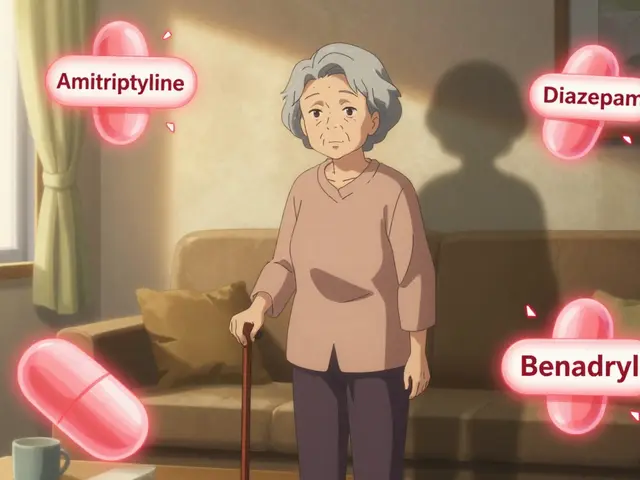
Imagine the tension in a pharmacy when a patient insists on a brand-name drug they've used for years, but the law in your state essentially forces you to dispense a generic. Or worse, consider the risk of a medication error when a pharmacist substitutes an antiepileptic drug in a state where that's strictly forbidden. For those behind the counter, dispensing a generic isn't just about swapping a label; it's a legal tightrope walk where a single oversight can lead to a state board disciplinary action.
The core of this practice relies on the FDA Orange Book is the official publication that provides the scientific foundation for determining if a generic drug is therapeutically equivalent to its brand-name counterpart. First published in 1980, this resource is the pharmacist's primary tool for ensuring that a substitution is safe and legal. When you see an 'A-rating' in the Orange Book, it generally means the generic is considered bioequivalent to the reference listed drug, meaning it performs the same way in the body.
The Legal Framework of Generic Substitution
Substitution laws aren't uniform across the board. Since the Hatch-Waxman Act is the 1984 legislation that created the modern generic drug industry by allowing for Abbreviated New Drug Applications (ANDA), the legal landscape has shifted toward cost-saving. Today, generics make up over 90% of prescriptions filled in the U.S., but the rules for how they are dispensed depend entirely on where your pharmacy is located.
You'll typically find yourself operating under one of two primary regulatory systems: mandatory or permissive substitution. In mandatory substitution states, the law requires you to dispense the generic version of a multi-source drug unless the doctor explicitly forbids it. In permissive states, you have the professional discretion to substitute, but you aren't legally obligated to do so. This creates a significant difference in generic utilization rates, with mandatory states seeing higher usage-often exceeding 92%.
Then there is the matter of consent. Depending on the jurisdiction, you might be in a "presumed consent" state, where you can swap the drug without a formal conversation. However, in "explicit consent" states, you must get a clear "yes" from the patient before making the switch. Failing to document this consent is one of the most frequent pitfalls; in fact, documentation errors account for nearly 68% of substitution-related disciplinary actions.
Navigating High-Risk Medications and Restrictions
Not all drugs are created equal in the eyes of the law. Some medications have a Narrow Therapeutic Index is a characteristic of drugs where small differences in dose or blood concentration may lead to serious therapeutic failures or adverse drug reactions. For these drugs, the risks of substitution are much higher. For instance, research has shown that substituting certain cardiac glycosides can lead to a 12.7% increase in adverse events, even when the drug is FDA-rated as bioequivalent.
State-specific restrictions often target these high-risk categories. Take Tennessee, for example. In that state, pharmacists are prohibited from substituting antiepileptic drugs used to treat epilepsy or seizures, regardless of the FDA rating. Similarly, California has strict rules regarding thyroid medications like levothyroxine. If a pharmacist misses these state-specific nuances, the result isn't just a legal violation-it's a potential medical emergency for the patient.
| Feature | Mandatory Substitution States | Permissive Substitution States |
|---|---|---|
| Pharmacist Obligation | Must dispense generic unless prohibited | May dispense generic at discretion |
| Typical Utilization Rate | Higher (~92.7%) | Lower (~87.3%) |
| Professional Judgment | More constrained by law | Greater flexibility in complex cases |
| Primary Goal | Maximized cost savings | Balanced professional choice |

Handling 'Dispense as Written' and Medical Necessity
When a doctor writes "Dispense as Written" (DAW), it's a direct order to avoid generics. However, the legal weight of this request varies. In some states, simply checking a box is enough. In others, like Florida, the prescriber must write "MEDICALLY NECESSARY" in their own handwriting on the script or perform a specific "overt act" during electronic transmission to prevent the pharmacist from substituting.
This creates a friction point between the American Medical Association is the professional organization representing physicians in the U.S., which often advocates for stronger prescriber control over drug selection and the pharmacy's duty to follow the law. While the AMA argues that the physician is best positioned to determine necessity, the American Pharmacists Association is the professional organization for pharmacists that emphasizes the right to exercise independent professional judgment during dispensing suggests that pharmacists must balance this with state-mandated cost-saving measures.
Practical Steps for Compliance and Risk Mitigation
To avoid the dreaded phone call from the Board of Pharmacy, you need a system that goes beyond memory. The legal landscape changes fast-17 states amended their substitution regulations in 2022 alone. Here is a practical approach to staying compliant:
- Audit Your Software: Ensure your pharmacy management system is configured for your specific state's consent protocols (explicit vs. presumed).
- Cross-Reference the Orange Book: Never rely solely on the software's "generic" flag. Check the rating for new or complex generics to verify therapeutic equivalence.
- Verify 'Medical Necessity' Markers: For high-stakes prescriptions, double-check that the DAW or 'Medically Necessary' notation meets your state's specific legal formatting requirements.
- Patient Communication: Be transparent. Since 63% of negative patient reviews regarding generics cite a "lack of notification," explaining the substitution clearly can prevent both complaints and legal disputes.

The Future of Substitution: Biosimilars and Beyond
The rules we've discussed mostly apply to "small-molecule" drugs. However, the rise of Biosimilars is biologic medications that are highly similar to another already-approved biologic medicine, but are not identical copies is changing the game. Between 2017 and 2022, 32 states introduced specific biosimilar substitution laws. These are much more complex than traditional generics because biologics are larger, more unstable molecules.
We are also seeing a move toward a "Model Substitution Act," a standardized framework that 14 states have already adopted to reduce the confusion of 51 different sets of rules. As we move toward 2027, expect more scrutiny on narrow therapeutic index drugs and updated labeling requirements from the FDA designed to make these distinctions clearer to the average patient.
What is the difference between an A-rated and B-rated drug in the Orange Book?
An A-rated product is considered therapeutically equivalent, meaning it has the same active ingredient, strength, dosage form, and route of administration, and has demonstrated bioequivalence. A B-rated product is therapeutically equivalent but has not been shown to be bioequivalent, meaning it may not be legally substitutable without prescriber approval in many states.
Can a pharmacist be held liable for a generic substitution that leads to a therapeutic failure?
Yes. While following FDA guidelines provides a level of protection, pharmacists have a "corresponding responsibility" to ensure the substitution is appropriate for the specific patient. This is especially true for narrow therapeutic index drugs where a legal substitution might still be clinically inappropriate.
Do I need patient consent for every generic substitution?
It depends on your state. In "explicit consent" states, you must obtain and document the patient's permission. In "presumed consent" states, you can substitute without an affirmative request, provided the substitution is legal under state law.
What happens if a doctor writes 'Dispense as Written' but the law requires mandatory substitution?
A 'Dispense as Written' (DAW) order generally overrides mandatory substitution laws. The prescriber's intent to avoid a generic is a legal directive that the pharmacist must follow, though some states require specific wording like 'Medically Necessary' for this to be valid.
How often should a pharmacist update their knowledge on substitution laws?
Given that nearly 20 states may amend their laws in a single year, pharmacists should check for regulatory updates quarterly. Many professional associations suggest 40-60 hours of continuing education annually to keep up with these changes.
Next Steps for Pharmacy Staff
If you are a pharmacy owner or manager, start by conducting a "gap analysis" of your current dispensing workflow. Compare your software's default settings against your state's latest statutes. For staff, focus on improving the patient counseling process-don't just tell the patient they are getting a generic; explain why it is therapeutically equivalent and how it benefits them financially. If you are dealing with a narrow therapeutic index drug, when in doubt, call the prescriber. A five-minute phone call is much cheaper than a board of pharmacy hearing.